
Last updated September 23, 2026
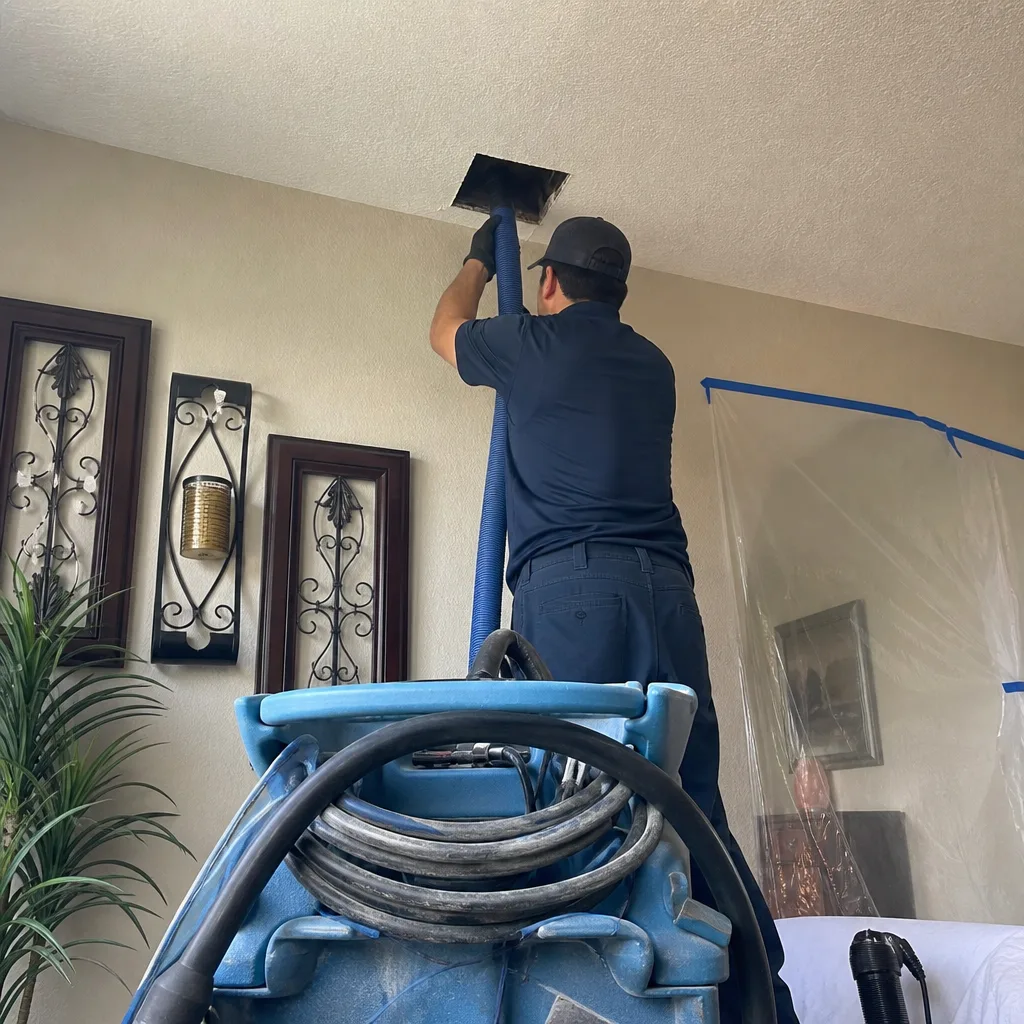
Whole-system duct and dryer vent check with before-and-after photos - you see exactly what came out of your vents
That "$99 whole-house special" is a bait ad - the real number appears once they are in your hallway, or the "clean" is a shop-vac at the register. We photograph the inside of your ducts before and after instead.
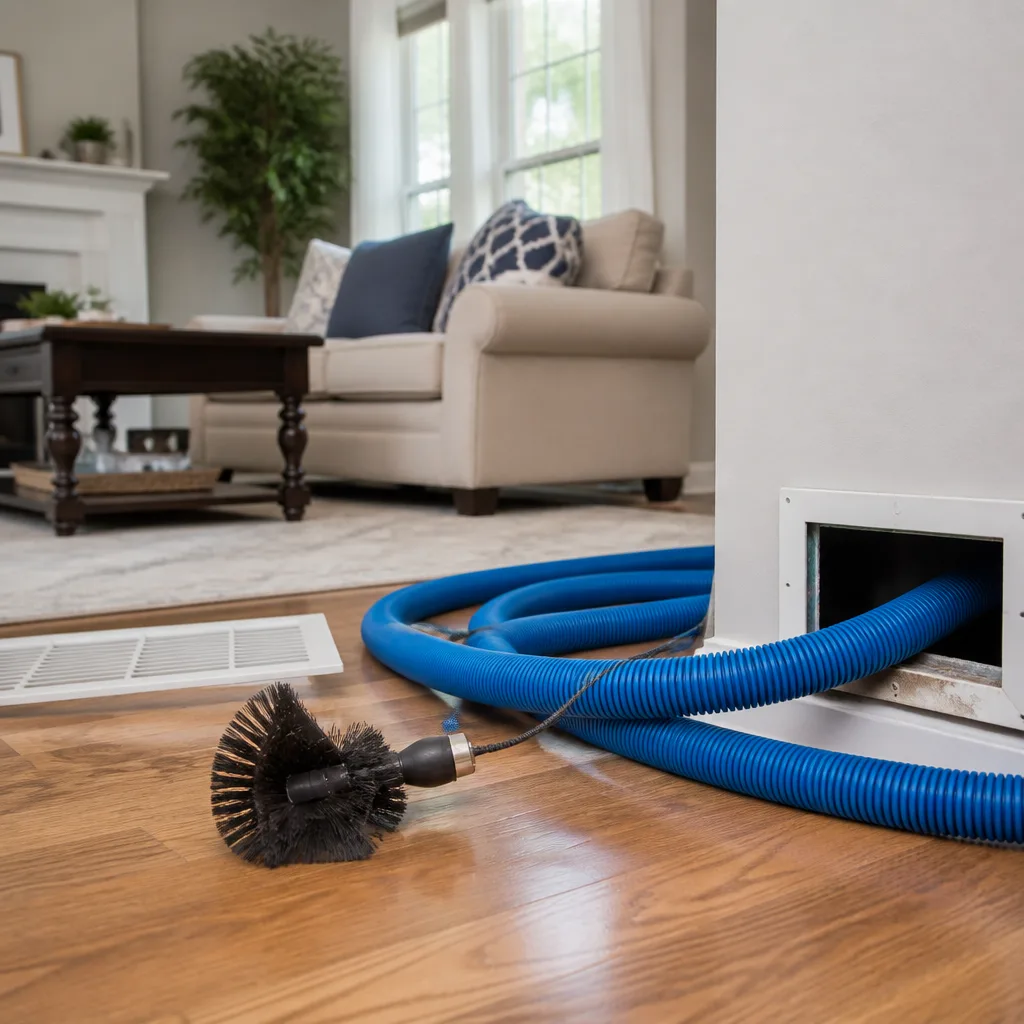
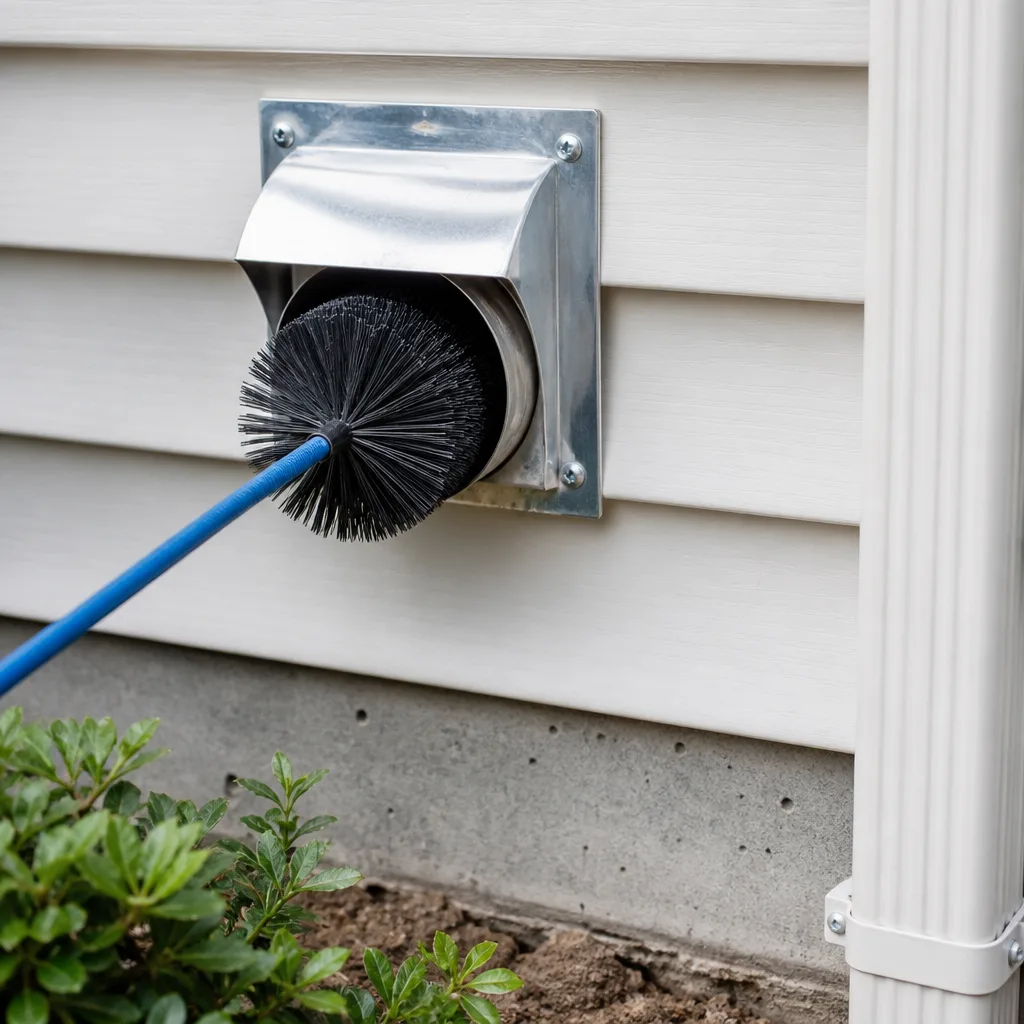
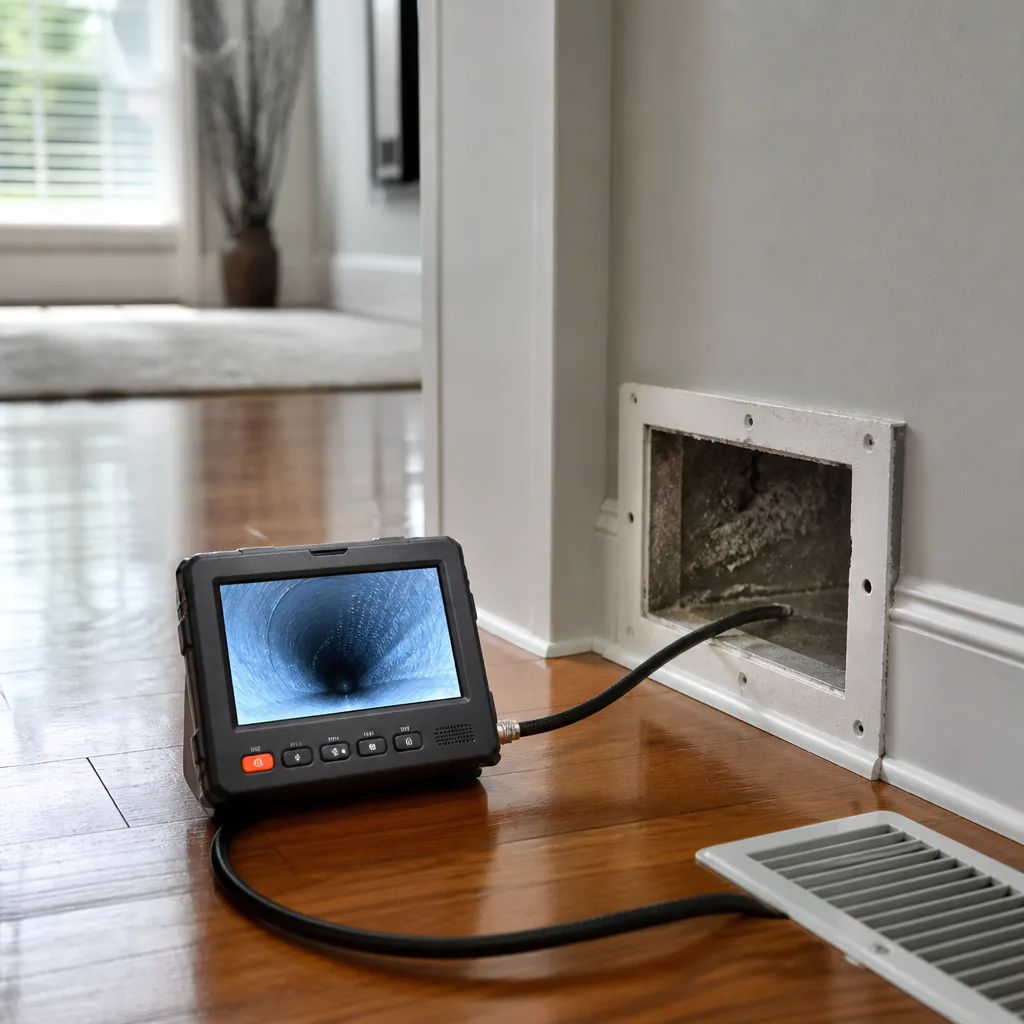
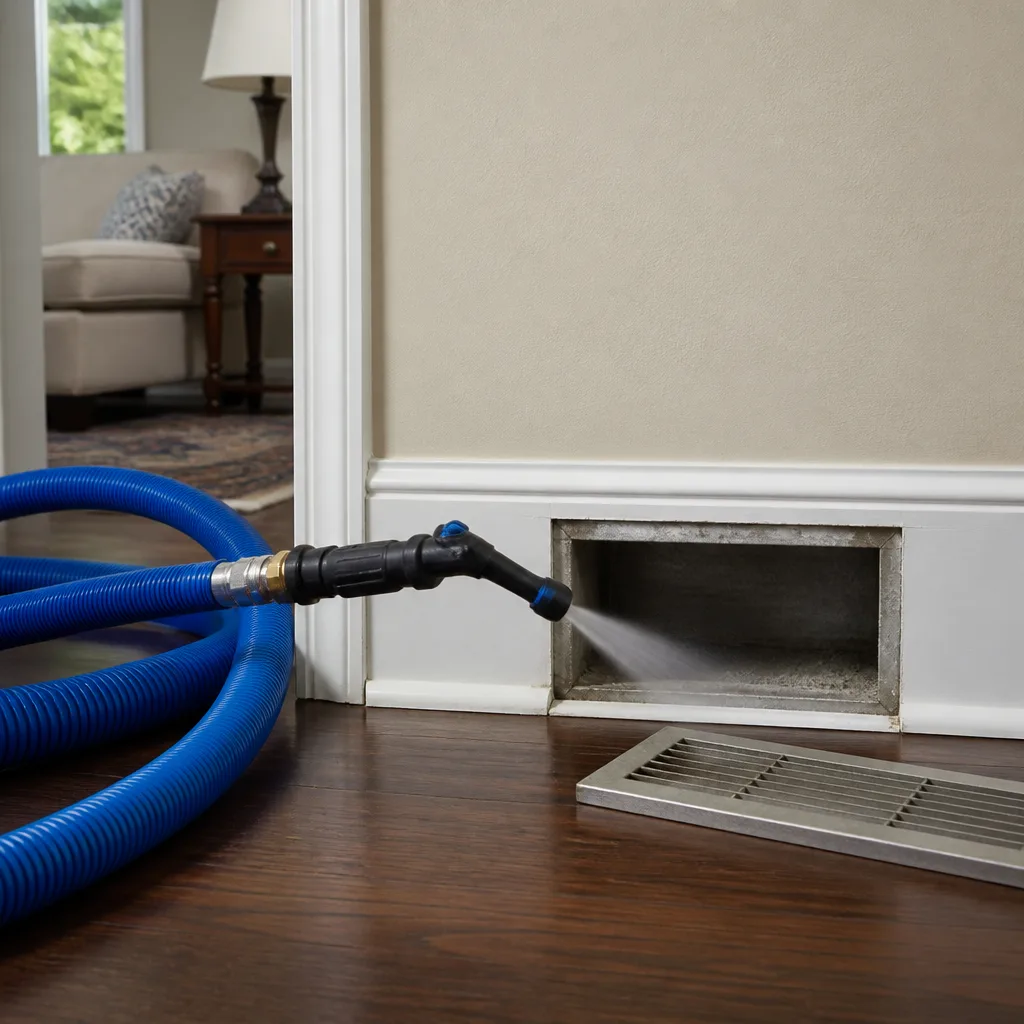
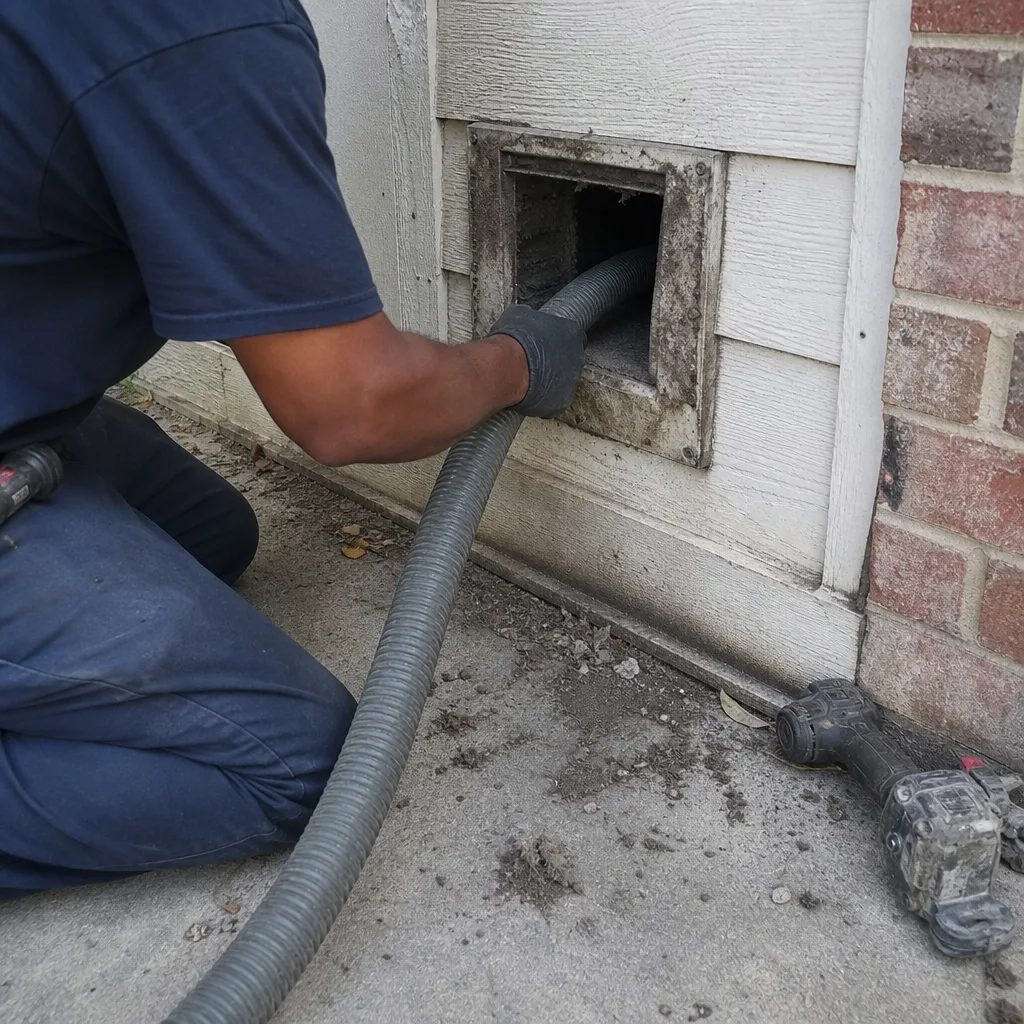 Before
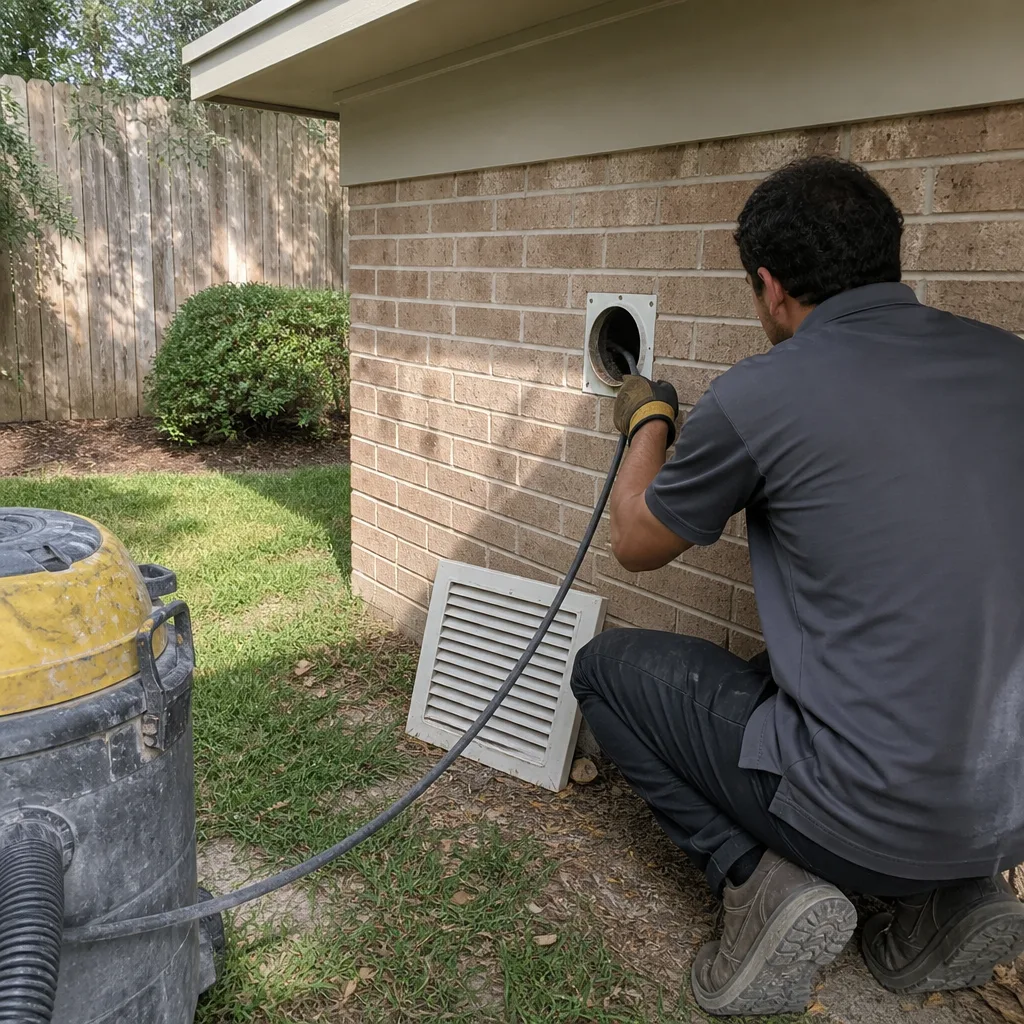 After
After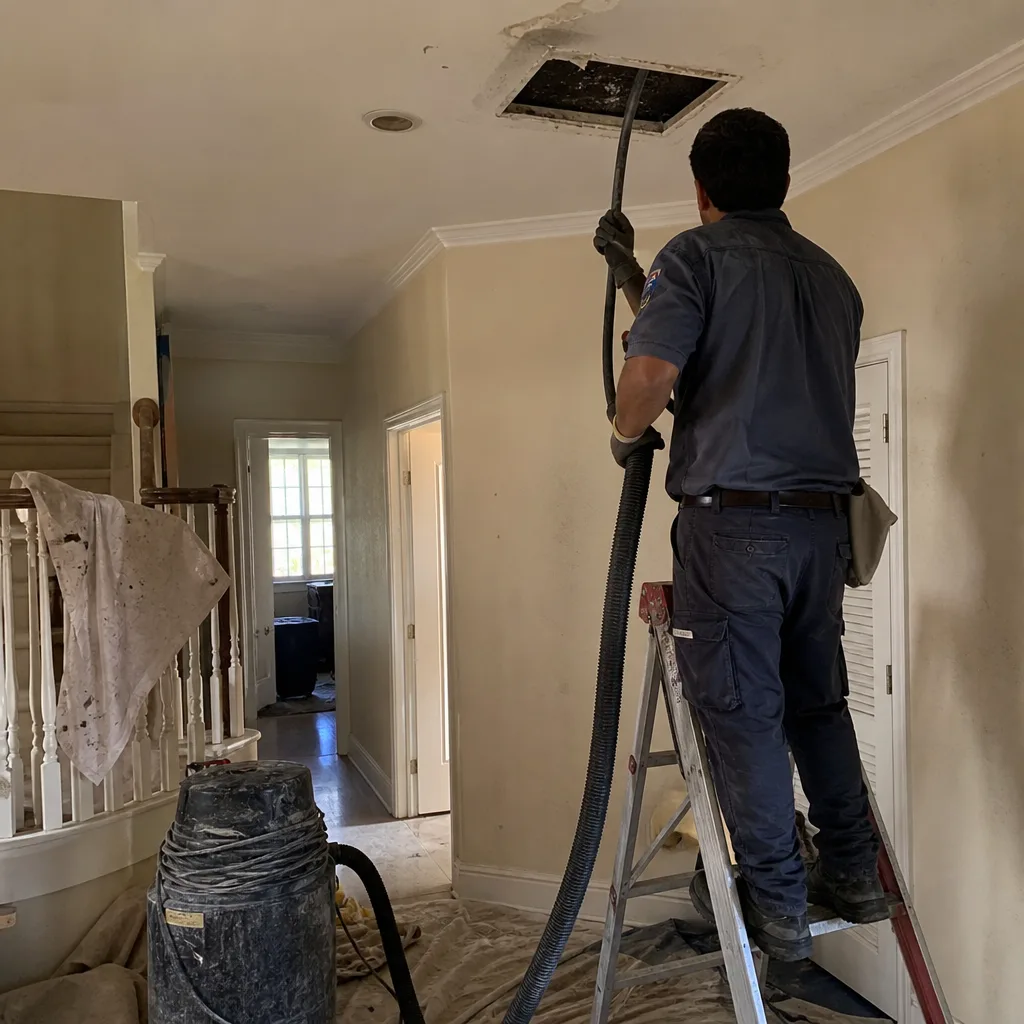 Before
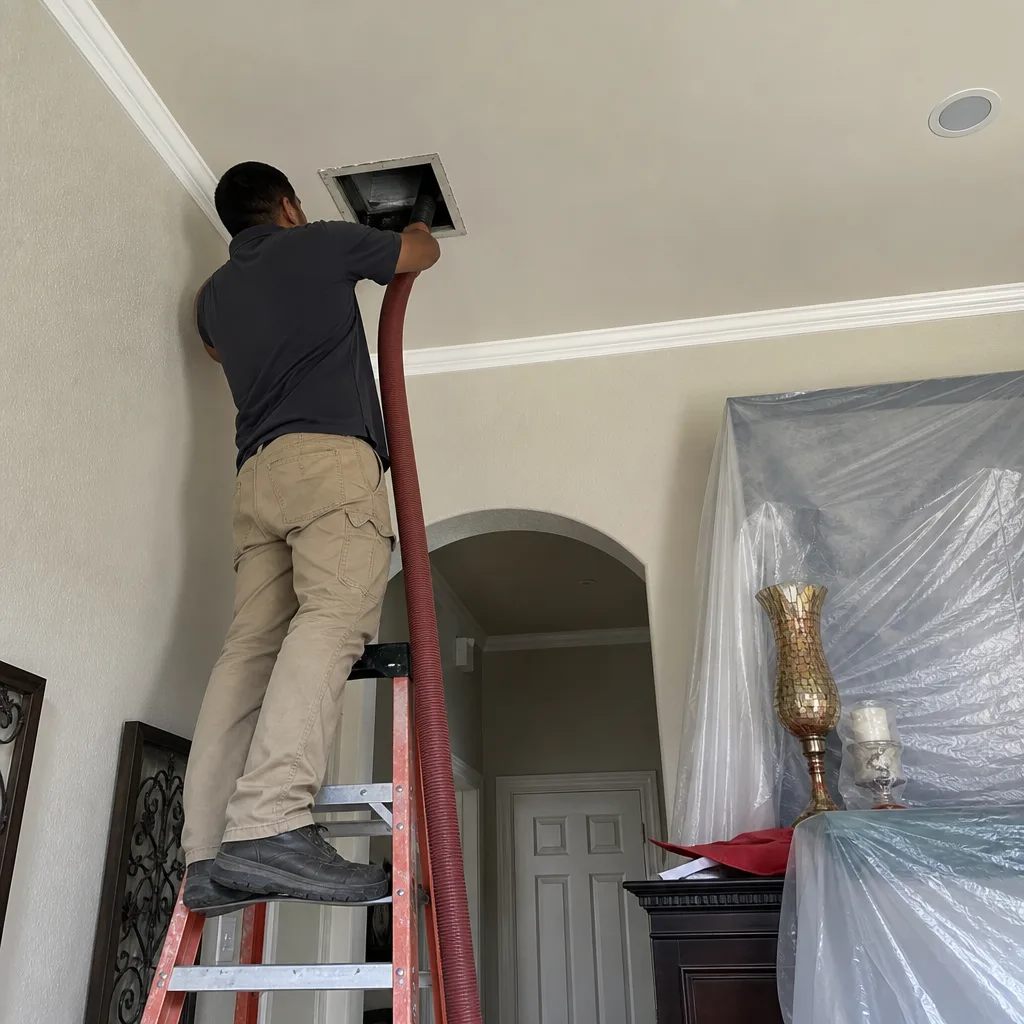 After
After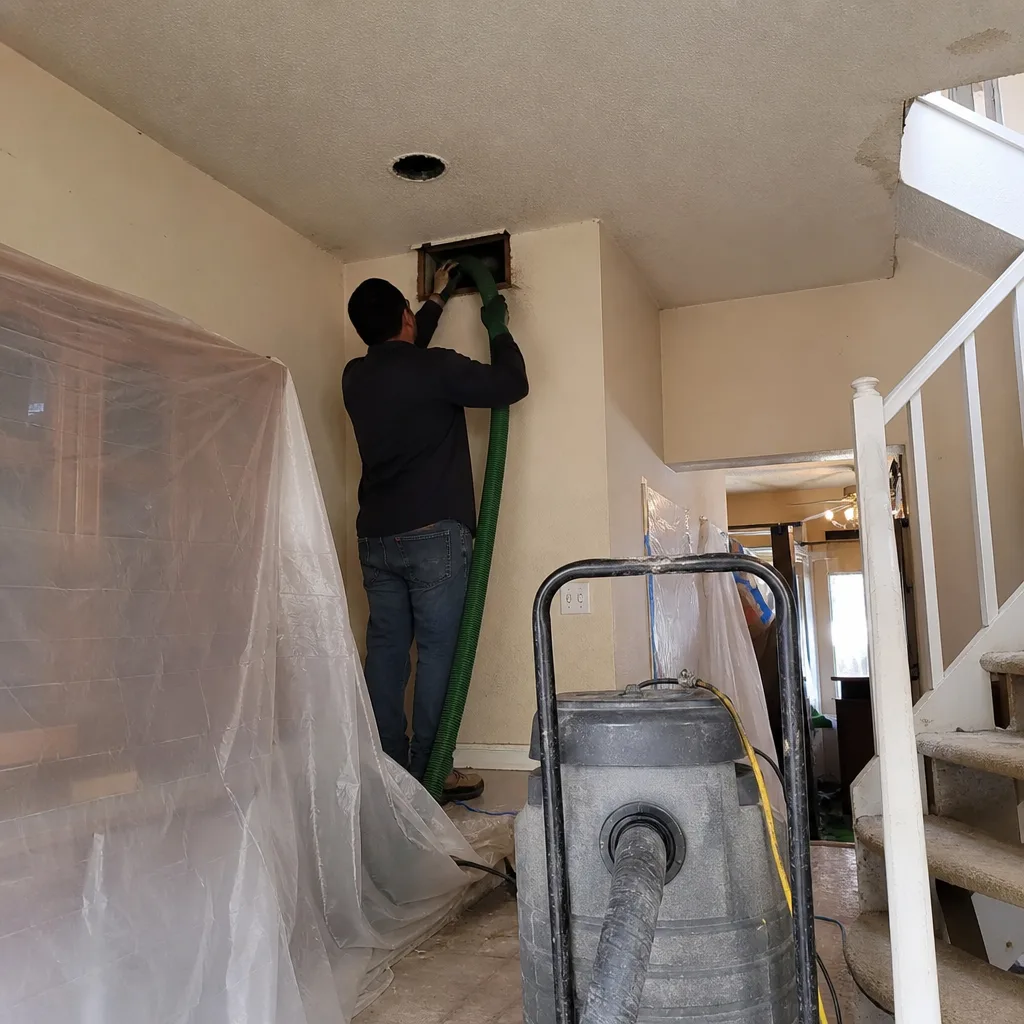 Before
 After
AfterAir Duct Cleaning Maintenance Checklist for Pearland Homeowners
Changing your HVAC filter every 90 days is standard advice, but if your return plenum has a gap in the duct board, a clean filter is irrelevant - the system is pulling unfiltered attic air regardless. In Pearland, where summer humidity stays above 70 percent for months and attic temperatures routinely hit 140 degrees, ductwork gaps aren’t minor leaks; they’re entry points for moisture, insulation particles, and conditioned-air loss that drives up your electric bill before you notice anything wrong. This guide gives Pearland homeowners a maintenance checklist built around observable conditions - what you can see, smell, and photograph - not arbitrary calendar dates.
Quick Answer
A complete air duct maintenance checklist for Pearland homeowners includes five condition-based checks: visual inspection of accessible duct connections for gaps or disconnections, filter MERV rating verification against your system’s static pressure capacity, odor and debris monitoring at registers, utility bill trend review for unexplained increases, and photographic documentation of baseline conditions. For professional help with any issues you find, see our Air Duct Cleaning services. Perform these checks when you notice specific triggers - musty odors after rain, visible debris around vents, or a sudden spike in summer cooling costs - rather than on a fixed annual schedule.
Table of Contents
- How to Visually Inspect Accessible Ductwork Without Professional Tools
- What MERV Ratings Actually Mean in Pearland’s Humidity
- Condition-Based Trigger List: When to Act
- How to Photograph and Date Your System Conditions
- The Three Components Most Often Skipped in DIY Inspections
- Common Mistakes to Avoid
- When to Call a Professional
- Frequently Asked Questions
BeforeAfterHow to Visually Inspect Accessible Ductwork Without Professional Tools
Most Pearland homes built between 1995 and 2020 have ductwork that runs through the attic or a conditioned crawl space. The good news: several critical connection points are accessible with a flashlight, a step ladder, and a smartphone camera. You don’t need a borescope or pressure gauge to spot the problems that matter most.
Start at the air handler, typically located in the attic, garage, or a dedicated closet. Look for these four specific conditions:
- Duct board gaps at the plenum connection. The plenum is the large box that sits on top of your air handler and distributes air into the duct runs. Where the plenum meets the air handler cabinet, you should see a continuous metal tape or mastic seal. If you see daylight, felt the ambient attic air temperature near the gap, or notice the tape has peeled back, that’s a leak. In Pearland’s climate, these gaps also pull in humid attic air that condenses on cool duct surfaces inside the plenum, creating the musty odor many homeowners mistake for “dirty ducts.”
- Sagging flexible duct at branch takeoffs. Flexible duct - the insulated, silver-sleeved tubing common in suburban construction - should run with gentle curves, not sharp bends or sagging loops. A sag deeper than 6 inches creates a debris trap and restricts airflow. In Silverlake and Shadow Creek Ranch, we’ve photographed sagging flex duct that had pulled completely off the takeoff collar, dumping conditioned air into the attic for years without the homeowner knowing.
- Disconnected or crushed duct runs. Follow each visible duct from the plenum to where it disappears into insulation or framing. A disconnected run is obvious: the end hangs free, sometimes with insulation bunched around it. A crushed run is subtler - the flexible duct looks pinched or flattened, often where a storage box or Christmas decoration bin was set on it.
- Missing or damaged insulation. The outer silver jacket of flexible duct hides a layer of fiberglass insulation. If the jacket is torn, the insulation gets wet from attic condensation or compresses over time. Wet insulation in Pearland’s humidity rarely dries completely and becomes a mold substrate. Press gently on the duct; you should feel resilient insulation, not a hard, compressed layer or damp spots.
Document what you find with dated photos. If you discover a disconnected run or a gap larger than a quarter-inch at the plenum, stop the inspection and call a professional - these aren’t DIY repairs, and running the system with open ductwork wastes energy and can pull insulation particles into your living space.
For homeowners in Pearland’s newer developments like Pomona or Canterbury Park, your ductwork may be entirely in conditioned space (inside walls and soffits). In these homes, focus on the air handler closet and any visible register boots - the metal boxes behind your wall and ceiling vents - rather than attic runs.
What MERV Ratings Actually Mean in Pearland’s Humidity
MERV stands for Minimum Efficiency Reporting Value. It’s a standardized scale from 1 to 20 that measures how effectively a filter captures particles of specific sizes. The higher the MERV, the smaller the particles captured. But in Pearland, where air conditioning runs eight to nine months of the year and evaporator coils operate near the dew point, MERV rating selection is as much about airflow physics as it is about filtration.
Here’s what most homeowners miss: a filter is a resistance element in your duct system. The denser the filter media, the more static pressure it adds. Your HVAC system was designed to operate within a specific static pressure range, typically 0.5 inches of water column for residential equipment. Exceed that, and you reduce airflow across the evaporator coil, which in Pearland’s humidity leads to coil icing, reduced dehumidification, and eventually compressor damage.
| MERV Range | Typical Particle Capture | Pearland Suitability |
|---|---|---|
| MERV 1-4 | Pollen, dust mites, carpet fibers | Too low for most homes; minimal protection |
| MERV 5-8 | Mold spores, pet dander, lint | Standard for most residential systems without modification |
| MERV 9-12 | Legionella, humidifier dust, lead dust | Acceptable if system static pressure is verified; may require blower adjustment |
| MERV 13-16 | Bacteria, tobacco smoke, sneeze nuclei | Requires professional static pressure test and likely duct or blower modifications |
| MERV 17-20 | Virus carriers, carbon dust, sea salt | Hospital-grade; incompatible with standard residential equipment |
For Pearland homeowners, MERV 8 is the practical ceiling unless you’ve had a static pressure test performed by an HVAC technician. The humidity here means your system runs longer cycles with more air passing through the filter; a MERV 13 filter that works fine in a dry climate can quietly damage a Pearland system over two summers.
If you want better filtration than MERV 8 provides, don’t just buy a denser filter. Have a technician measure total external static pressure with your preferred filter installed. If the reading exceeds 0.5 inches of water column, your options are a blower speed adjustment, duct modification to reduce resistance elsewhere, or a standalone air cleaner like a Honeywell electronic air cleaner installed on the return side - a solution that adds filtration without the pressure penalty of a dense media filter.
One more Pearland-specific note: pollen season here runs from February through May, with oak and pine peaking in March and April. A MERV 8 filter loaded with pollen adds more resistance than the same filter in September. Check your filter monthly during peak pollen, not quarterly, and replace it when the media looks gray and opaque, not when you remember the date.
Condition-Based Trigger List: When to Act
Calendar-based maintenance assumes your home operates under average conditions. Pearland homes don’t. A house near the golf course in Green Tee Terrace with mature oak canopy deals with different debris loads than a new build in Shadow Creek Ranch with construction dust still settling. A family with three indoor dogs generates different filter loads than a single professional who travels weekly.
Use this trigger list instead of arbitrary dates. When you observe one of these conditions, perform the full checklist within two weeks:
- Musty or sour odor from vents, especially after rain. In Pearland, this often indicates condensate drainage problems or duct leaks pulling humid attic air, not simply “dirty ducts.” The odor is your earliest warning.
- Visible debris or dust accumulation on register fins or surrounding ceiling. Clean registers are normal; black debris that returns within days of cleaning is not. This suggests inadequate filtration or a return-side leak pulling unfiltered air.
- Unexplained increase in summer electric bills year-over-year. Compare June-August usage to the same months last year, adjusted for any thermostat setting changes. A 15 percent increase with no other explanation often traces to duct leakage or restricted airflow forcing longer run times.
- Uneven cooling between rooms that previously performed equally. If the west-facing bedroom suddenly can’t keep up in July, check for a disconnected duct run or crushed flex before assuming the unit is failing.
- Condensation on ductwork or registers in summer. Cold air hitting humid attic air through a leak causes surface condensation. In Pearland’s climate, this leads to water stains, mold growth, and eventually drywall damage.
- Increased allergy symptoms or respiratory irritation when the system runs. This is a lagging indicator, not a leading one - by the time symptoms appear, the underlying condition has been present for weeks. But it’s still a valid trigger for immediate inspection.
- Filter collapses or bows inward toward the blower. This indicates excessive pressure drop, either from an over-dense filter or a blower working against restricted ductwork. Replace with a lower MERV filter and inspect the return path for blockages.
The key distinction: these triggers are observable and recordable. You can photograph dust on a register. You can screenshot your CenterPoint Energy bill history. You can note the date you first smelled the musty odor. This documentation becomes evidence if you later hire a professional - and it’s the foundation of the baseline record we’ll discuss next.
How to Photograph and Date Your System Conditions
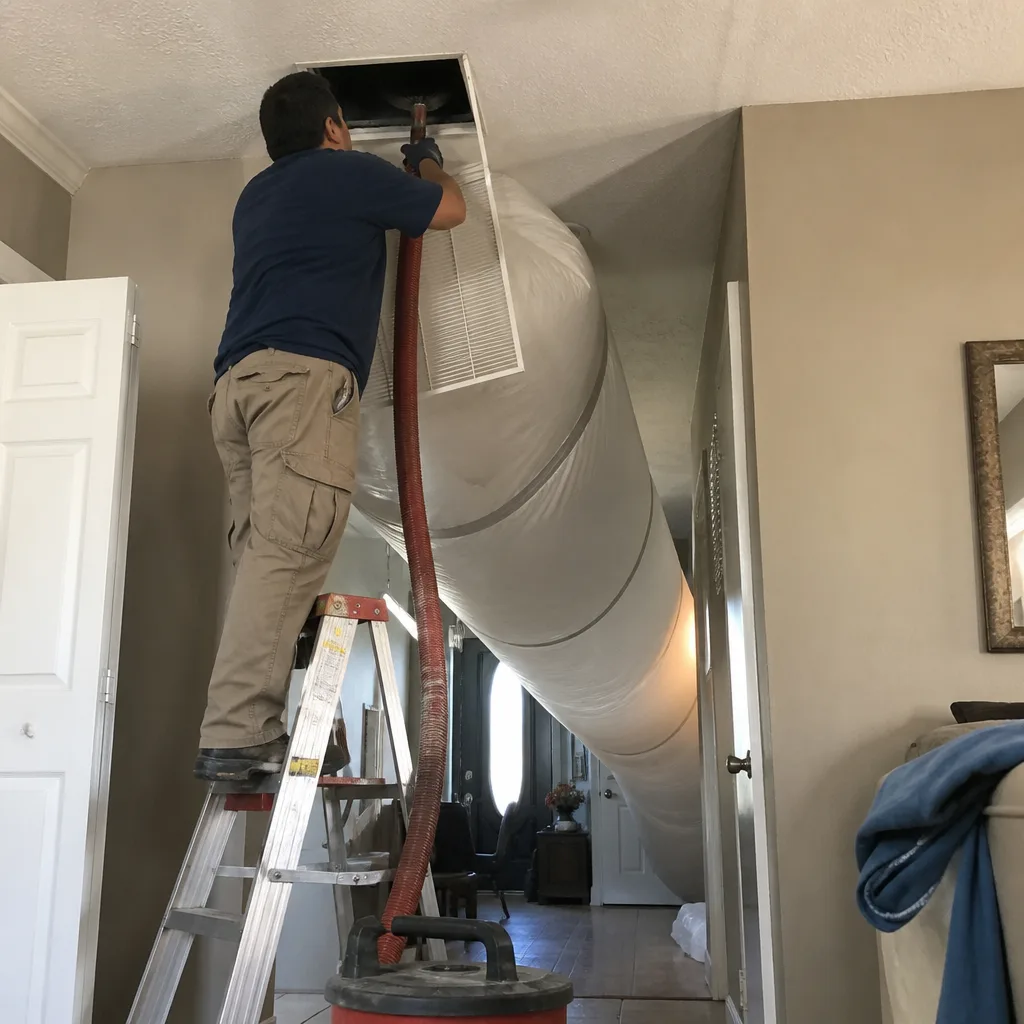
Before you hire any duct cleaning or repair company in Pearland, you need a baseline record of your own system. This isn’t about suspicion; it’s about having comparable evidence. If a technician shows you a photo of “your” dirty duct, you should be able to verify it matches your system’s configuration. If you’re quoted $800 for cleaning, you should know whether the conditions justify that scope.
Here’s how to create a useful photographic record with your smartphone:
- Photograph the air handler data plate. This metal plate lists the model number, serial number, manufacture date, and design static pressure. Include this in every photo set so there’s no confusion about which system the images document.
- Photograph each accessible duct connection at the plenum. Use your flash. Capture the condition of the sealant, any visible gaps, and the general state of the duct insulation. Take one wide shot and one close-up per connection.
- Photograph each register from below and, where possible, the duct boot from above. Remove the register grille (usually two screws or spring clips) and photograph the inside of the duct boot. In Pearland homes, we commonly find construction debris, pet hair accumulation, and in older Shadow Creek Ranch builds, deteriorated flex duct lining that has detached and blown down to the boot.
- Photograph your current filter with the date and MERV rating visible. Include the filter packaging or the printed rating on the frame. This documents what the system has been operating with.
- Photograph your thermostat settings and a recent utility bill. These establish operational context: what temperature you maintain, how the system is programmed, and what you’re paying to operate it.
Store these photos in a dedicated album with the date in the title: “HVAC Baseline 2024-06-15.” Update the album whenever you perform maintenance, replace a filter, or observe a new trigger condition.
This practice has a second purpose: it protects you from the bait-and-switch pricing endemic to the duct cleaning industry. A company that advertises Air Duct Cleaning in Pearland at a teaser rate has every incentive to find “additional problems” once inside your home. Your baseline photos let you ask specific questions: “You say the return plenum needs sealing - here’s my photo from March showing the sealant condition. What specifically changed?” This shifts the conversation from persuasive sales to verifiable facts.
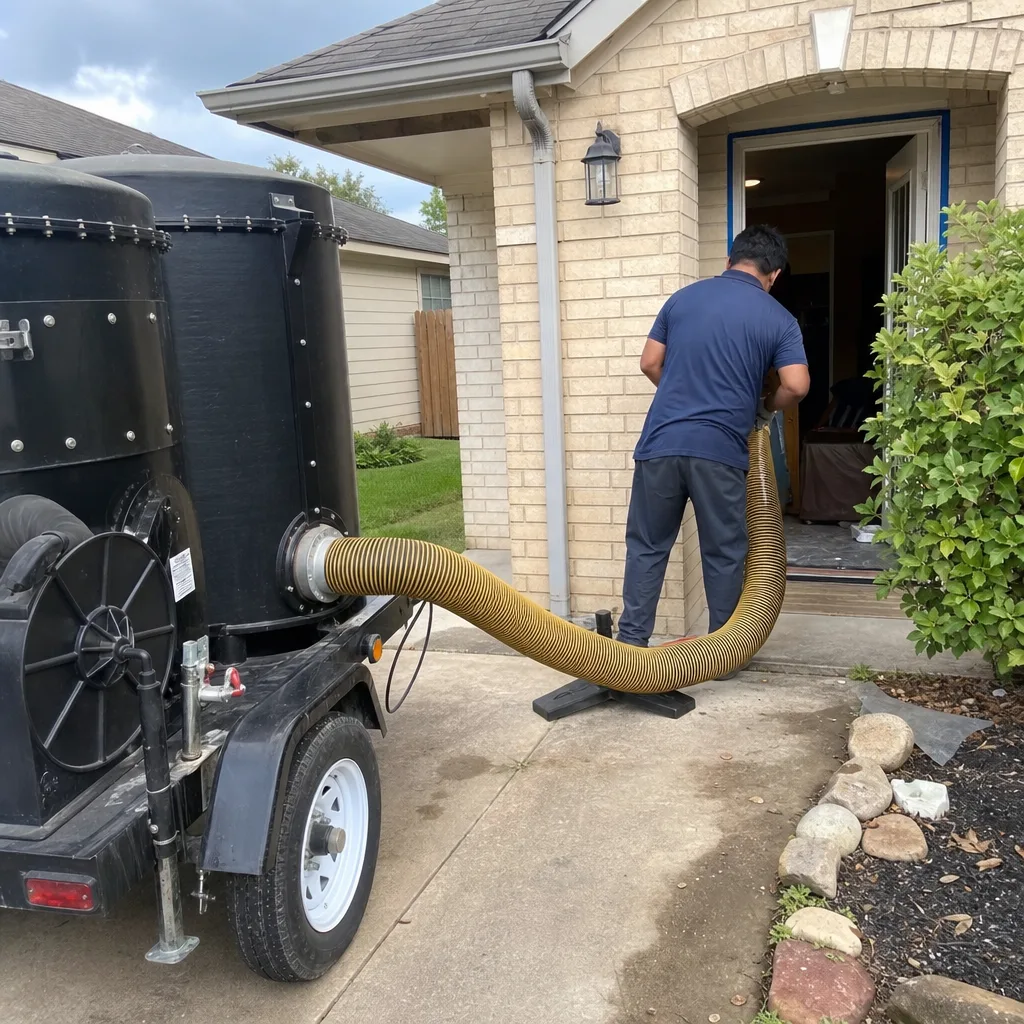
At CleanRun, we’ve delivered documented photo records on every visit since 2013. We encourage customers to compare our before-and-after images to their own baseline photos. The match should be obvious: same duct configuration, same register locations, same system data plate.
The Three Components Most Often Skipped in DIY Inspections
Homeowners who inspect their own ductwork typically focus on the visible: filters, registers, and maybe a quick attic look at the plenum. Three critical components rarely get checked, and each can harbor problems that render surface cleaning irrelevant.
The Evaporator Coil Drain Pan
The evaporator coil sits above or below your air handler and removes humidity from the air. The drain pan beneath it catches condensate and routes it to a drain line. In Pearland, this pan runs continuously from April through October. If the drain line clogs - common with algae growth in humid conditions - the pan overflows, and water backs into the ductwork or the air handler cabinet.
Inspect the drain pan by removing the air handler access panel (usually one or two screws, with power to the unit shut off at the breaker). The pan should be dry if the unit hasn’t run recently, or show a thin film of water with a clear path to the drain outlet if it has. Standing water, rust, or algae staining indicates a drainage problem that needs professional attention. Running the system with a compromised drain pan risks water damage to ceilings and walls, and the moist environment promotes microbial growth throughout the downstream ductwork.
Never pour bleach or cleaning solutions into the drain line. These corrode PVC over time and can damage the pan coating. If you suspect a clog, use a wet/dry vacuum on the exterior drain line termination, or call a technician.
The Return Plenum Interior
The return plenum is the large duct section that collects air from your home and delivers it to the air handler. Unlike supply ducts that push conditioned air out, the return side operates under negative pressure - it’s pulling air in. Any leak on the return side is worse than a supply leak of the same size, because it pulls unfiltered, unconditioned attic air directly into your system and distributes it to every room.
Homeowners rarely inspect the return plenum interior because it’s awkward to access. In most Pearland attics, the return plenum is a large rectangular duct board box near the air handler. Remove the filter and use your phone’s flashlight and camera to photograph the interior surfaces. You’re looking for:
- Gaps or separations in the duct board seams
- Collapsed or deteriorated internal insulation
- Debris accumulation that suggests air is entering from an unfiltered source
- Moisture staining or mold growth on interior surfaces
If you find any of these conditions, document with photos and schedule professional repair. Return plenum leaks are not DIY-sealable with tape from the hardware store; they require proper mastic application and often structural reinforcement.
Flexible Duct Connectors at Branch Takeoffs
Branch takeoffs are the connection points where smaller ducts split from the main plenum to serve individual rooms. In flexible duct systems, these connections use metal collars with draw bands (large zip-tie-style clamps). Over time, attic heat cycling degrades the draw bands, and vibration loosens the connection.
Inspect each takeoff by tracing the flexible duct to its origin. The draw band should be tight, with no visible gap between the collar and the duct insulation. The flexible duct should extend straight for at least 6 inches before any bend - a sharp bend at the takeoff itself stresses the connection and restricts airflow.
In Pearland’s attic environment, we’ve found draw bands that have completely failed, with the flexible duct hanging by friction alone. These leaks are silent and invisible from below, but they can waste 20 to 30 percent of conditioned air. The fix is simple for a professional with proper tools: remove the old draw band, seat the duct fully on the collar, and install a new tensioned clamp. But the diagnosis requires getting into the attic and knowing what to look for - which is why this component so often goes unaddressed.
Common Mistakes to Avoid
- Assuming a clean filter means clean ducts. The filter protects the equipment and captures a portion of circulating debris. It does not prevent duct leakage, condensation-related microbial growth, or construction debris left in the system since installation. We’ve found new homes in Pearland’s Pomona development with filters that looked pristine and duct boots packed with drywall dust from rough construction.
- Using the highest MERV filter available. A MERV 13 filter from the hardware store seems like better protection, but without verifying your system’s static pressure capacity, you may be slowly damaging the blower motor and reducing dehumidification. In Pearland’s humidity, reduced airflow means less moisture removal and a clamper indoor environment.
- Sealing visible gaps with standard duct tape. The cloth-backed tape sold as “duct tape” is poorly named - it fails quickly in attic heat and humidity. Proper duct sealing requires foil-backed tape rated for HVAC use, or better, mastic compound applied with a brush. Temporary fixes with the wrong materials create a false sense of security and often make professional repair more difficult.
- Ignoring the condensate drain until water appears inside. By the time you see a ceiling stain, the drain pan has likely been compromised for weeks or months. Include the drain line and pan in your visual inspection routine, especially before Pearland’s peak cooling season.
- Scheduling duct cleaning without inspecting the system first. Cleaning ducts with significant leaks is like washing a car with a hole in the bucket - the debris returns, and you’ve spent money without addressing the cause. Always inspect for leaks, disconnections, and drainage problems before considering cleaning.
- Trusting “before” photos without verification. The duct cleaning industry has a documented problem with stock photography passed off as customer-specific documentation. Your baseline photos protect you; demand that any professional’s images include identifiable features of your actual system.
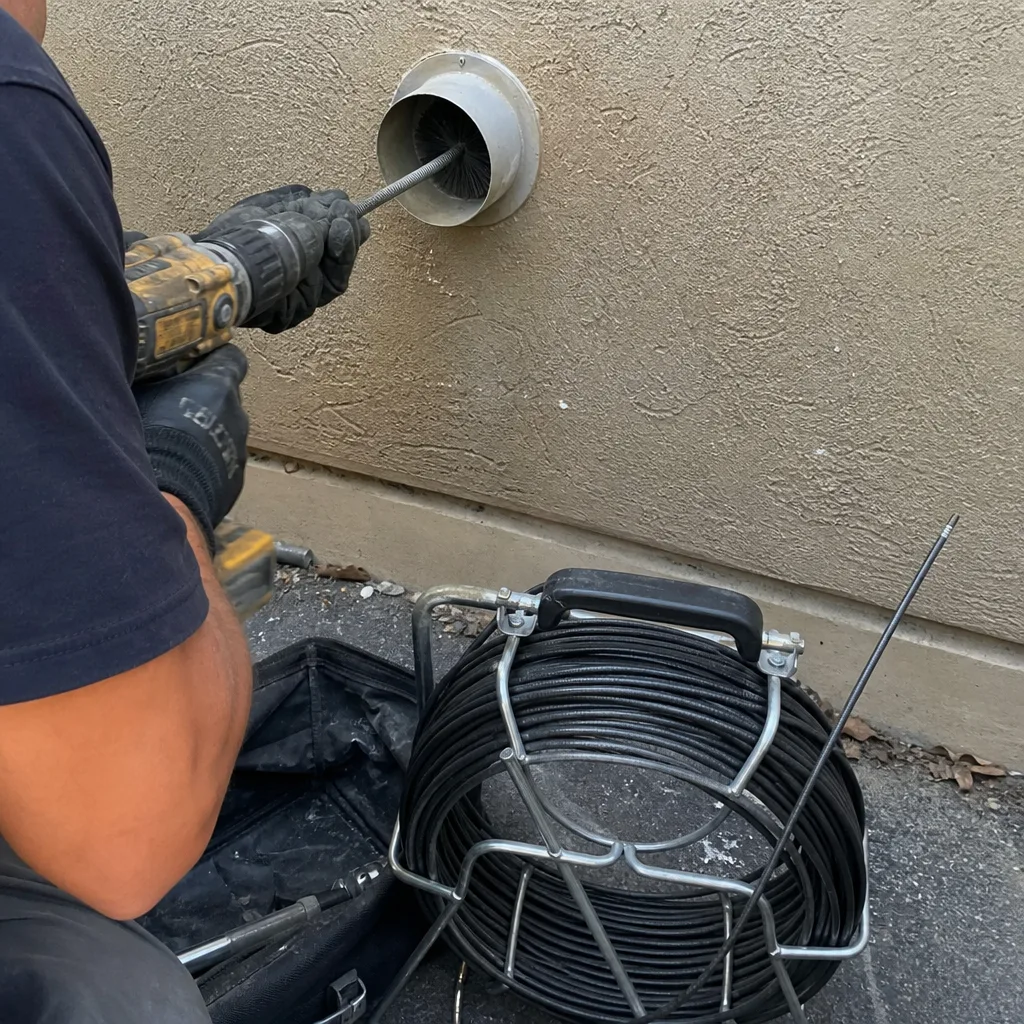
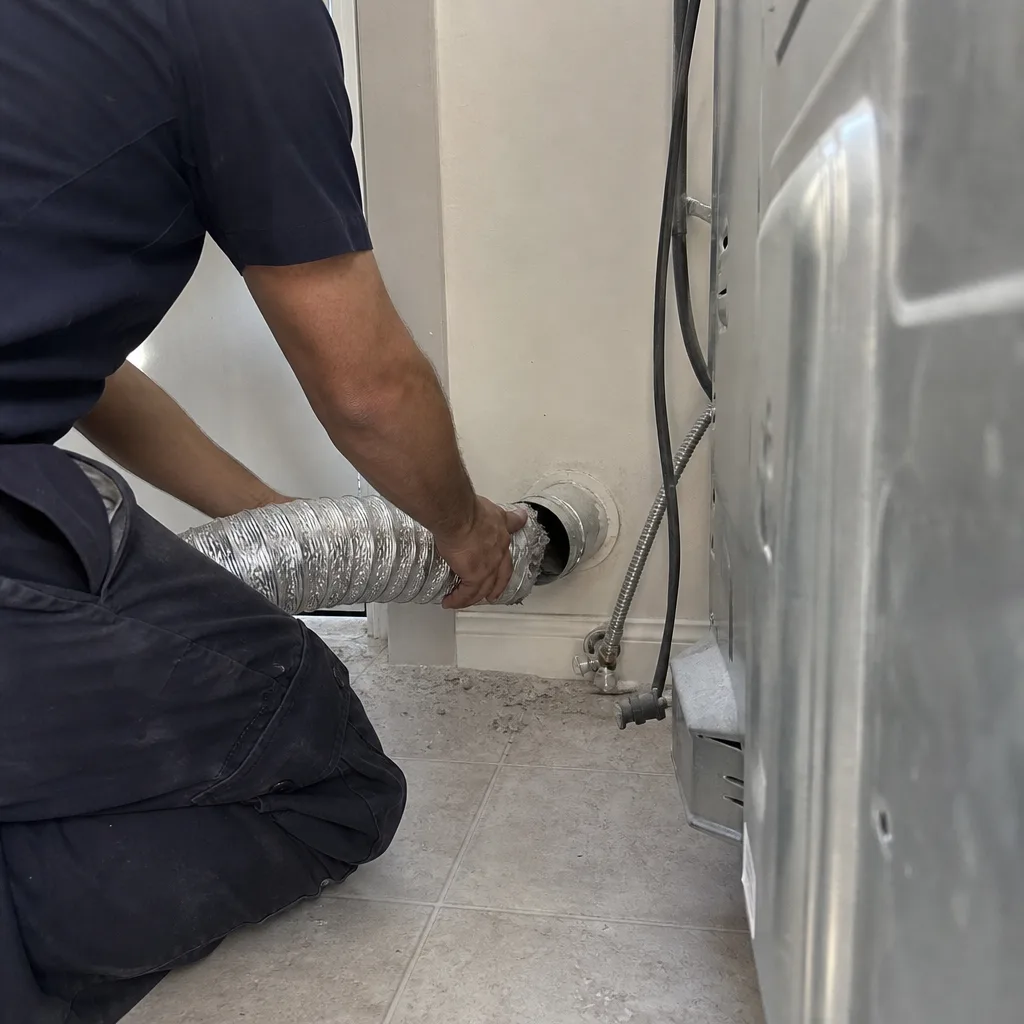
- Neglecting the dryer vent while focusing on HVAC ducts. The dryer vent is part of your home’s air management system, and lint accumulation creates fire risk and reduces dryer efficiency. In Pearland’s humidity, partially blocked vents also trap moist air against the duct walls, promoting corrosion. Dryer Vent Cleaning in Pearland should be part of a complete home air system review.
When to Call a Professional
Some conditions require equipment, training, or safety protocols beyond DIY scope. Call a licensed professional if you find: disconnected duct runs of any size; moisture or mold growth on duct interior surfaces; a collapsed or crushed main trunk line; refrigerant lines that appear damaged or corroded; or any electrical component near the air handler that shows burn marks or melted insulation. These are not maintenance items; they’re system failures that affect safety and performance.
For homeowners who want a documented assessment without commitment, CleanRun Air Duct Cleaning Pearland home offers free estimates with written pricing before any work begins - Haven Standard Clause 1. We also provide a Free Second Opinion on any written estimate from another company; bring their quote, and we’ll put our number next to it in writing. Every assessment includes a Documented Photo Record of accessible components, delivered as part of the standard job record. Call (346) 253-1822 to schedule in Pearland.
Frequently Asked Questions
Whole-system air duct cleaning in Pearland typically ranges from $400 to $800 for a standard single-system home, depending on the number of duct runs, accessibility, and whether the job includes the evaporator coil and dryer vent. Make sure any company you hire understands Air Duct Cleaning Permits, Codes & Inspections in TX: What You Need to Know. Be wary of any quote below $300 for a complete system; in our experience since 2013, these rates indicate limited scope, unverified equipment, or bait-and-switch pricing that expands once the crew is on site. CleanRun provides a written price before any work starts, with one flat price per system - no per-vent add-ons. Call (346) 253-1822 for a free written estimate.
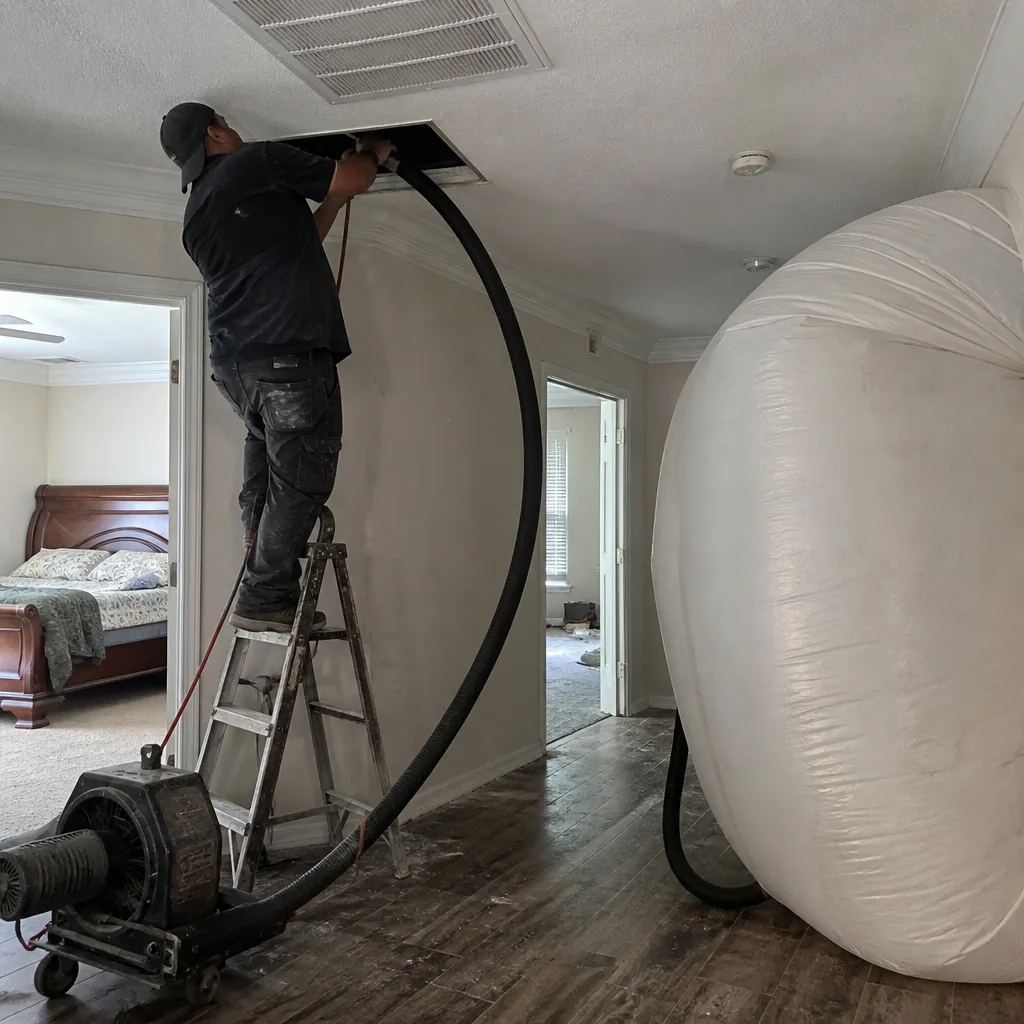
Low quotes typically rely on one of three tactics: a shop vacuum and rotary brush limited to register-level cleaning, without negative-pressure extraction or register removal; a “whole house” price that excludes the return plenum, main trunk, or evaporator coil; or a teaser rate that requires “additional services” discovered on arrival. A proper cleaning uses professional-grade negative-pressure equipment like Rotobrush or Nikro systems, requires 3 to 5 hours for a typical home, and includes access to every duct run. Ask for the specific equipment brand, the scope in writing, and whether before-and-after photos of your actual ducts are included. If any answer is vague, the price is not the real price.
Demand a documented photo record of the inside of every duct run, before and after, with identifiable features of your system visible in the images - the register pattern, duct boot shape, or a specific bend configuration. At CleanRun, this has been standard practice on every job since our first visit in 2013. The photos are delivered as part of the job record, not held hostage for a review or additional fee. If a company cannot or will not provide this, you have no verification that the work occurred as described.
There is no fixed interval that applies to all Pearland homes. A home with no pets, no recent construction, and verified tight ductwork may go 5 to 7 years without needing cleaning. A home with multiple pets, recent renovation, or ongoing duct leakage may need attention every 2 to 3 years. Use the condition-based triggers in this guide - odors, visible debris, utility trends - rather than a calendar. And address any duct leakage before cleaning; otherwise, you’re paying to clean a system that will recontaminate itself.
Yes. Pearland’s average annual relative humidity exceeds 75 percent, and summer dew points regularly reach the low to mid-70s. This means your evaporator coil and drain pan work harder and longer than in drier climates, and any duct leak that pulls in unconditioned attic air creates condensation on cool duct surfaces. The maintenance priority in Pearland is leak prevention and condensate management, not just debris removal. A sealed, dry system stays cleaner longer than a leaky system that gets vacuumed annually.
Duct cleaning addresses the distribution network - the supply and return ducts, registers, and grilles. HVAC Cleaning in Pearland includes the ductwork plus the mechanical components: evaporator coil, blower assembly, heat exchanger, and condensate system. If your system has never had the evaporator coil cleaned, or if you notice musty odors specifically when the compressor cycles on, you likely need HVAC cleaning, not just duct cleaning. The coil and blower are where moisture and debris interact to create the conditions that produce odors and reduce efficiency.
The Bottom Line
Effective duct maintenance in Pearland is condition-based, not calendar-based. Inspect what you can see and photograph what you find. Match your filter MERV rating to your system’s verified capacity. Monitor for triggers - odors, debris, bills, uneven cooling - and act when they appear, not when a reminder email says so. Address leaks and drainage before considering cleaning, and demand documentation from any professional you hire. The homeowners who get the best long-term performance from their duct systems are those who treat maintenance as evidence gathering, not date checking.
Written by Tomas Reyes, Owner at CleanRun Air Duct Cleaning Pearland, serving Pearland since 2013.