
Last updated September 23, 2026
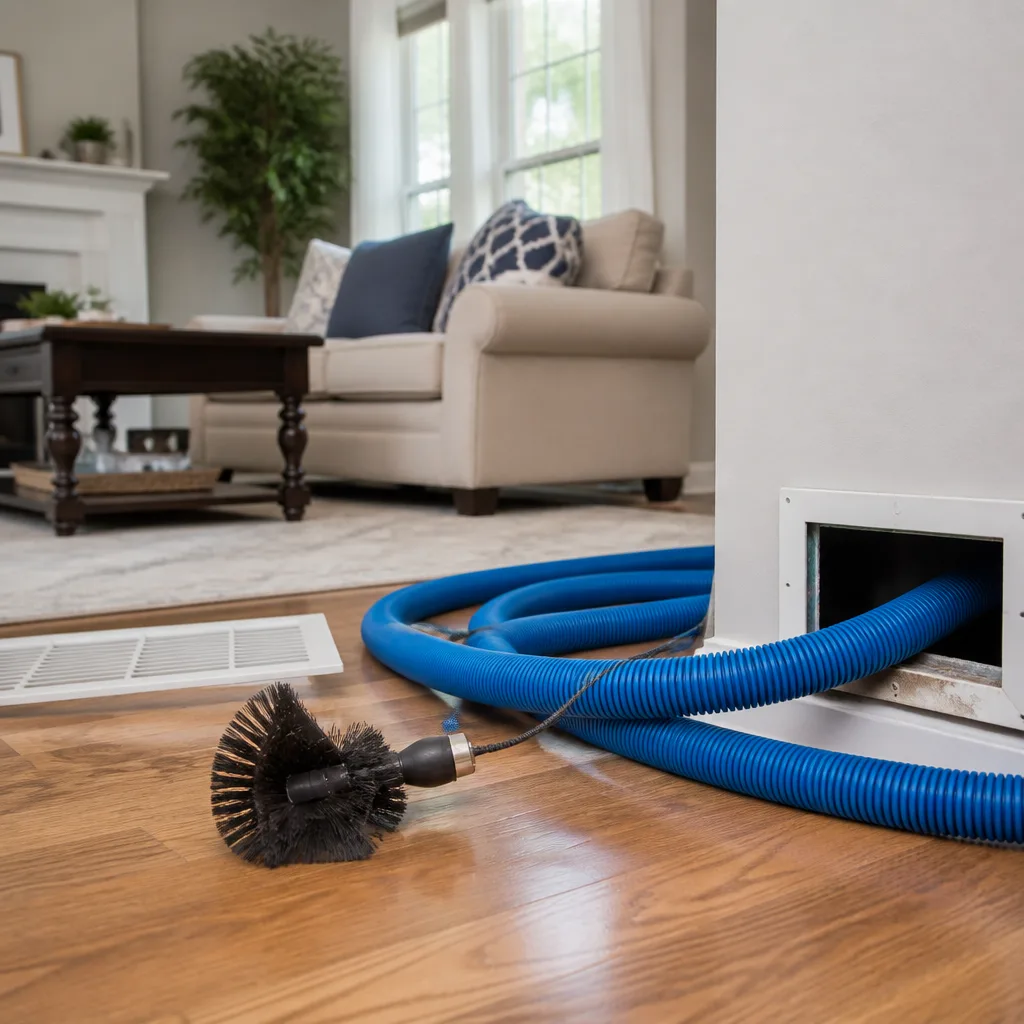
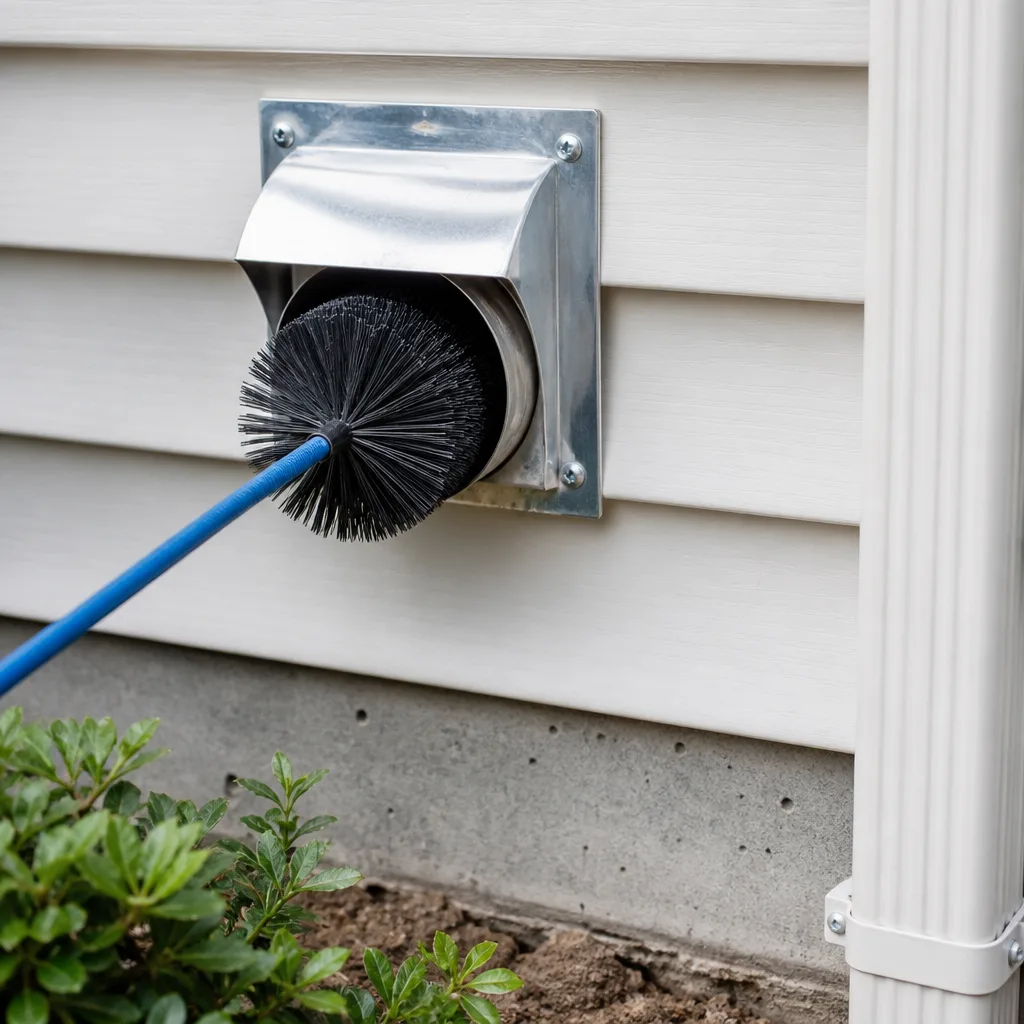
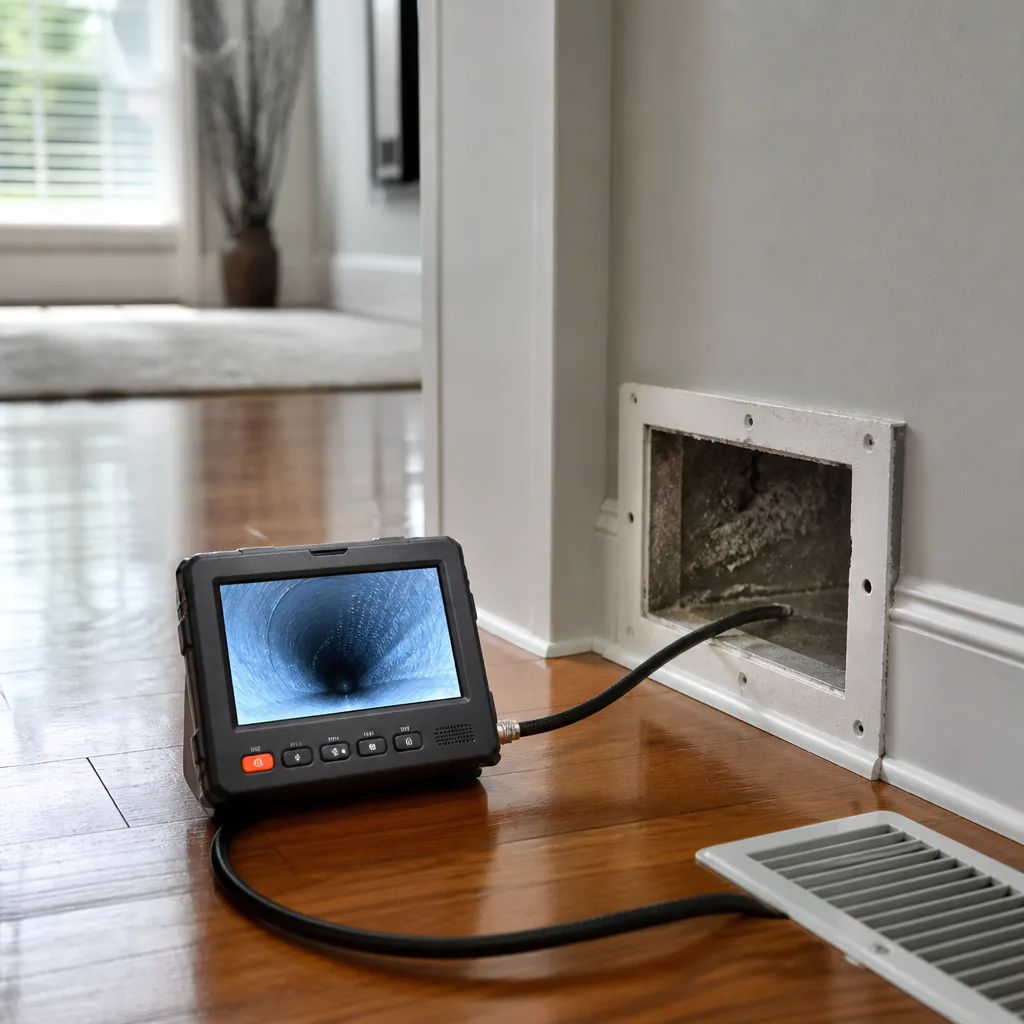
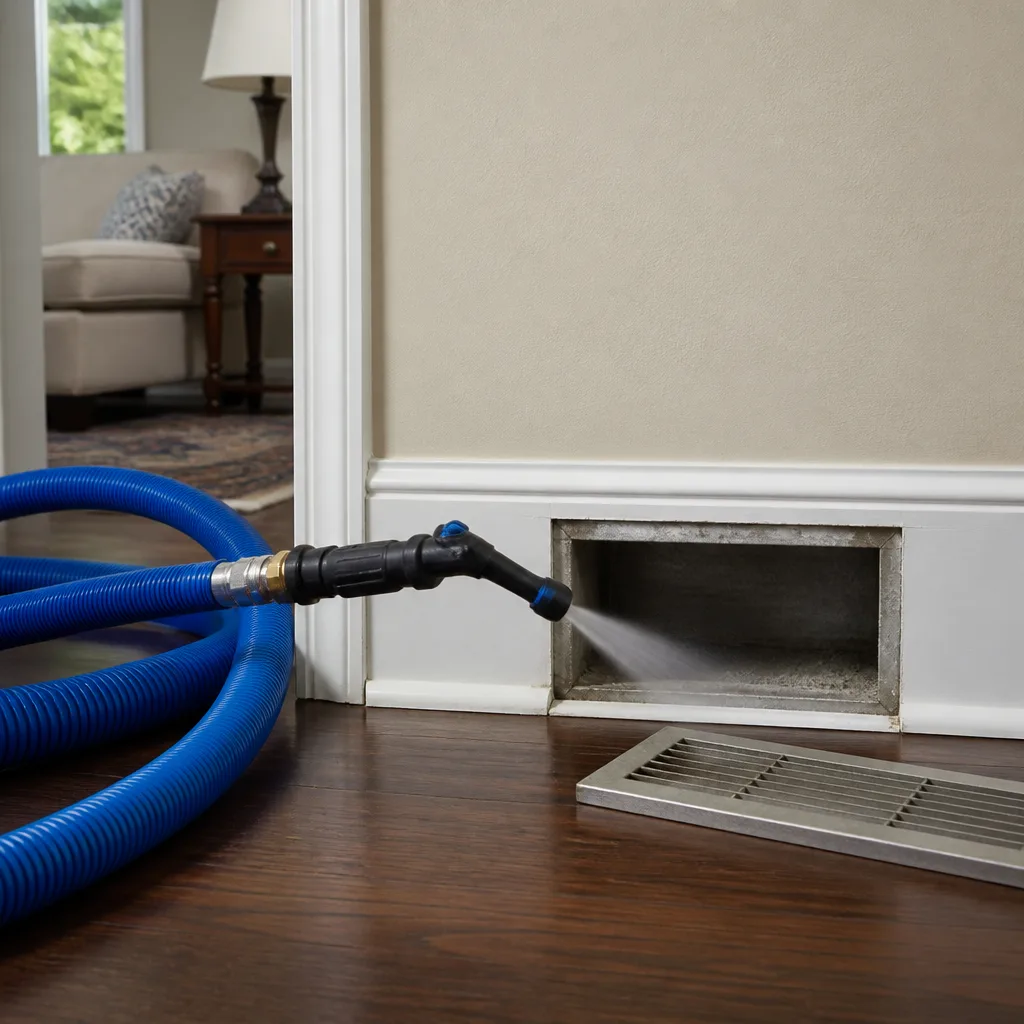
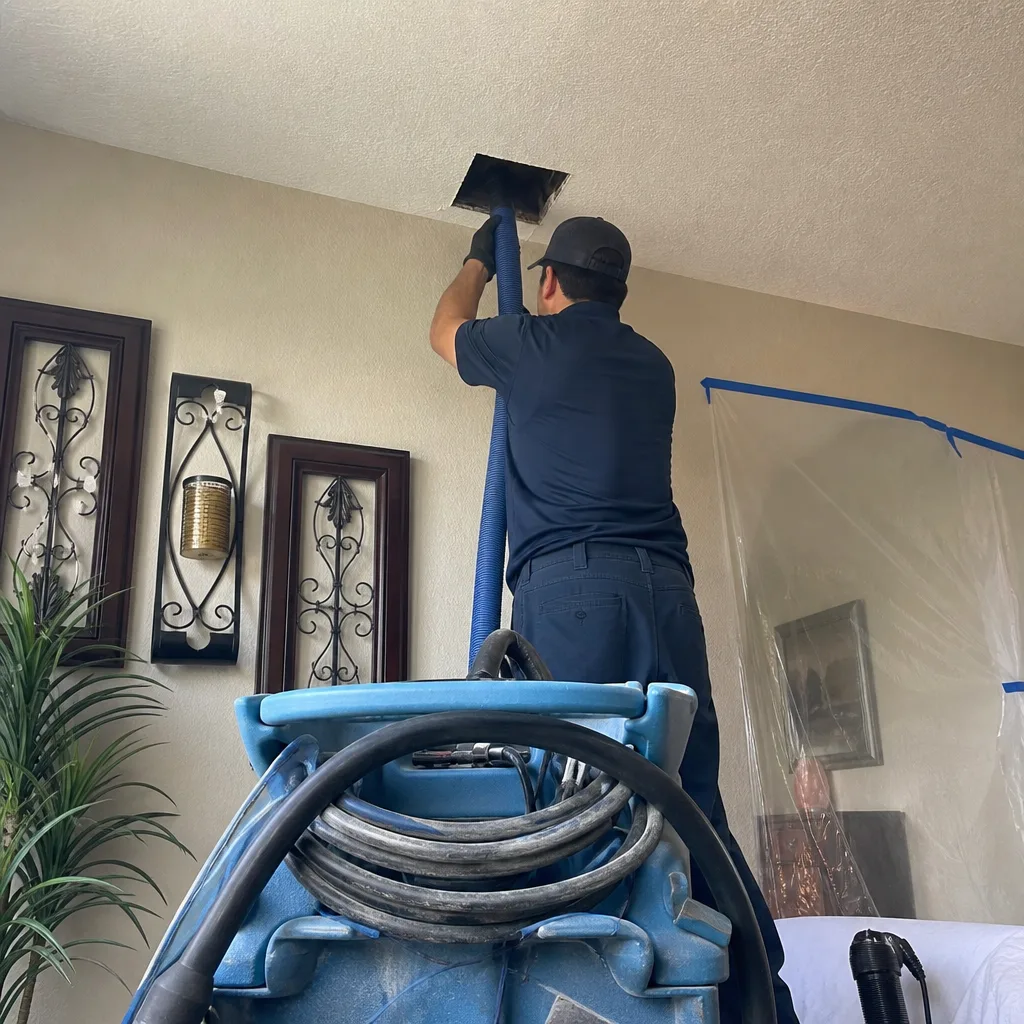
Whole-system duct and dryer vent check with before-and-after photos - you see exactly what came out of your vents
That "$99 whole-house special" is a bait ad - the real number appears once they are in your hallway, or the "clean" is a shop-vac at the register. We photograph the inside of your ducts before and after instead.
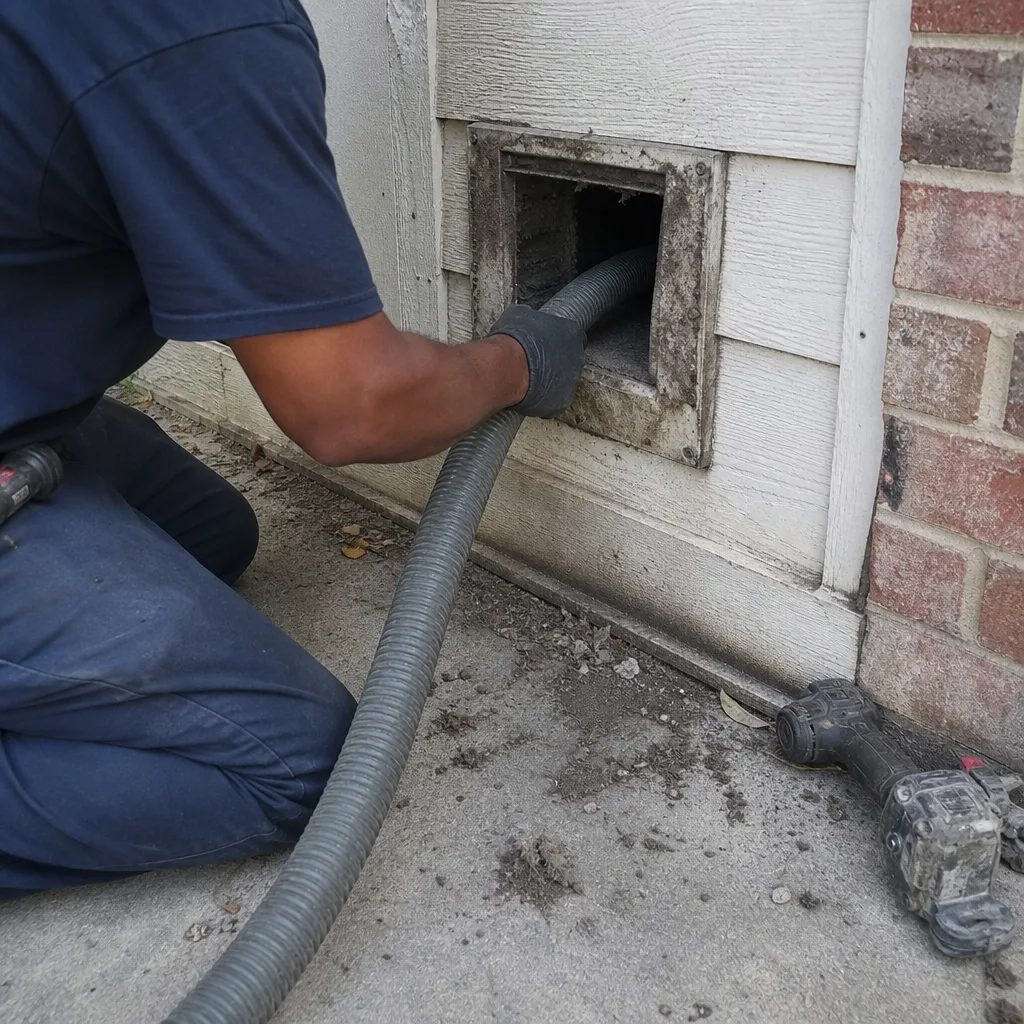 Before
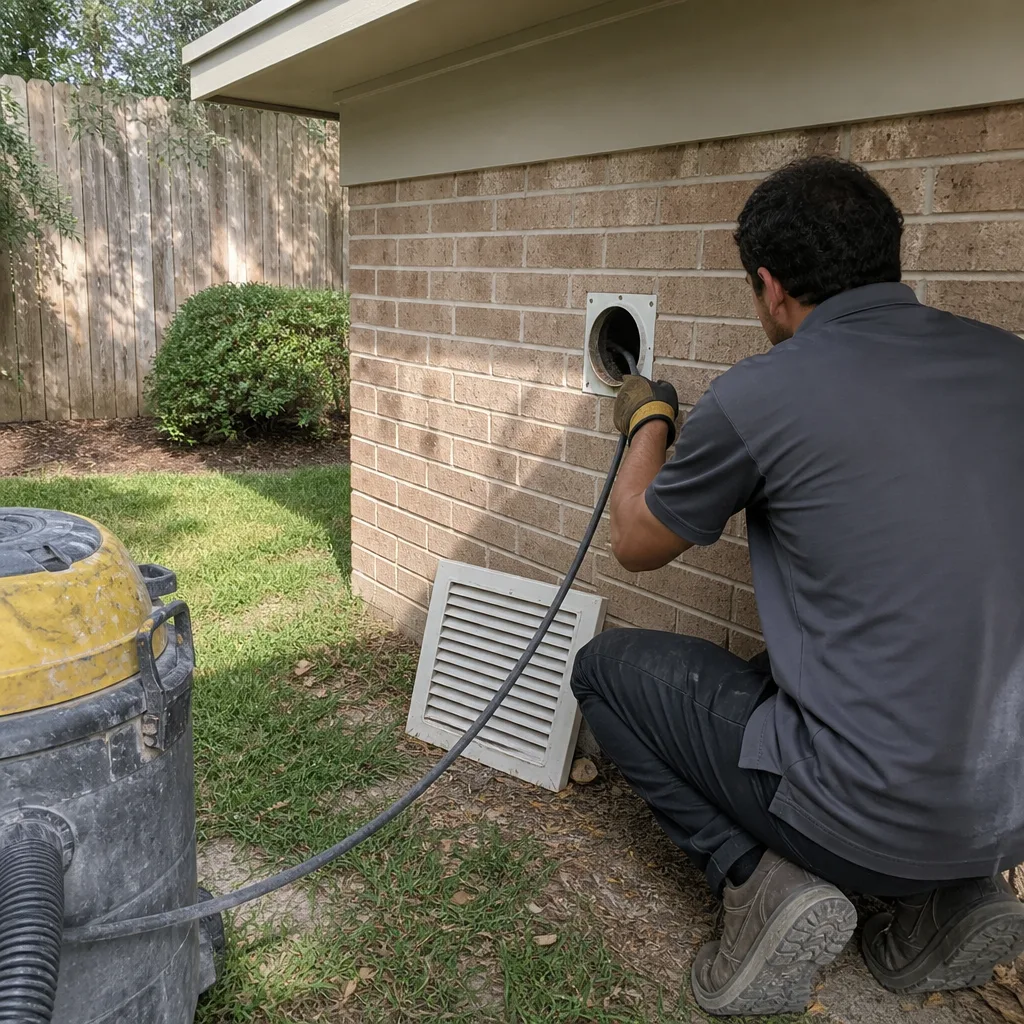 After
After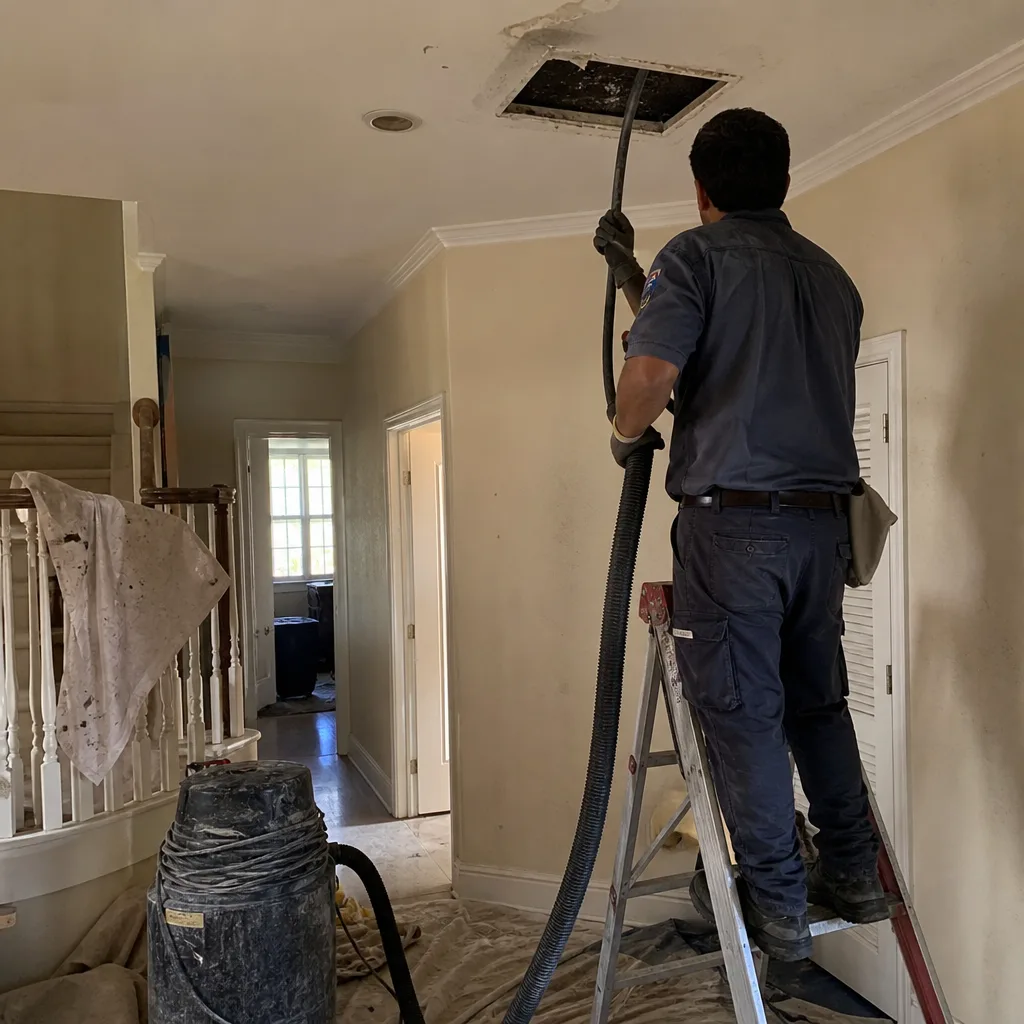 Before
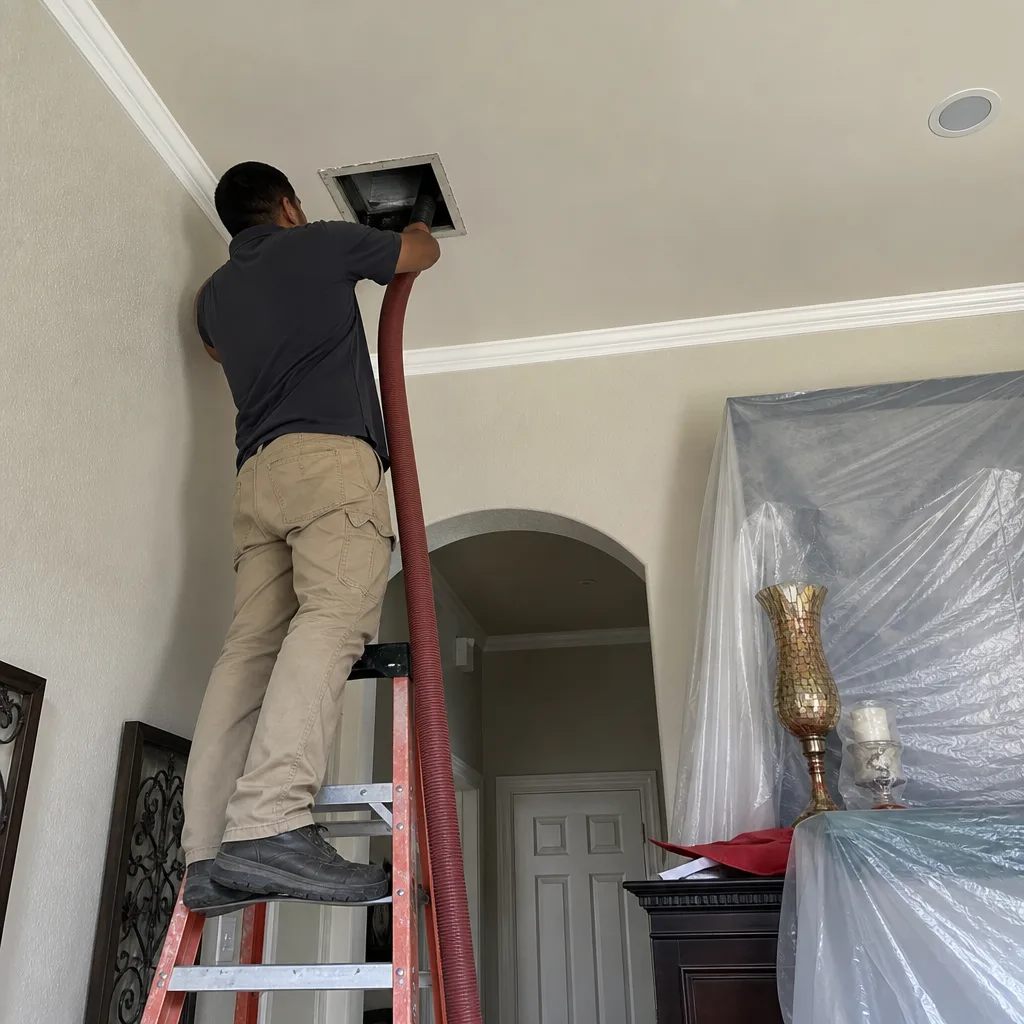 After
After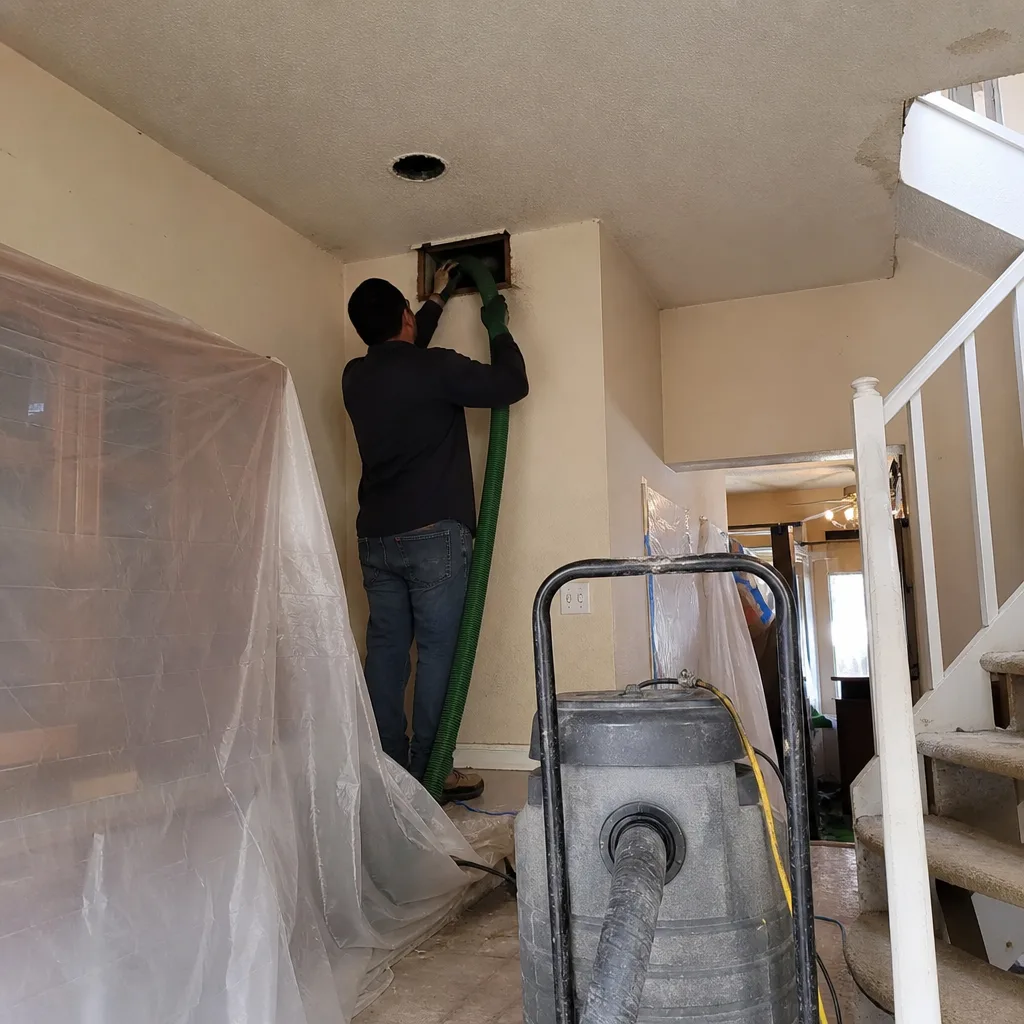 Before
 After
AfterAir Duct Cleaning Warning Signs: A Pearland Homeowner’s Reference Guide
Most homeowners in Pearland call us after they’ve already been living with a problem for months. The musty odor that shows up every time the AC cycles on. The thin film of dust that reappears on furniture within 48 hours of wiping it down. The utility bill that climbed $40 last summer with no change in thermostat setting. Here’s what surprised us after 52,000 homes: by the time you notice these symptoms, the underlying cause has usually been developing for 12 to 36 months. This guide maps each warning sign to its physical source inside your duct system, so you can describe what you found rather than just reporting a feeling. For more guides & resources, visit our blog.
Quick Answer
The most reliable warning signs that your Pearland home needs Air Duct Cleaning services are: visible debris accumulation at supply registers that returns within two weeks of cleaning, a persistent musty or chemical odor that intensifies when the HVAC system cycles on, and uneven airflow between rooms that cannot be explained by closed dampers. These symptoms indicate contamination inside the duct runs themselves, not surface-level dust or temporary filter issues.
Table of Contents
- Symptom-to-Cause Mapping: What Each Warning Sign Actually Means
- Dirty Ducts vs. Poorly Balanced Systems: How to Tell the Difference
- What Visible Debris at Supply Registers Tells You
- Odor Decoded: Biological Growth, Construction Debris, and Pest Activity
- Pest-Specific Evidence in Ductwork and Insulation
- How to Document Warning Signs With Your Phone Camera
- Common Mistakes to Avoid
- When to Call a Professional
- Frequently Asked Questions
- The Bottom Line
BeforeAfterSymptom-to-Cause Mapping: What Each Warning Sign Actually Means
Homeowners often describe symptoms in emotional terms: “the air feels stale,” “something smells off,” “the house won’t cool evenly.” These descriptions are accurate to the experience but useless for diagnosis. The following table connects what you notice to where the problem likely lives in your system.
| What You Notice | Physical Cause | Location in System | Required Response |
|---|---|---|---|
| Musty odor when AC cycles on | Biological growth on evaporator coil or in drain pan; standing water in plenum | Air handler / coil compartment, not duct runs | Coil cleaning and pan treatment; duct cleaning alone will not resolve |
| Dust film on furniture within 48 hours | Leaky return ductwork pulling attic debris; filter bypass; missing filter rack seal | Return plenum, filter slot, or return trunk in attic | Duct sealing plus cleaning; filter system inspection |
| Chemical or “hot plastic” smell | Overheated blower motor, failing capacitor, or degraded flex duct liner | Air handler or supply trunk | HVAC repair first; cleaning is secondary |
| Uneven temperatures room-to-room | Undersized duct runs, closed or stuck dampers, or excessive duct leakage | Distribution system design or integrity | Balancing, sealing, or modification; cleaning alone insufficient |
| Visible debris at supply registers | Upstream contamination in duct run, or register dust from construction/renovation | Specific duct run or register boot | Camera inspection to locate source; targeted or whole-system cleaning |
| Scratching or scurrying sounds | Rodent activity in ductwork or attic insulation intrusion | Duct runs, especially flex duct in attic | Pest remediation first; then duct repair/replacement and cleaning |
In Pearland’s climate, we see the musty odor pattern more frequently than in drier markets. The Gulf Coast humidity keeps evaporator coils wet for 8 to 10 months annually, and a coil that was not properly treated during installation or maintenance becomes a growth surface within 2 to 3 years. We’ve inspected homes in Shadow Creek Ranch where the homeowner had paid for duct cleaning twice in 18 months for a musty odor that returned each time, a situation we detail in The Complete Guide to Air Duct Cleaning in Pearland. The camera showed clean duct runs and a coil caked with biological material. The ducts were not the problem.
The dust film pattern is equally common in newer Pearland construction. Homes built between 2015 and 2022 in neighborhoods like Pomona and Canterbury often have return ductwork in the attic with multiple connection points that were sealed with tape rather than mastic. Tape degrades in attic heat within 3 to 5 years. The return side operates under negative pressure, so every gap pulls hot, dusty attic air into the system. You can change your filter monthly and still see dust accumulation because the contamination enters downstream of the filter.
Dirty Ducts vs. Poorly Balanced Systems: How to Tell the Difference
This distinction costs homeowners thousands in unnecessary cleaning or, conversely, leaves them frustrated after cleaning that did not solve their comfort complaint. Both problems produce uneven temperatures. Only one is solved by cleaning.
A dirty duct system restricts airflow through accumulation. The restriction is gradual and often affects the entire system somewhat evenly, though longer runs with more elbows show more restriction. The key indicator: rooms that were once comfortable have slowly become less so, and the problem affects heating and cooling seasons similarly.
A poorly balanced or undersized system has never worked correctly. The homeowner can usually identify when the problem started: “Since we moved in,” or “After the addition was finished.” The master bedroom in a two-story home with a single zone is a classic example. The duct run is too small for the heat load, or the static pressure is too high because the blower was not matched to the ductwork. Cleaning these ducts improves nothing because the ducts are not dirty enough to matter.
Here’s how to tell before calling anyone:
- Check every supply register with the system running. Hold a tissue near the face. Weak airflow at specific registers suggests restriction or undersizing. Uniformly weak airflow suggests a blower or filter issue.
- Remove a supply register and photograph the duct boot with your phone’s flash. Heavy debris within 6 inches of the register face indicates upstream contamination. A clean boot with weak airflow indicates a design or balance problem.
- Compare upstairs and downstairs during peak load. In Pearland’s August heat, a properly sized and balanced two-story system should maintain within 3 degrees between floors. A 5 to 8 degree split that worsens through the afternoon indicates capacity or distribution issues, not duct contamination.
- Review your utility bills against degree-day data. The National Weather Service publishes cooling degree days for the Houston-Galveston region. If your consumption per degree day has been stable but comfort has declined, the ducts are likely dirty. If consumption has risen disproportionately, you may have leakage or equipment degradation.
We’ve documented this distinction in hundreds of Pearland homes. In Silverlake, a 2017 build, we found a homeowner who had received three quotes for duct cleaning to address a hot upstairs bedroom. The camera showed nearly clean ducts. The problem was a 6-inch supply run to a 180-square-foot room with west-facing windows. The correct fix was duct modification, not cleaning. Haven Standard Clause 1 requires us to deliver a written price before work starts, but it also requires us to describe what we found accurately, even when the finding does not lead to a sale.
What Visible Debris at Supply Registers Tells You
The debris you can see at your supply registers is not necessarily coming from inside your ducts. This single observation changes how you should respond and what you should expect from a contractor.
Register dust accumulates on the grille face and visible boot throat. It is usually gray, uniform, and easily wiped away. This dust comes from the room itself: skin cells, textile fibers, cooking aerosols, and outdoor particles that enter through windows and doors. The HVAC system pulls this air in through the return, filters some portion, and sends the remainder back through the supply. Some fraction deposits on the register face because the air velocity drops as it enters the room, allowing particles to settle. Register dust is normal. It is not a warning sign.
Upstream debris appears deeper in the duct boot or falls out when you remove the register. It is often darker, may contain construction materials (wood chips, drywall fragments, insulation flecks), and reaccumulates quickly after cleaning. This debris originated during construction or renovation, or it entered through a breach in the ductwork. In Pearland’s rapid-growth market, homes built during the 2015 to 2022 construction surge often have significant construction debris remaining in duct runs. We’ve photographed 2-inch piles of drywall compound at the first elbow in systems that had never been cleaned.
Interior duct fallout is debris that has adhered to duct walls and is now releasing in sheets or flakes. This occurs when humidity cycles cause condensation on metal duct surfaces, cementing dust into a mat that later dries and cracks. The fallout is often brown or black, may have a fibrous texture, and can carry odor. This is the condition that professional negative-pressure extraction with agitation is designed to address.
To distinguish these conditions yourself:
- Clean the register face thoroughly with a damp cloth and note the date.
- Remove the register and photograph the boot with flash.
- Reinstall and check again in 14 days.
- If the face is dusty but the boot is clean, you have register dust.
- If the boot shows new debris, note the color and texture for your contractor.
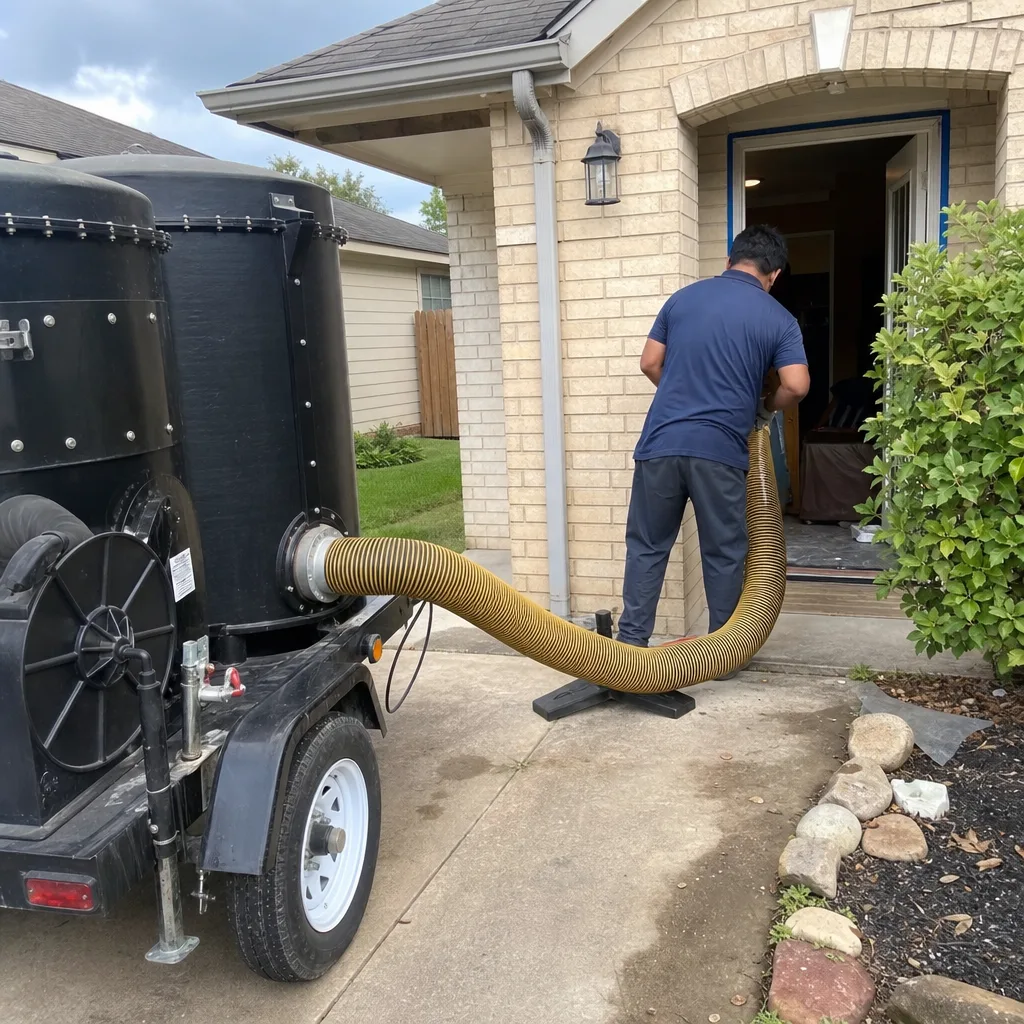
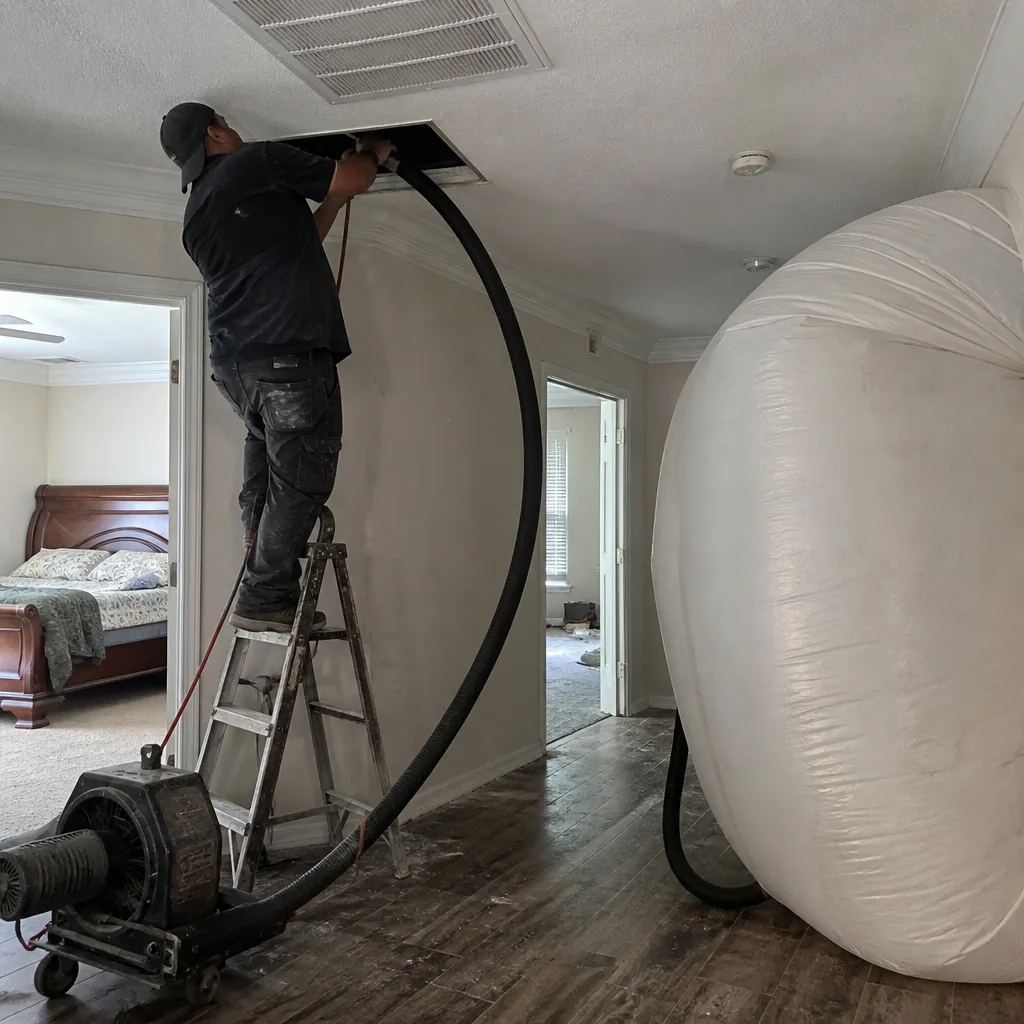
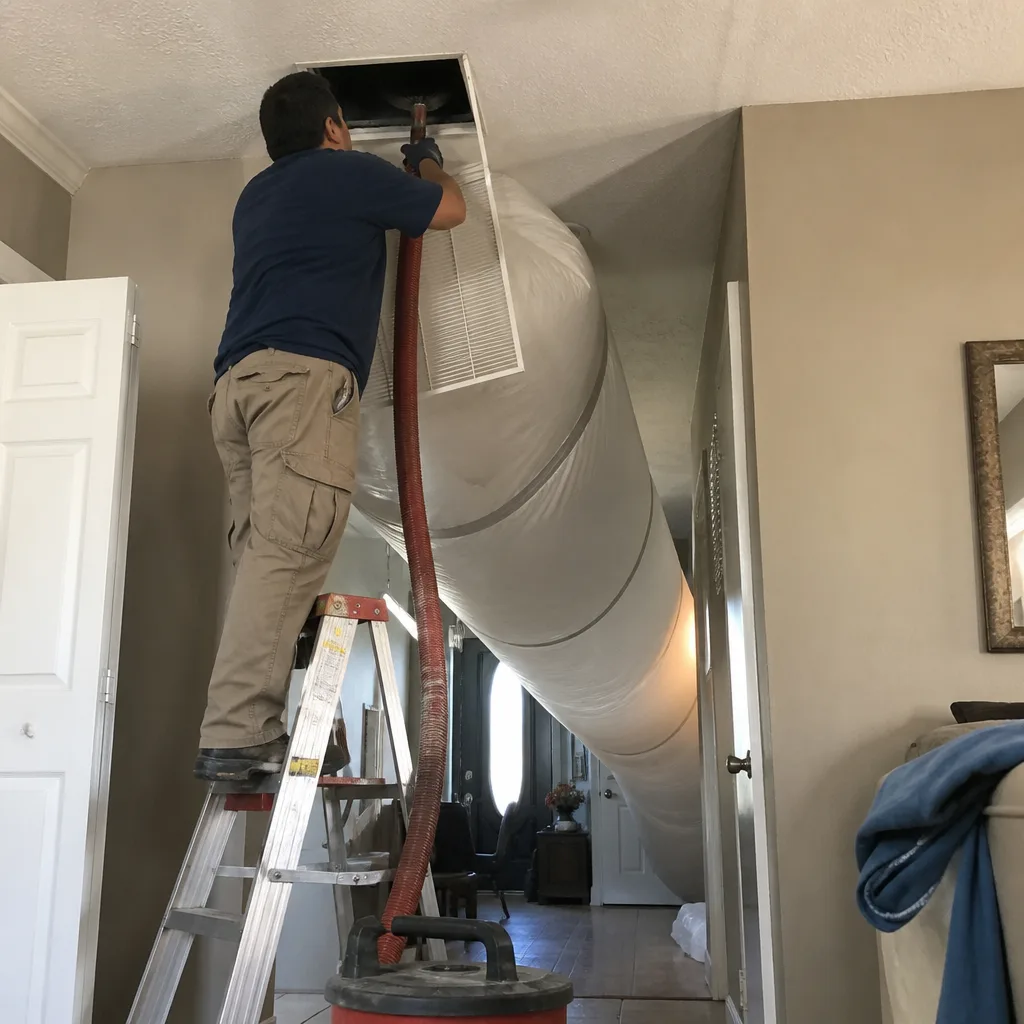
Our crews use Rotobrush and Nikro equipment with camera systems that can identify which condition exists in each duct run. The photo record we deliver shows you what we found and what we removed, run by run.
Odor Decoded: Biological Growth, Construction Debris, and Pest Activity
Odors are the most misdiagnosed symptom in residential HVAC. Homeowners report “a smell from the vents” and receive quotes for duct cleaning. The correct response depends entirely on the odor’s character and when it occurs.
Biological growth odor is musty, earthy, or resembles wet cardboard. It intensifies within 30 to 90 seconds of the blower starting, then may fade as the system runs. This pattern occurs because the air passing over the contaminated coil or drain pan volatilizes microbial compounds, then the odor becomes less noticeable as olfactory adaptation sets in. In Pearland’s humid climate, we see this most often in systems where the coil has not been cleaned in 3+ years, or where the drain pan has a slight slope issue causing standing water.
The critical point: this odor is not coming from the duct runs. Cleaning the ducts without addressing the coil produces the same odor within 30 days. We’ve verified this repeatedly. In a 2019 home in Lakes of Highland Glen, the homeowner had paid for two duct cleanings elsewhere for a musty odor. Our camera showed clean ducts and a coil with visible biological material. The correct scope was coil treatment and pan modification, not duct cleaning. We documented the finding, showed the photo, and declined the duct cleaning sale. Haven Standard Clause 1: written price for what is actually needed.
Construction debris odor is sharper, sometimes sulfurous or like fresh drywall. It may be constant or vary with humidity. This occurs when drywall compound, wood preservatives, or other construction materials remain in ductwork and off-gas slowly. The odor is often worse in newer homes during the first two years, then may fade as volatile compounds dissipate. If the odor persists beyond three years, the material is likely trapped in a low-velocity section of ductwork and requires physical removal.
Pest activity odor is distinct: ammonia-like for rodent urine, or a sweet-decomposing note if there is carcass material. This odor worsens with temperature and humidity and does not fade with system runtime. It requires pest remediation before any cleaning or repair work begins. We will not clean ducts with active pest contamination until a licensed pest operator has addressed the source and verified clearance.
Chemical or electrical odor requires immediate HVAC technician inspection, not duct cleaning. Overheated motors, failing capacitors, and degraded flex duct liners all produce odors that homeowners describe as “from the vents” because the blower distributes them. These are safety hazards. If you smell hot plastic, burning, or acrid chemicals, shut the system off and call an HVAC technician.
Pest-Specific Evidence in Ductwork and Insulation
Rodent activity in residential ductwork falls into three categories, and each requires a different response. Misidentifying the category leads to incomplete remediation and recurring problems.
Duct run intrusion occurs when rodents enter the ductwork itself, usually through a damaged or missing register boot in an unconditioned space, or through a gap where flex duct connects to a metal trunk. Evidence includes: droppings inside the duct boot or visible through a removed register; gnaw marks on metal or plastic duct surfaces; nesting material (shredded insulation, paper, fabric) packed into low-velocity sections; and a urine odor that intensifies when the system runs. The required response is: pest remediation to eliminate active infestation; repair or replacement of damaged duct sections (flex duct with rodent contamination is not cleanable to a sanitary standard); then professional cleaning of remaining ductwork with antimicrobial treatment.
Attic insulation intrusion is more common in Pearland’s suburban developments, where homes have extensive attic ductwork and adjacent insulation. Rodents travel through insulation, occasionally crossing duct surfaces, but do not enter the duct interior. Evidence includes: droppings on duct exterior surfaces; insulation displacement on duct wrapping; and occasional odor transmission through thin duct walls or gaps. The duct interior may be clean. The required response is: pest remediation; inspection of duct sealing at all joints; and cleaning only if camera inspection shows interior contamination. We have documented cases in Shadow Creek Ranch where homeowners were quoted for full duct replacement based on exterior droppings, when camera inspection showed clean interiors and intact seals.
Nest material in air handler or plenum occurs when rodents access the return side upstream of the filter, or when the air handler cabinet itself has entry gaps. This is the most serious contamination type because nest material is drawn directly into the blower and distributed. Evidence includes: debris at the filter face that is not dust (shredded material, seeds, droppings); blower wheel imbalance or noise; and sudden, severe filter loading. The required response is: pest remediation; air handler disassembly and cleaning; blower wheel replacement if balance is compromised; and full duct cleaning with documented photo verification.
Our crews are trained to distinguish these conditions during the initial inspection. The photo record we deliver includes exterior duct images when pest evidence is present, so you can see what we saw and verify that the scope matches the finding.
How to Document Warning Signs With Your Phone Camera
The photos homeowners send us before a visit range from diagnostically useless to immediately actionable. The difference is not equipment; it is framing and context. Here’s how to produce images that actually help a contractor understand what you are seeing.
- Photograph the register face with the system off. Include the surrounding wall or ceiling surface for scale. Flash on. This establishes baseline debris accumulation.
- Photograph the duct boot with the register removed. Hold your phone parallel to the duct opening, not angled down into it. Flash on. Capture as far into the boot as lighting allows. We need to see whether debris is surface-level or extends deeper.
- Photograph the filter with the access panel open. Include the filter rack and any visible gaps around the filter edges. Filter bypass is a common and easily missed problem.
- Photograph the air handler or furnace if accessible. Wide shot showing the entire cabinet, then close-ups of any visible moisture, rust, or debris at the base. Include the model and serial number plate if you can read it; this tells us capacity and age.
- Photograph your thermostat display showing current temperature, set point, and system status during a comfort complaint. Timestamped evidence of temperature split is more reliable than memory.
- Photograph utility bills for the most recent 12 months, or screenshot your utility account graph. We use this to correlate consumption patterns with comfort complaints.
Send these images with a brief note describing: when the problem started; whether it is seasonal or constant; what you have already tried; and whether any other contractor has inspected the system and what they recommended. This information allows us to arrive with appropriate equipment and to give you a written price that reflects what we are likely to find, not a low estimate that changes after inspection.
In Pearland’s competitive market, we offer a Free Second Opinion on any written estimate. Bring another contractor’s quote and your own documentation. We’ll put our finding and our written price next to theirs.
Common Mistakes to Avoid
- Assuming that dust on furniture means dirty ducts. In Pearland’s new construction, the more common cause is return duct leakage pulling attic debris. Cleaning the ducts without sealing the returns wastes money and recreates the problem.
- Treating musty odor with duct cleaning alone. The evaporator coil is the source in roughly 60% of cases we inspect. A contractor who does not inspect the coil before quoting duct cleaning is not following a diagnostic process.
- Accepting a per-vent price or phone estimate without inspection. You cannot price duct cleaning accurately without knowing duct configuration, contamination type, and access conditions. CleanRun does not provide prices by phone; we inspect and deliver a written scope with a single system price.
- Ignoring pest evidence until after cleaning. Active pest contamination requires remediation first. Cleaning contaminated ducts without addressing the source spreads biological material and violates basic sanitation protocol.
- Replacing flex duct based on exterior droppings alone. Camera inspection of the interior is required. We’ve saved Pearland homeowners thousands by documenting clean interiors and recommending targeted sealing instead of full replacement.
- Expecting cleaning to solve comfort problems caused by design or balance issues. An undersized duct run to a west-facing room will still be hot after cleaning. The correct fix is modification, not repeated cleaning.
- Failing to request documentation of results. Without before-and-after photos of each duct run, you cannot verify that work was performed. CleanRun includes this documentation as a standard deliverable on every job, a practice we established in 2013.
When to Call a Professional
Call for inspection when: debris at supply registers returns within two weeks of cleaning; any odor intensifies with system operation and persists beyond 48 hours; you observe pest evidence of any category; or room-to-room temperature differences exceed 4 degrees with all dampers open and filters clean. Also call if your home was built between 2015 and 2022 and has never had duct inspection, construction debris in Pearland’s rapid-growth market is common and often remains undisturbed for years.
CleanRun Air Duct Cleaning Pearland offers free estimates in Pearland. Our inspection includes camera documentation of accessible duct runs, coil and drain pan assessment, and a written price before any work begins. Call (346) 253-1822 to schedule. All technicians are background-checked, uniformed, and identified by name before arrival under Haven Standard Clause 3: Verified Crews.
Frequently Asked Questions
Whole-system air duct cleaning in Pearland typically ranges from $450 to $850 for a single HVAC system in a home between 1,800 and 3,500 square feet, depending on duct configuration, contamination level, and accessibility. Homes with multiple systems, extensive flex duct in attics, or pest contamination requiring remediation first will fall above this range. CleanRun delivers a written price before any work starts under Haven Standard Clause 1; we do not provide phone estimates or per-vent pricing. Call (346) 253-1822 for a free inspection and exact quote.
The $79 to $149 coupon offers typically cover a brief vacuuming of accessible register boots, not full-system cleaning with negative-pressure extraction and agitation. The equipment difference is substantial: a shop vacuum and brush versus professional systems from Nikro, Rotobrush, or Abatement Technologies with HEPA containment. The cheaper quote often becomes a larger invoice once the technician is in your home and “discovers” additional contamination. CleanRun’s written price covers the complete scope agreed before work starts; the number does not change after inspection.
Request before-and-after photos of every duct run, delivered as part of the job record. CleanRun has photographed every duct run on every job since 2013. The photo record shows the interior condition before work begins and after completion, with timestamps. Without this documentation, you have only the contractor’s word. With it, you can verify that agitation and extraction reached the full duct length, not just the accessible boot area.
For most Pearland homes, every 5 to 7 years with standard fiberglass or pleated filter use and no major contamination events. Homes with pets that shed heavily, recent renovation without duct protection, or known construction debris may need earlier cleaning. More frequent cleaning is not harmful but is usually unnecessary. The better indicator is documented condition: camera inspection every 3 to 4 years shows whether accumulation is progressing faster than expected.
Surface cleaning of register faces and boots is reasonable homeowner maintenance. Interior duct cleaning requires professional negative-pressure equipment to prevent contamination release into living space and to protect the HVAC system from damage. The rotating brushes and compressed air tools used in professional cleaning can damage flex duct or dislodge connections if misapplied. We do not recommend DIY interior duct cleaning; the risk of system damage and incomplete contamination removal exceeds any cost savings, as explained in DIY vs Professional Air Duct Cleaning: The Pearland Homeowner’s Decision Guide.
Pearland’s Gulf Coast humidity increases the risk of biological growth on coils and in drain pans, which can produce odors mistaken for duct contamination. The humidity itself does not significantly increase particulate accumulation in duct runs. However, humidity cycling in metal ducts can cement dust into adhered mats that later release as fallout, a pattern we see more frequently here than in drier climates. This condition responds well to professional agitation and extraction but may redevelop faster if the home’s humidity control is poor.
The Bottom Line
The warning signs that matter are those that map to a physical cause you can document: debris that reaccumulates after cleaning, odors that intensify with system operation, temperature splits that exceed design, and pest evidence that requires remediation before cleaning. Surface dust, transient odors, and minor register accumulation are normal and do not indicate duct contamination. Before paying for any duct cleaning, require a camera inspection, a written scope that identifies the contamination source, and a single system price that does not change after work begins. The documentation you receive, photos, written scope, written warranty, is the only evidence that the work was necessary and performed correctly.
Written by Tomas Reyes, Owner at CleanRun Air Duct Cleaning Pearland, serving Pearland since 2013.