
Last updated September 23, 2026
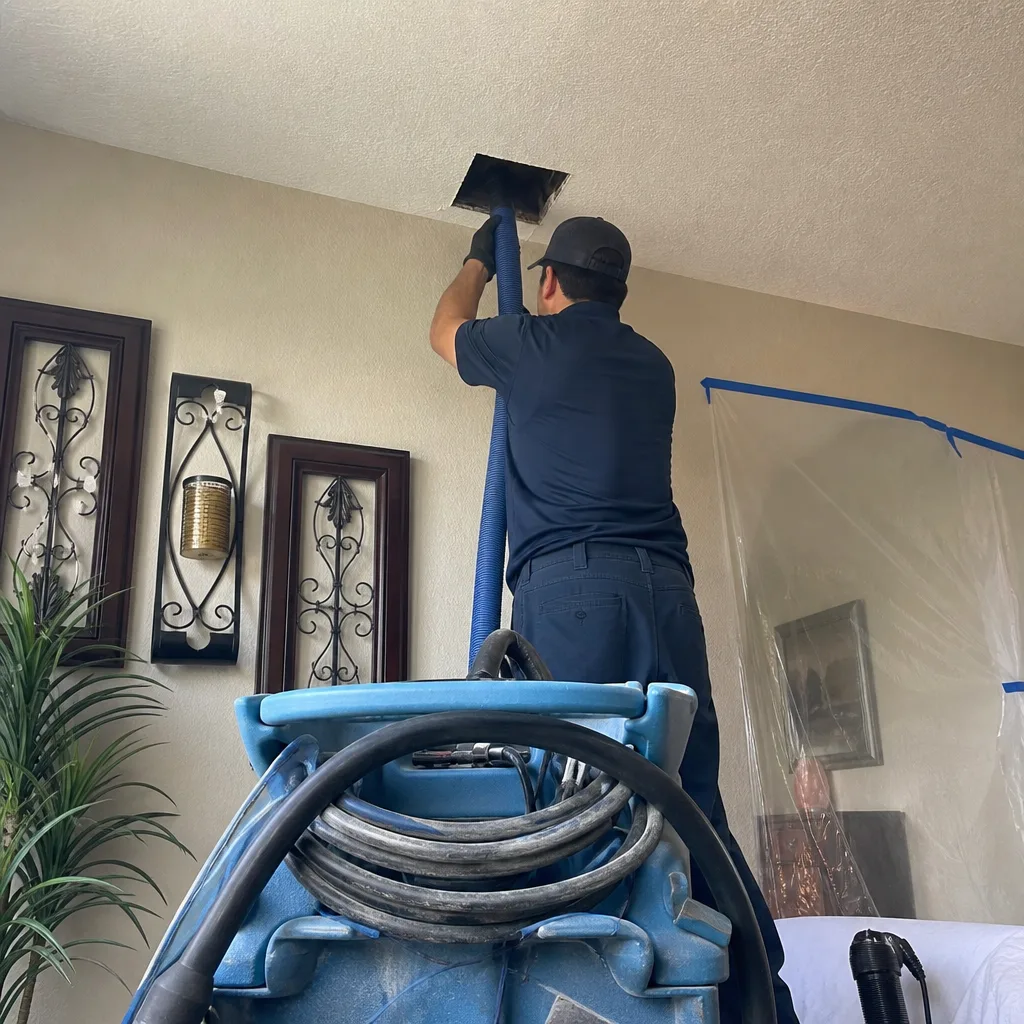
Whole-system duct and dryer vent check with before-and-after photos - you see exactly what came out of your vents
That "$99 whole-house special" is a bait ad - the real number appears once they are in your hallway, or the "clean" is a shop-vac at the register. We photograph the inside of your ducts before and after instead.
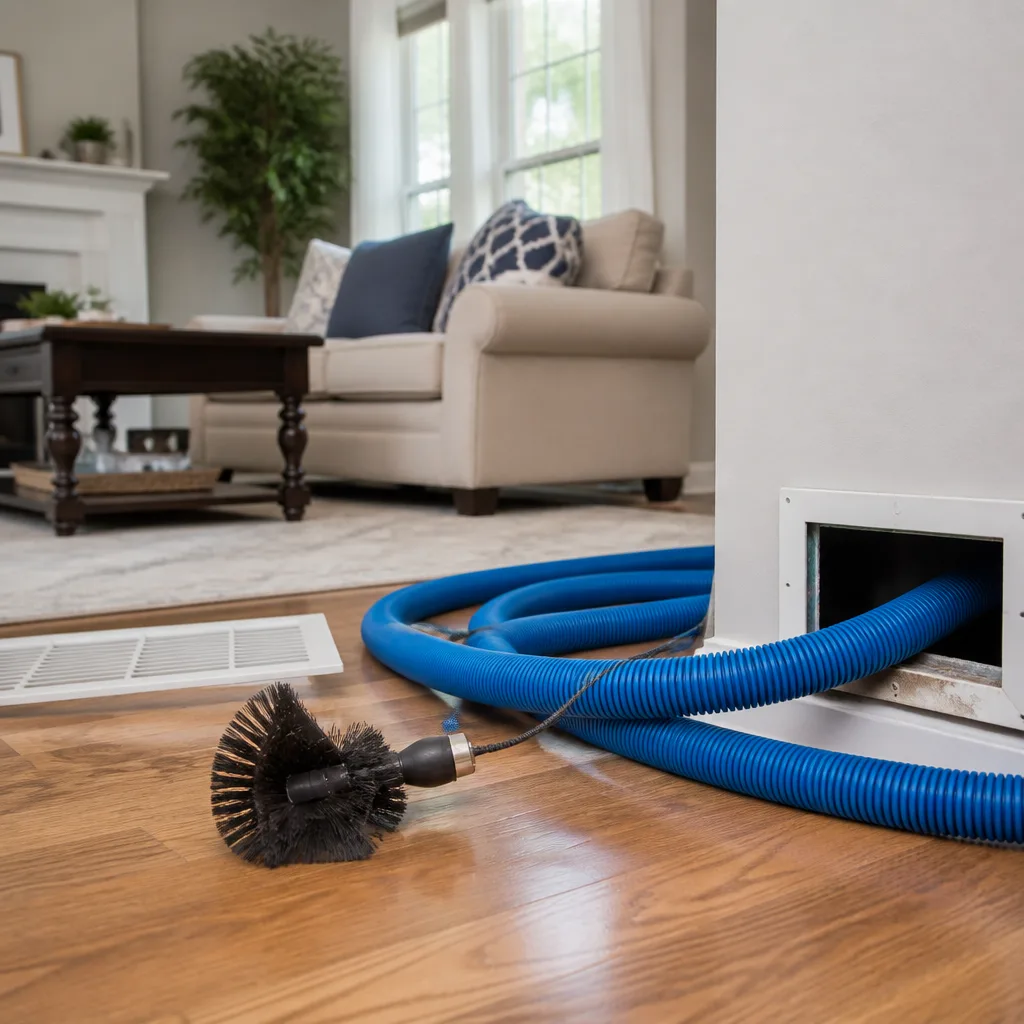
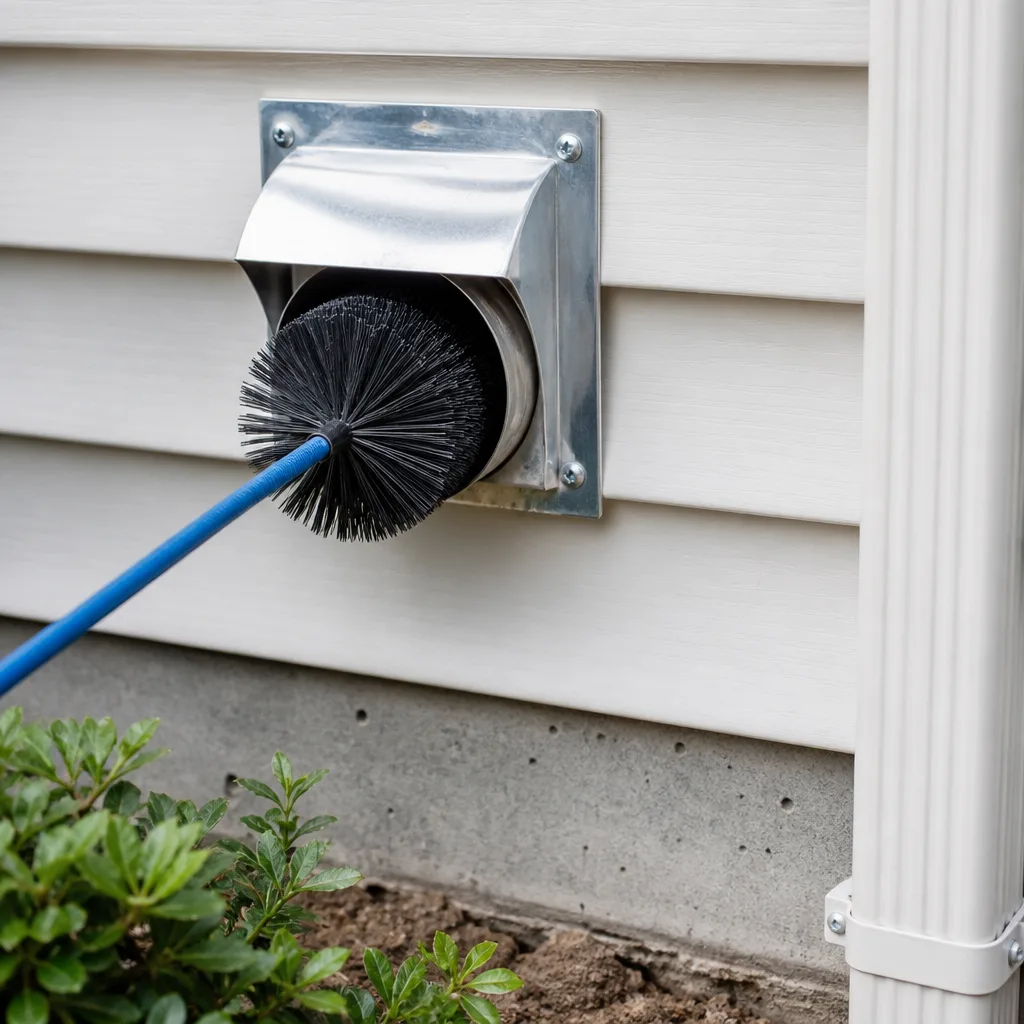
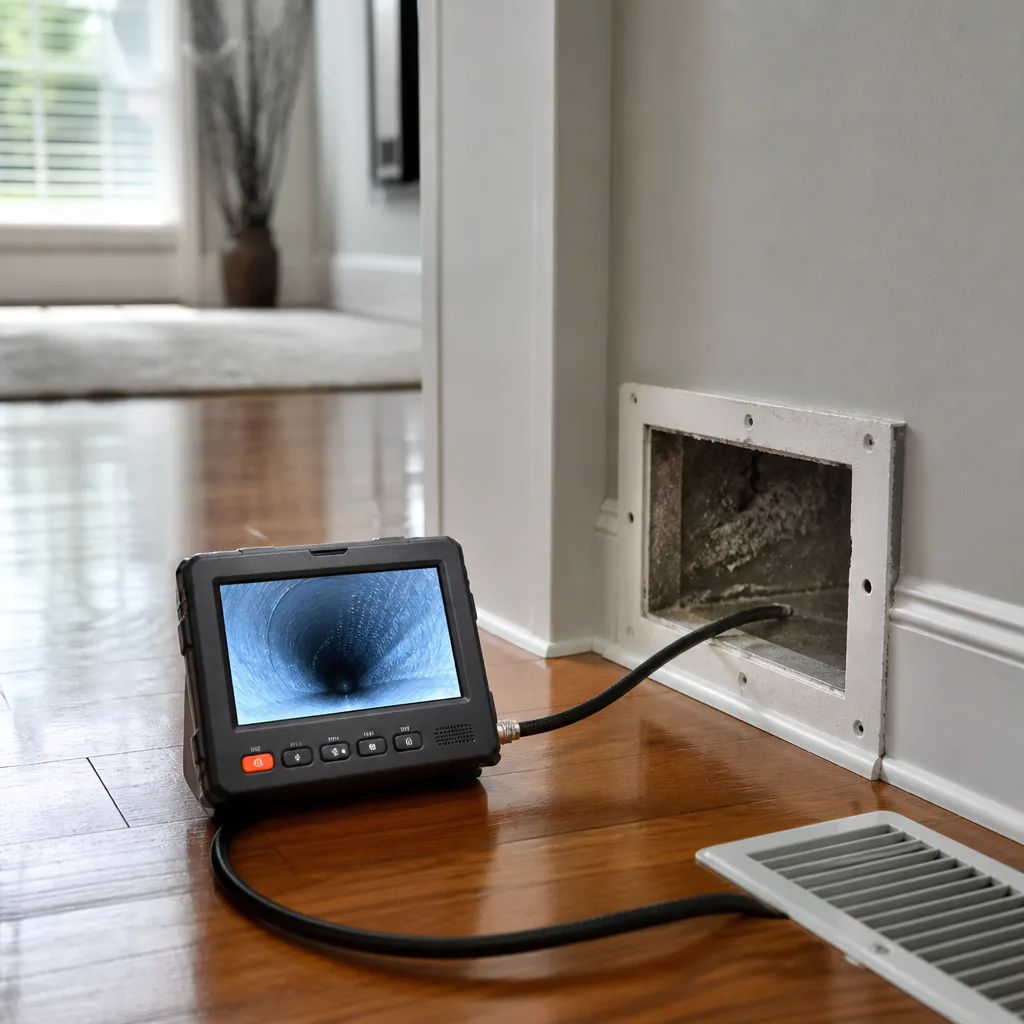
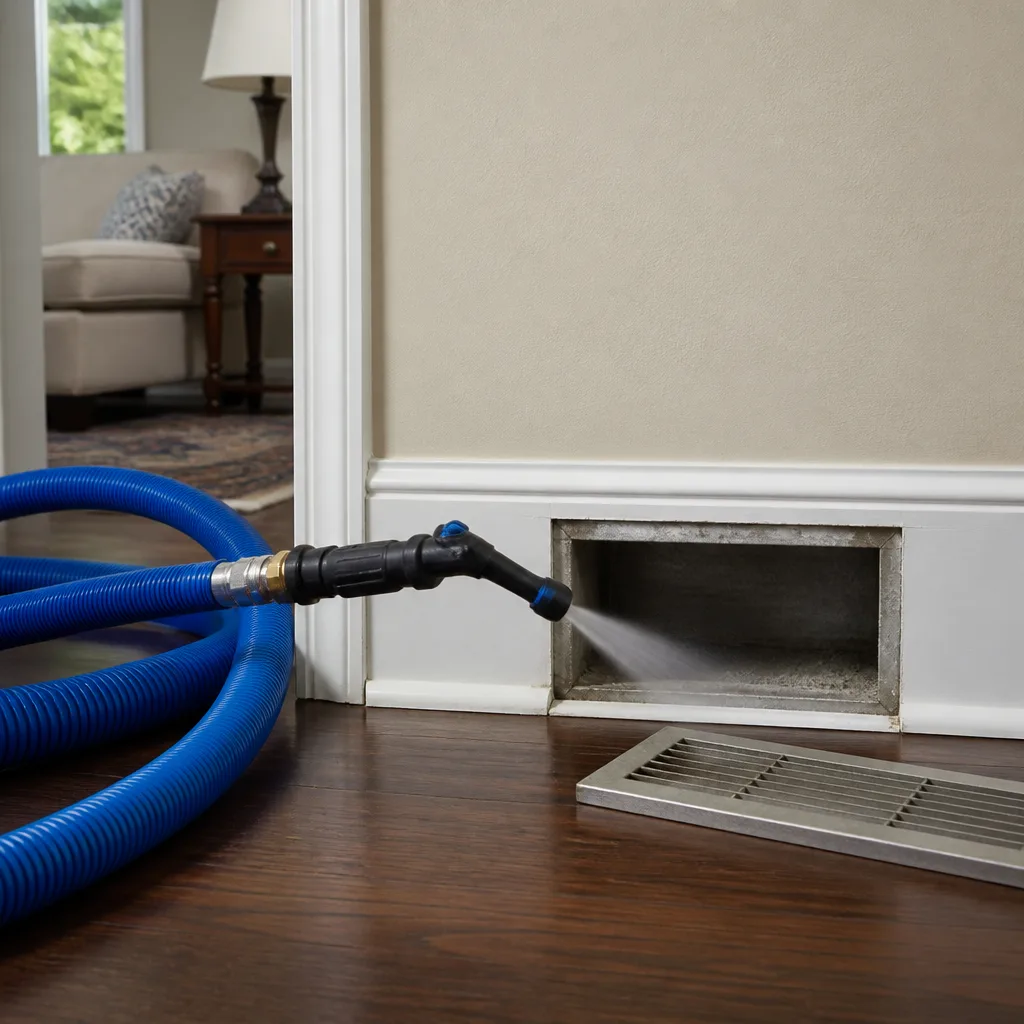
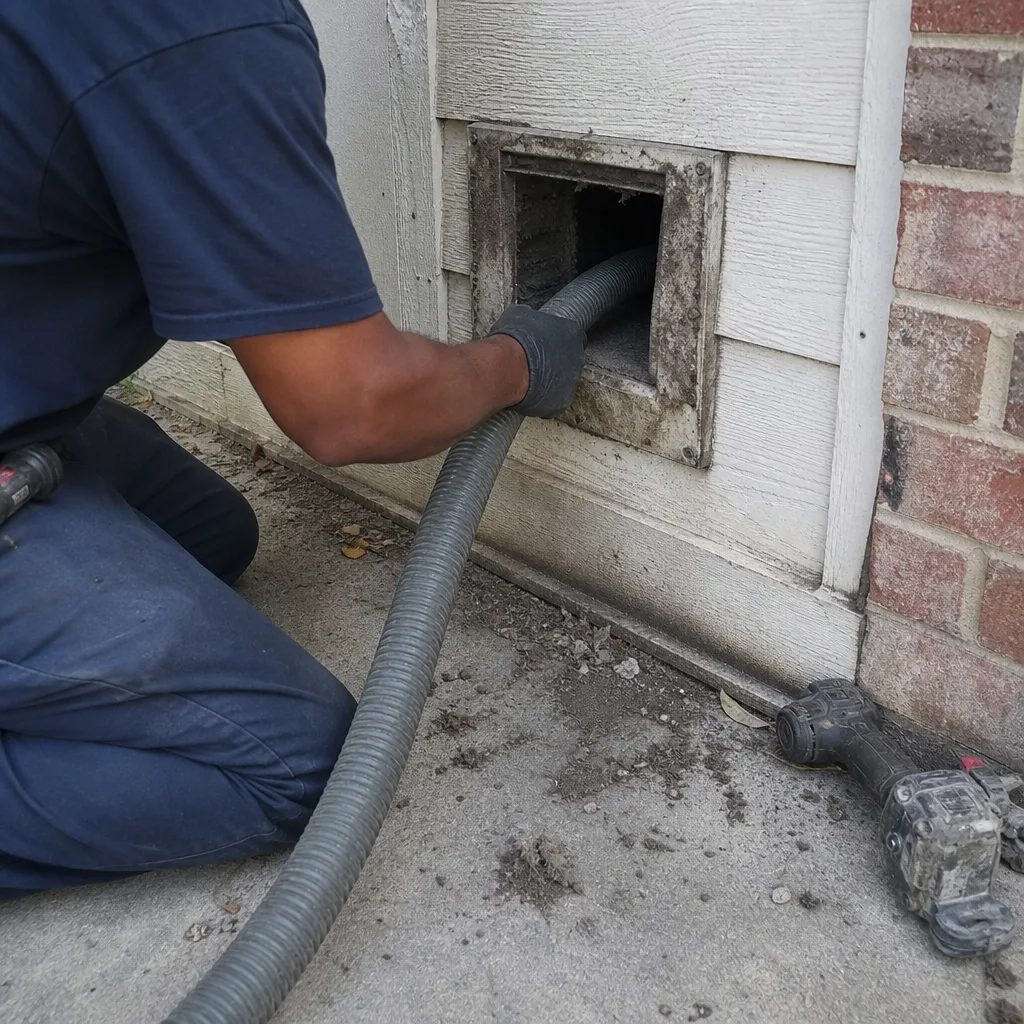 Before
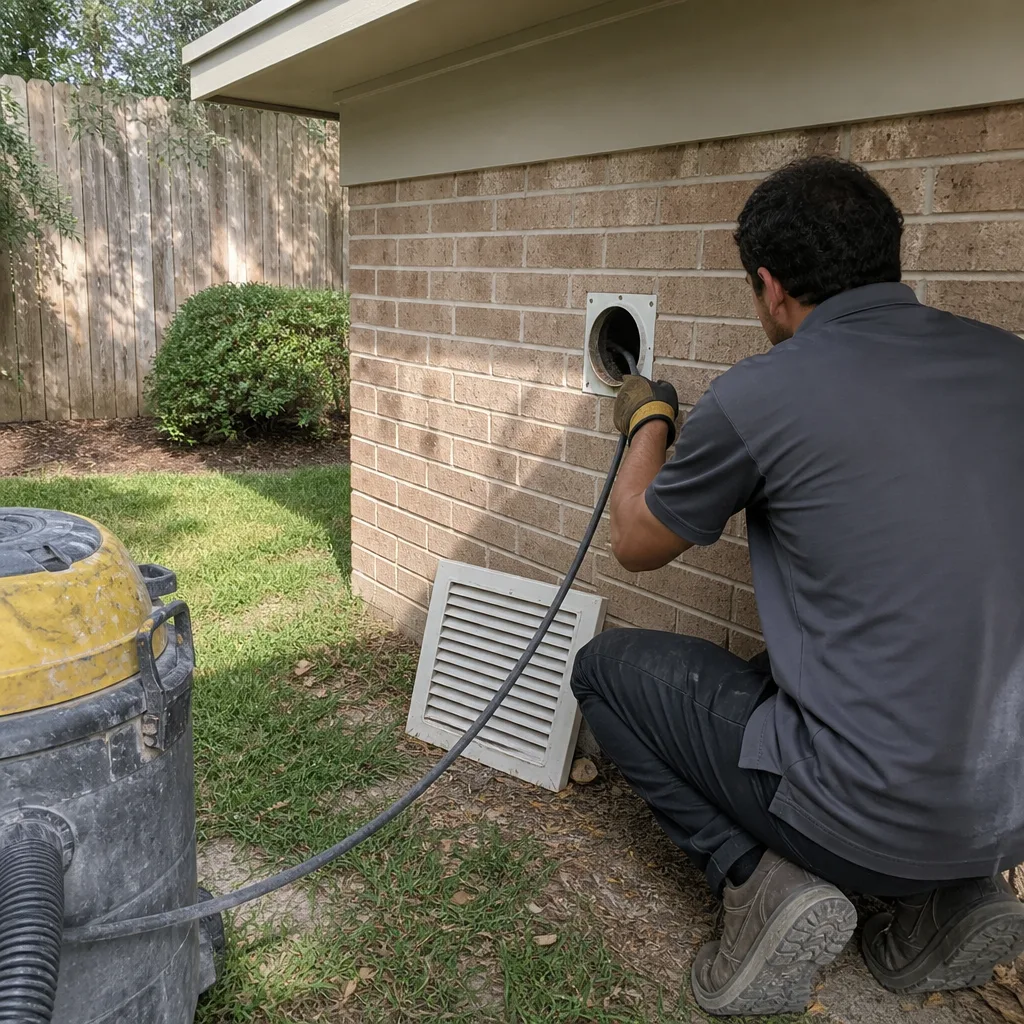 After
After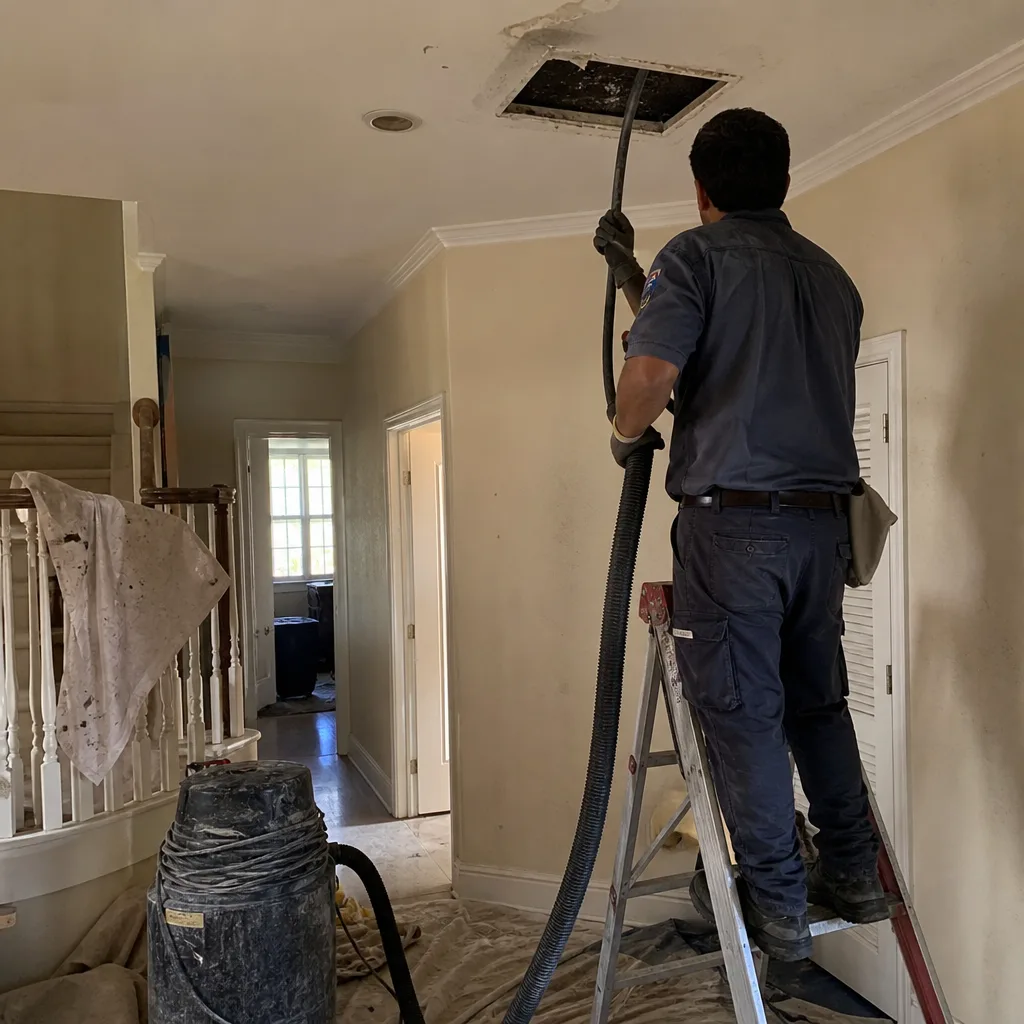 Before
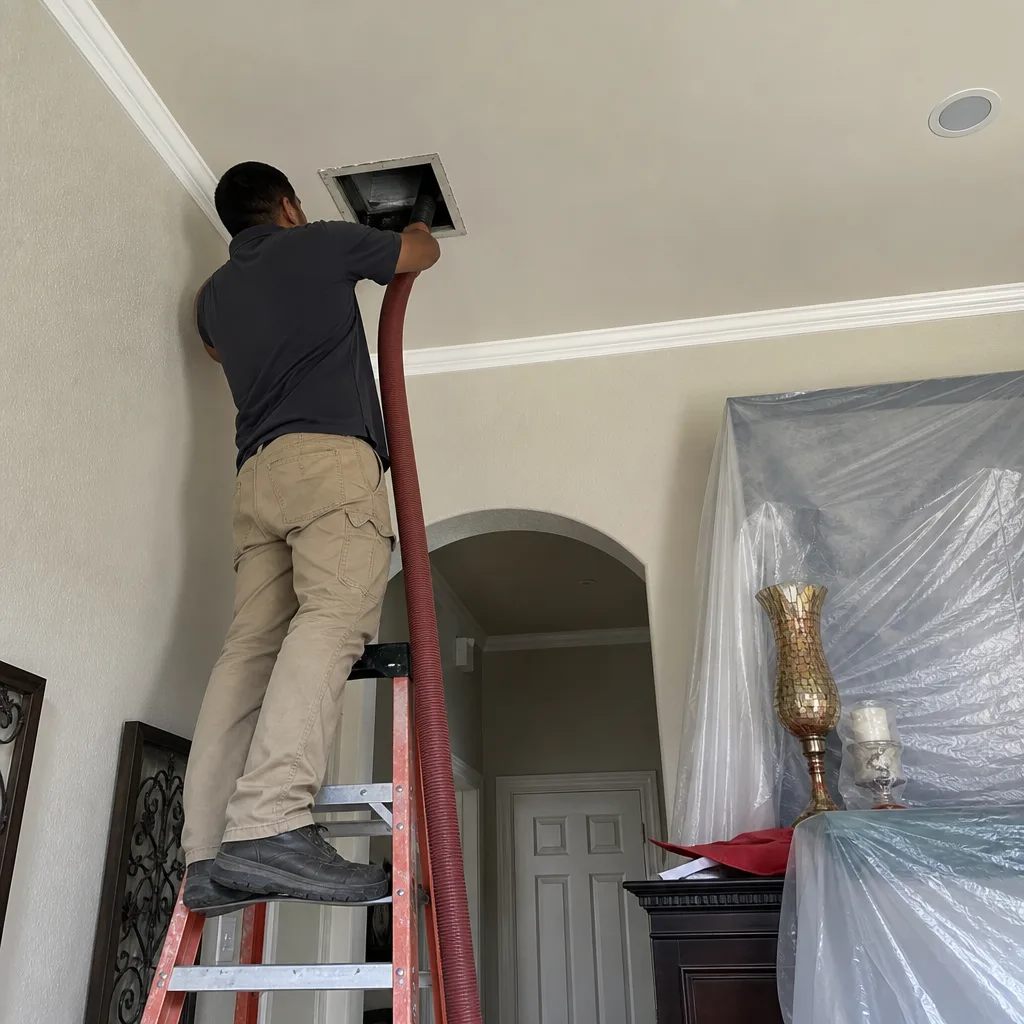 After
After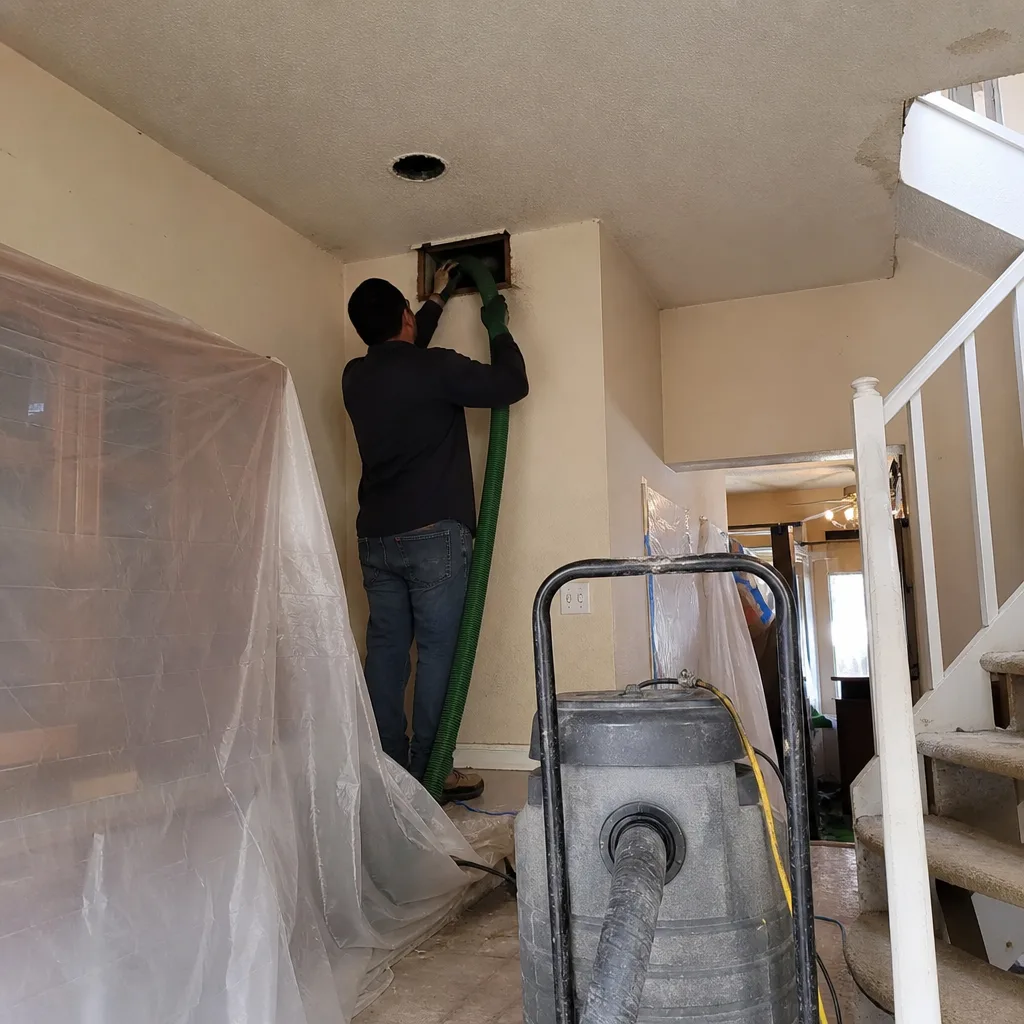 Before
 After
AfterDIY vs Professional Air Duct Cleaning: The Pearland Homeowner’s Decision Guide
A homeowner in Silverlake or Shadow Creek Ranch with a $300 shop-vac and a duct-cleaning kit attachment will clean the first 18 inches of each run cleanly - and push the remaining debris deeper into the system. We’ve documented this exact pattern in Pearland homes since 2013: the register looks pristine, but a camera sent past the first elbow shows a dense debris ridge that wasn’t there before the “cleaning.” The physics are straightforward - consumer vacuum motors produce roughly 1-2 inches of water column suction, while dislodging debris from a 25-foot flex duct run and transporting it out of the system requires 8-12 inches minimum. This guide explains why that gap matters, what you can safely handle yourself, and how to verify that any professional you hire actually reached the full duct run rather than just making noise near the registers. For more detail, see our How to Hire a Air Duct Cleaning Contractor in Pearland: A Step-by-Step Guide.
Quick Answer
Most Pearland homeowners can handle register cleaning, filter changes, and visual inspections of accessible ductwork themselves. Professional Air Duct Cleaning services become necessary when debris has settled beyond arm’s reach, when the system shows restricted airflow at distant registers, or when the home has undergone renovation - because consumer equipment lacks the static pressure to extract debris from full duct runs and will redistribute it instead.
Table of Contents
- The Equipment Physics: Why Consumer Vacuums Fail at Full Duct Runs
- What Homeowners Can Legitimately Do Themselves
- When Professional Cleaning Is Not Yet Warranted
- How to Verify a Professional Actually Cleaned the Full Run
- The Liability Question: Who Pays When DIY Goes Wrong
- Pearland-Specific Factors: Climate, Construction, and Common Issues
- What to Look for in a Professional Service
- Common Mistakes to Avoid
- When to Call a Professional
- Frequently Asked Questions
- The Bottom Line
BeforeAfterThe Equipment Physics: Why Consumer Vacuums Fail at Full Duct Runs
The duct cleaning industry in Pearland and across Houston’s suburbs runs on a quiet deception: the assumption that suction is suction, and that a powerful shop-vac with a brush attachment performs the same function as professional equipment. It does not. The difference is not one of degree but of kind.
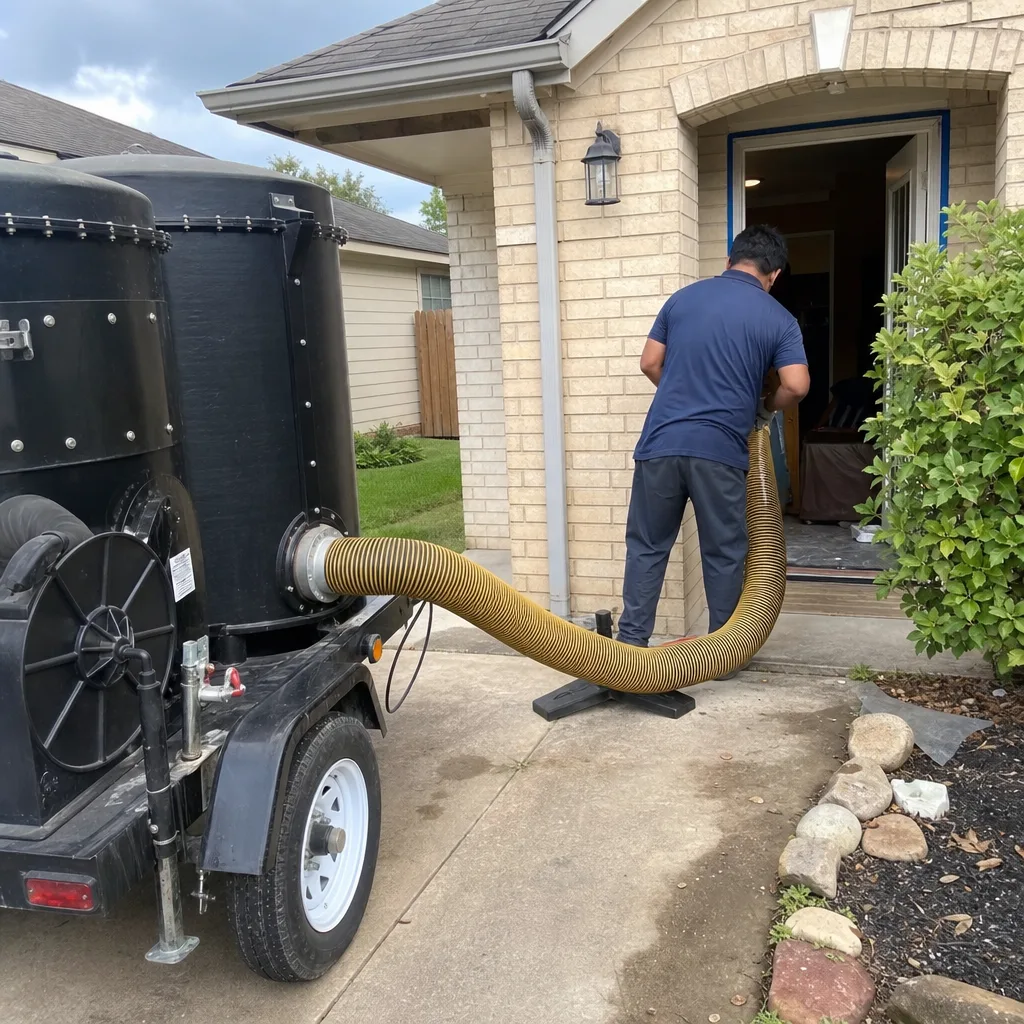
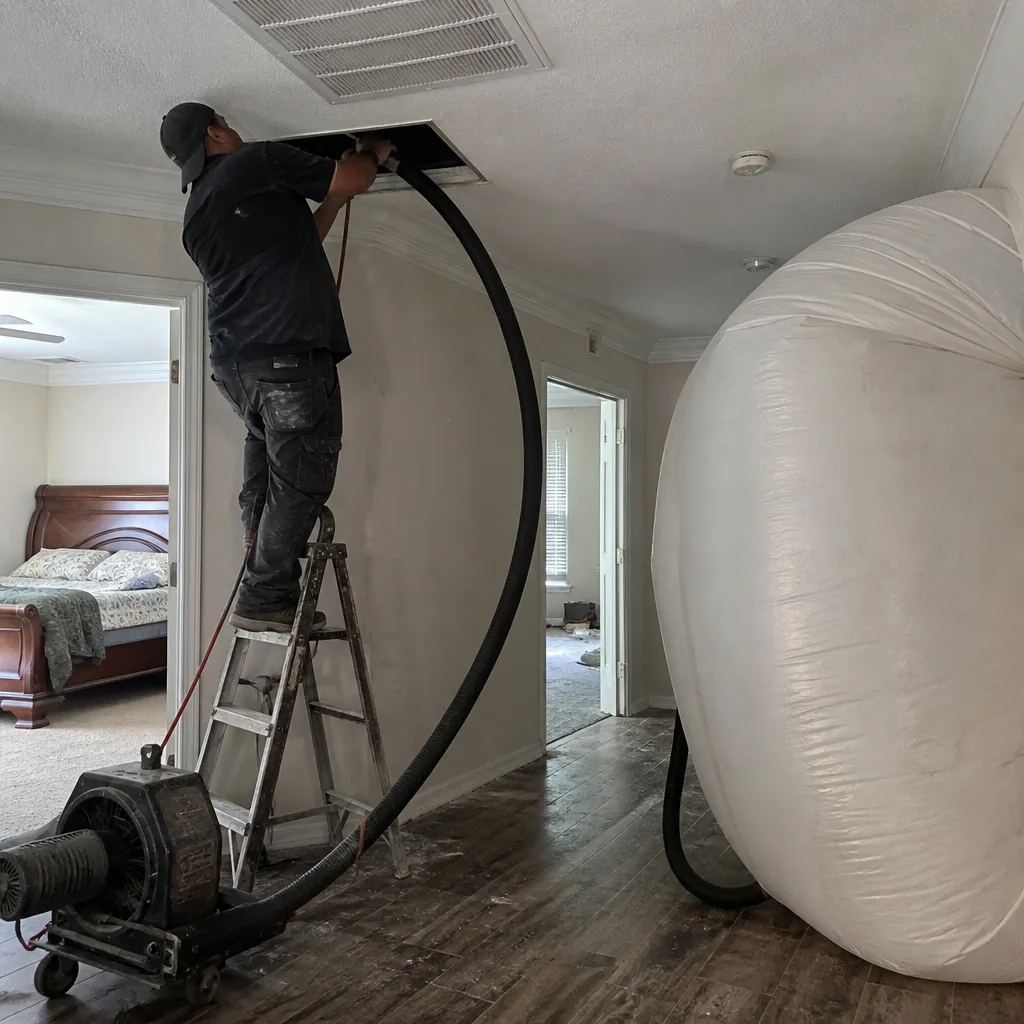
Static pressure - the force that moves air and debris through a closed duct system - is measured in inches of water column (in. w.c.). A typical consumer vacuum or shop-vac operates at 1-2 inches of water column. Professional negative-pressure extraction systems, such as the Nikro and Abatement Technologies equipment we deploy on Air Duct Cleaning in Pearland jobs, operate at 8-12 inches minimum, with some configurations reaching 15-20 inches for heavily contaminated systems.
This matters because debris in a duct run behaves according to the laws of fluid dynamics, not willpower. Dust, pet dander, construction particulate, and the fine pollen that blows through Pearland’s open windows from March through May settle into a cohesive mat along duct walls. Dislodging this material requires two simultaneous forces: mechanical agitation (brush or whip contact) and sufficient airflow velocity to entrain the debris and carry it out of the system.
A consumer brush kit on a drill will agitate. But without adequate suction at that exact point, the debris simply becomes airborne within the duct, resettles further downstream, and compacts more densely at the next restriction - typically the elbow or transition fitting nearest the air handler. We’ve photographed this phenomenon repeatedly in Pearland’s newer subdivisions like Sunrise Lakes and Lakes of Highland Glen, where homeowners attempted DIY cleaning before calling us. The camera shows a clean first three feet, then a debris dam at the first 90-degree turn that exceeds what was originally present.
Airflow velocity adds another constraint. Transporting debris through a 6-inch diameter flex duct requires approximately 4,000-5,000 feet per minute of air velocity. Consumer vacuums cannot achieve this across any meaningful length of ductwork because their motors are designed for open-air pickup, not closed-system extraction with resistance. Professional systems use large-diameter collection hoses, high-CFM blowers, and sealed connections at the plenum to maintain velocity from the farthest register back to the collection unit.
The result is predictable and measurable. In our documentation from Pearland jobs, we’ve found that DIY-attempted systems show:
- Improved airflow at the nearest 1-2 registers (where the brush reached)
- Reduced airflow at distant registers (where debris was pushed)
- Higher static pressure readings at the air handler post-DIY, indicating system restriction
- Visible debris compaction at elbow fittings, confirmed by borescope inspection
The equipment gap is not a marketing claim. It’s a specification sheet difference that any homeowner can verify by checking the static pressure rating on their shop-vac against the published specifications of professional Nikro or Abatement Technologies systems.
What Homeowners Can Legitimately Do Themselves
DIY duct maintenance has a proper scope. Several tasks improve system performance without risking the redistribution problems that inadequate suction creates.
1. Register and Grille Cleaning
Remove floor, wall, or ceiling registers and soak them in warm water with mild detergent. The metal or plastic grille accumulates visible dust and film that restricts airflow even when ducts behind it are clean. Dry completely before reinstallation to prevent moisture introduction into the system. This is straightforward, zero-risk maintenance.
2. Filter Replacement on Schedule
Pearland’s combination of Gulf Coast humidity, pollen-heavy springs, and frequent construction dust makes filter discipline more consequential here than in drier climates. A clogged 1-inch pleated filter increases system static pressure and can cause the blower motor to draw excess amperage. Replace 1-inch filters every 60-90 days during high-use months; 4-inch media filters every 6-12 months depending on the manufacturer’s pressure-drop guidance. Write the installation date on the filter frame.
3. Visual Inspection of Accessible Flex Duct Connections
In Pearland’s attic spaces, where summer temperatures exceed 140°F, flex duct connections to plenums and trunks can degrade. A homeowner with a flashlight can inspect visible connections for:
- Disconnected or sagging flex duct (the insulation sleeve may look intact while the inner liner has separated)
- Visible gaps at collar connections
- Crushed or kinked duct runs, often from storage items placed in attic spaces
Do not attempt repair. Duct sealing requires proper materials (mastic, UL-181 tape, mechanical fasteners) and access safety protocols for attic work. Document what you see and provide the photo to your technician.
4. Return Air Pathway Maintenance
Ensure return grilles are unobstructed by furniture, storage, or accumulated debris. The return side operates under negative pressure and will ingest anything near the grille. This is not duct cleaning, but it directly affects what enters the duct system.
What homeowners should not attempt: inserting any tool or vacuum hose beyond the register boot into the duct run itself. The register boot is the sheet-metal box immediately behind the grille, typically 6-12 inches deep. Beyond that point, you enter the duct run proper, where inadequate suction guarantees redistribution rather than removal.
When Professional Cleaning Is Not Yet Warranted
Not every home needs professional duct cleaning on a fixed schedule. There is a legitimate window where maintenance, not service, is the appropriate response.
A system under three years old in a Pearland home with no pets, no recent renovation, and documented regular filter changes typically does not contain significant accumulated debris. The ducts are functionally clean. Spending $400-$700 on professional cleaning in this scenario returns minimal measurable benefit. The money is better allocated to:
- Upgrading to MERV 11-13 filtration (compatible with most modern systems; verify with your HVAC technician)
- Sealing visible duct leaks that bypass conditioned air into attic spaces
- Installing a Honeywell or Aprilaire whole-home media air cleaner at the return plenum
The exception in Pearland’s market: new construction homes, even under three years old, often require cleaning due to construction debris. Drywall dust, wood particulate, and fastener debris left in ducts during building frequently survive the builder’s rough cleaning. If your home was completed between 2020 and 2024 in developments like Pomona, Canterbury Park, or Shadow Creek Ranch, and you’ve never had the ducts cleaned, a borescope inspection is worth the nominal cost even if the system is new.
Similarly, homes with documented water intrusion, rodent activity in attics, or visible mold on registers should not wait for an arbitrary schedule. These conditions change the risk calculation.
How to Verify a Professional Actually Cleaned the Full Run
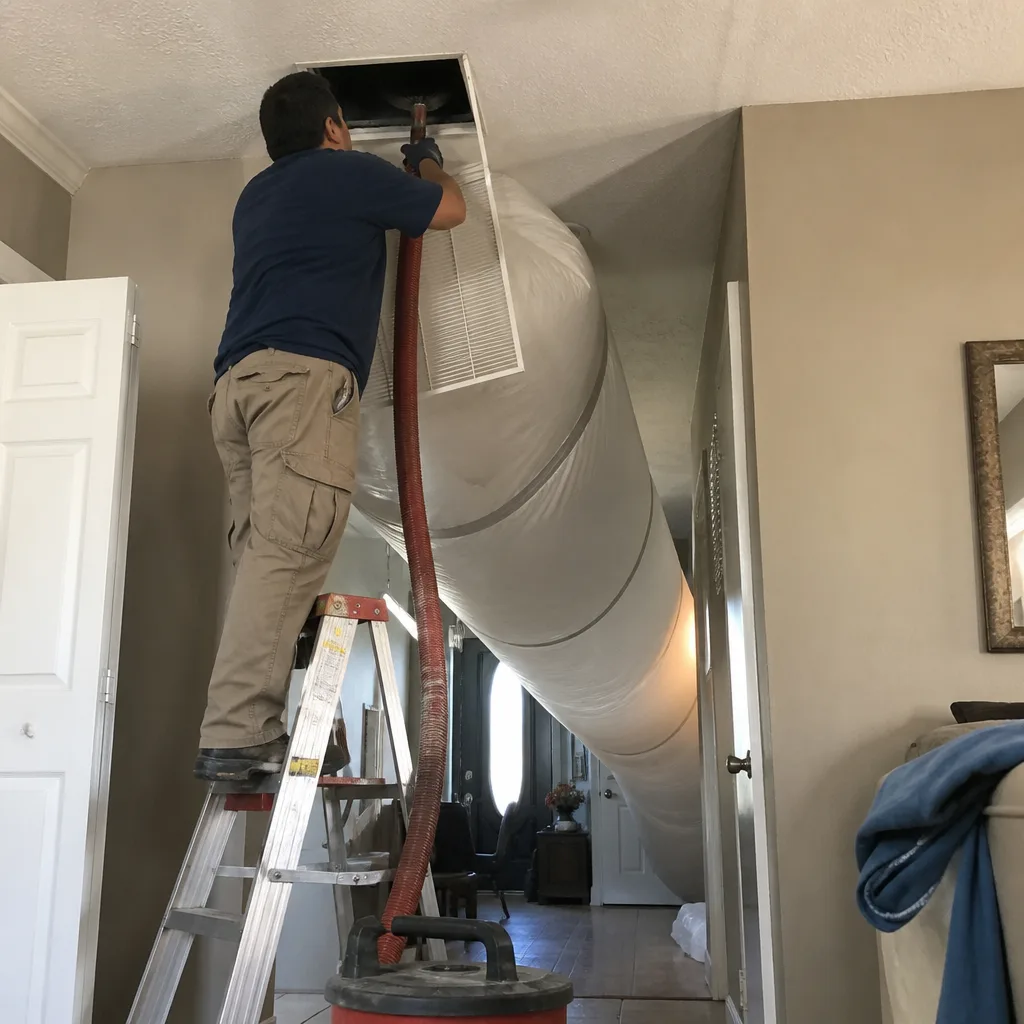
The duct cleaning industry’s most common failure mode is not fraud but incompleteness: cleaning what is easy to reach and accessible, while leaving the majority of the system untouched. A homeowner paying for full-system cleaning deserves evidence that the full system was cleaned.
Here’s what verification looks like in practice:
- Demand a photo record of every duct run. Not a representative sample. Every supply and return run should have before-and-after images from a borescope or inspection camera showing the interior duct surface at a point at least 10 feet from the register. At CleanRun, this is standard deliverable, not an upsell - Haven Standard Clause 2: Documented Outcomes. The photo record is delivered to the customer as part of the job file.
- Check the photo metadata or sequence. A legitimate before-and-after pair shows the same duct section, identifiable by a unique feature: a seam, an elbow, a support strap, or a specific debris pattern. Generic stock photos of “dirty ducts” and “clean ducts” are useless for verification.
- Inspect accessible sections yourself post-service. Remove a register in a distant room - the master bedroom at the far end of a long ranch plan, or a second-floor register in a two-story home in Pearland’s Brookside Village area. Shine a flashlight into the boot and look for:
- Clean metal or flex duct surface, not dust film
- No debris accumulation at the boot-to-duct transition
- Consistent appearance with the professional’s photos of that run
- Request static pressure readings before and after. Professional equipment measures system static pressure as a diagnostic baseline. A meaningful cleaning should show reduced static pressure post-service, indicating that restrictions have been removed. Ask for the numbers in writing.
- Verify the equipment used. The truck or portable unit should be visible and identifiable. Rotobrush, Nikro, and Abatement Technologies units have distinct appearances and published specifications. A shop-vac in a branded van is not professional duct cleaning equipment.
The core principle: CleanRun Air Duct Cleaning Pearland home documentation practices exist because the customer cannot otherwise know what happened inside their walls. Any professional unwilling to provide this evidence is asking for trust they have not earned.
The Liability Question: Who Pays When DIY Goes Wrong
The financial comparison between DIY and professional duct cleaning is often framed as $300 in equipment versus $500-$800 in service. This framing omits the tail risk: what happens when the DIY attempt damages the system or worsens its performance.
Consider specific failure modes we’ve encountered in Pearland homes:
- Flex duct disconnection: A homeowner pushing a brush too aggressively through a flex duct run separates the inner liner from the collar connection. The attic space now receives conditioned air continuously. Repair requires attic access, mastic sealing, and mechanical reconnection - typically $200-$400 in labor.
- Debris introduction into the air handler: A shop-vac without proper filtration or with a compromised filter bag blows fine particulate past the motor and into the return plenum. This debris coats the evaporator coil, reducing heat transfer efficiency and potentially causing freeze-ups. Coil cleaning runs $350-$600; refrigerant recovery and recharge adds cost if the coil must be removed.
- Register boot damage: Over-torqued drill attachments or aggressive brush insertion cracks the boot’s seal to the drywall or subfloor. This creates an air leak that bypasses the register entirely, reducing conditioned air delivery to the room and increasing energy consumption.
- Warranty implications: Some HVAC equipment warranties explicitly exclude coverage for damage caused by “unauthorized service or modification.” A homeowner’s DIY duct cleaning that introduces debris into the air handler or damages electrical connections may void compressor or heat exchanger coverage worth thousands.
Professional work carries the inverse structure: the service provider bears liability for damage occurring during service. At CleanRun, the 365-Day Done Right Promise means that if our work causes a problem, we correct it at our expense - documented in writing on every job, not subject to manager discretion. The written price agreed before work starts includes this accountability. DIY has no comparable backstop.
The honest cost math: DIY saves money only when it succeeds perfectly. Given the equipment physics discussed above, perfect success - complete debris removal without redistribution or damage - is unlikely for full duct runs. The expected value calculation favors professional service for any system where debris has accumulated beyond register depth.
Pearland-Specific Factors: Climate, Construction, and Common Issues
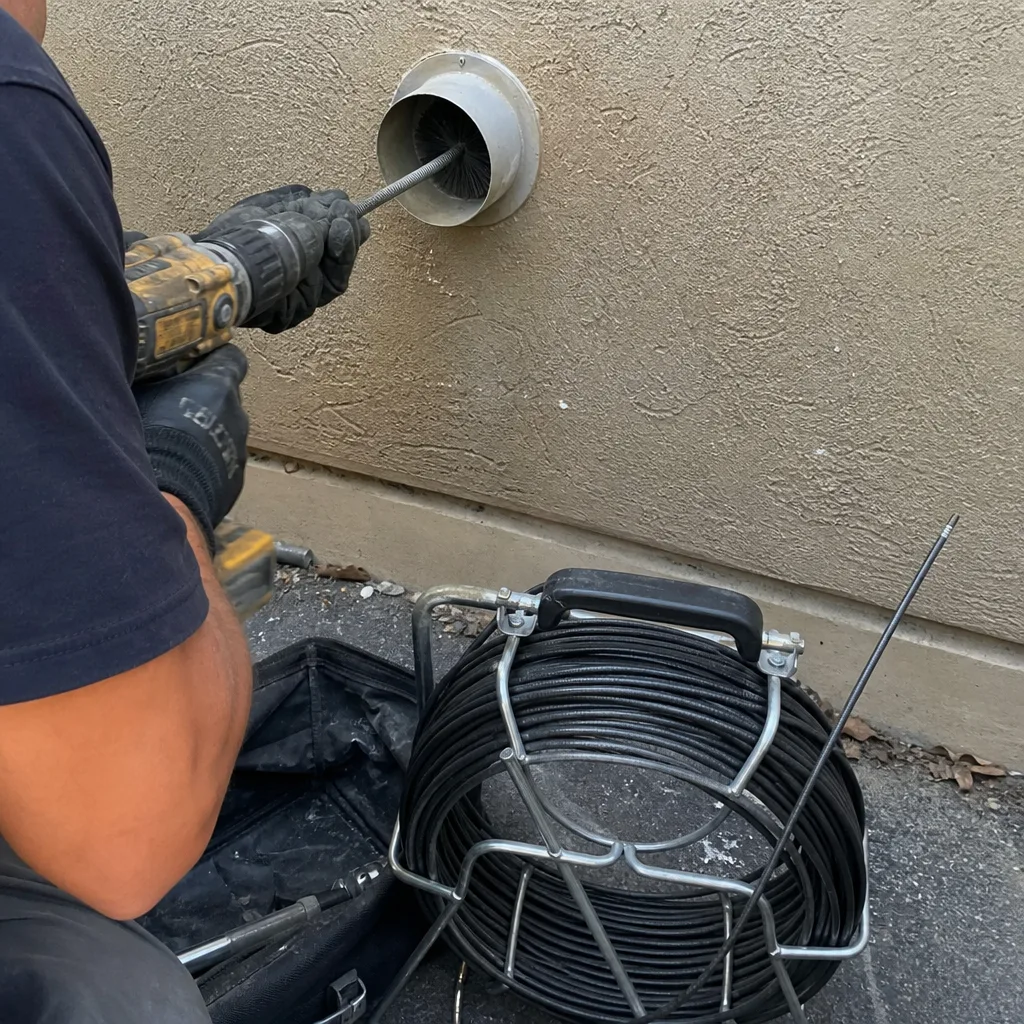
Pearland’s location on the Gulf Coastal Plain creates conditions that accelerate duct contamination and complicate maintenance decisions.
Humidity and microbial growth: Annual relative humidity averages 75-78%, with summer peaks above 90%. Duct interiors with any organic debris load - skin cells, pet dander, pollen - provide substrate for microbial growth when humidity exceeds 60% and condensation occurs on duct surfaces. This is not “mold” in the sensationalist sense, but it is biological activity that professional cleaning addresses with mechanical removal rather than chemical fogging. The EPA and NADCA both emphasize that biocides in ductwork are not recommended as routine practice; physical removal of debris is the appropriate response.
Construction density and particulate load: Pearland’s growth from 2010 to 2024 added tens of thousands of homes in active construction zones. Even established neighborhoods like Old Pearland and Green Tee experience nearby development. Fine particulate from construction - silica, drywall dust, wood treatment chemicals - infiltrates duct systems through intake pathways and settles in low-velocity sections. This material is particularly dense and resistant to consumer-grade suction.
Soil composition and foundation movement: The expansive clay soils in Brazoria County cause seasonal foundation movement that stresses duct connections in slab-on-grade homes. A flex duct connection that was tight in January may show gaps by August. Homeowners performing DIY inspections should note any new gaps or separations, but should not attempt repair without proper materials and techniques.
Pollen calendar: Oak pollen in February-March, grass pollens in April-June, and ragweed in September-October create distinct contamination pulses. Homes with outdoor air intake or frequent window use show corresponding debris layers in return ducts. This is normal and expected; it does not indicate system failure, but it does establish realistic cleaning intervals.
Energy code evolution: Homes built to 2018 IECC standards and later in Pearland have tighter envelopes and smaller HVAC loads per square foot. This is efficient but means that any duct restriction represents a larger percentage of total system capacity. A 10% airflow reduction in a right-sized system produces more noticeable comfort degradation than in an older, oversized system.
What to Look for in a Professional Service
If the equipment physics, liability exposure, and verification requirements point toward professional service, the next question is how to distinguish legitimate operators from the $79 coupon model that dominates search results.
Written price before work starts. This is non-negotiable. Haven Standard Clause 1: Agreed Pricing. The technician should inspect the system, scope the work, and provide a written price that does not change unless the customer authorizes additional work. “Call for a quote” or “price depends on what we find” is a disqualifier. The price should specify what is included: number of supply and return runs, access to main trunk lines, cleaning of the air handler cabinet, and photo documentation.
Documented photo record as standard. Not an upsell. Not “available upon request.” Included on every visit, every run, before and after. This is the only proof that the work reached the full duct system.
Published license and insurance verification. Texas requires Air Conditioning and Refrigeration Contractor licensing for any work that disturbs HVAC components. Ask for the license number and verify through TDLR. CleanRun publishes its license number on every page and provides proof of insurance on request - Haven Standard Clause 3: Verified Crews.
Equipment identification. The specific brands and models being used should be stated and verifiable. Rotobrush, Nikro, Abatement Technologies, Honeywell, Aprilaire, and Guardsman are trade-recognized manufacturers with published specifications. A service that cannot or will not name its equipment is not operating transparently.
No per-vent pricing. This model incentivizes superficial cleaning of many registers while neglecting trunk lines and plenums. Whole-system pricing reflects actual scope and encourages thorough work.
Post-service deliverables. Beyond photos, the customer should receive: a written scope of work performed, static pressure readings if taken, and warranty terms in writing. The 365-Day Done Right Promise at CleanRun is backed by a written document, not a verbal assurance.
For HVAC Cleaning in Pearland that includes full system components, the same verification standards apply.
Common Mistakes to Avoid
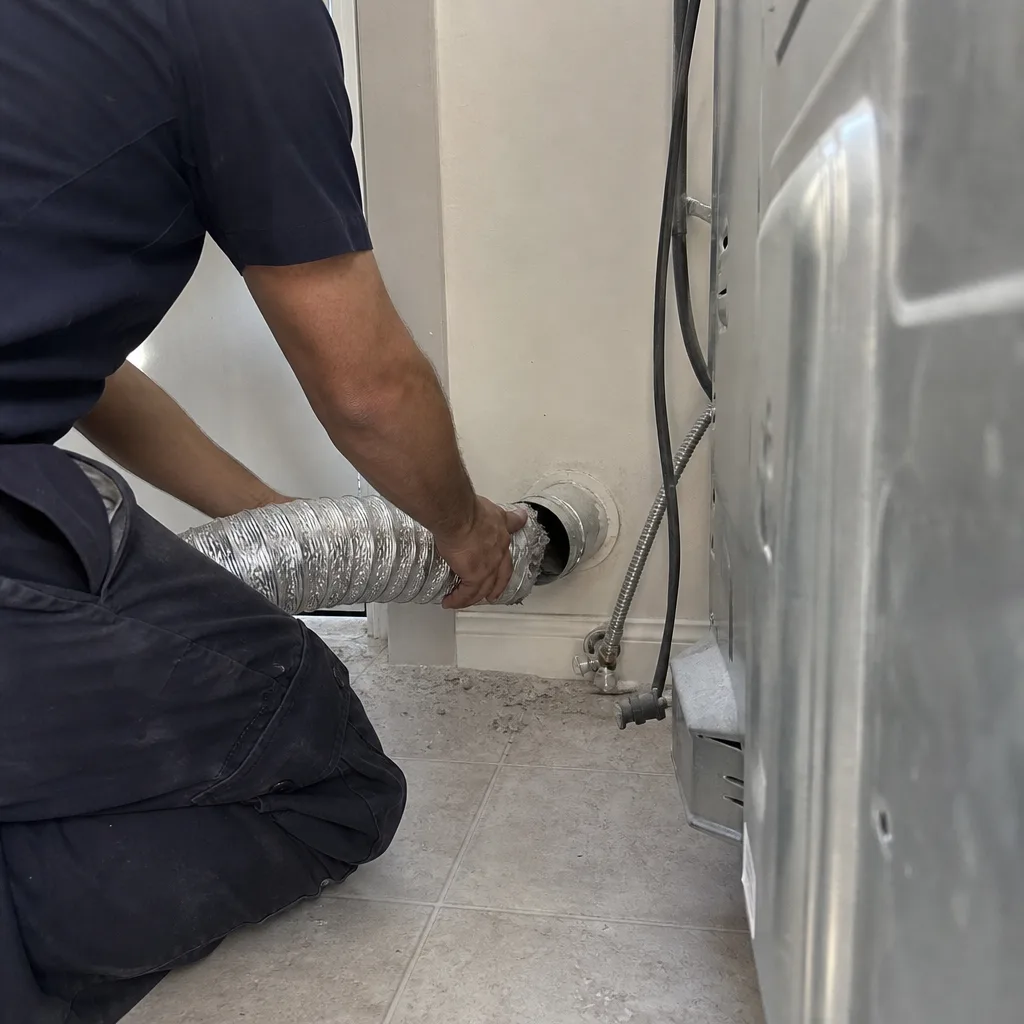
- Assuming visible register cleanliness indicates clean ducts. The first 18 inches are the easiest to reach and the least representative of system condition. Always verify with inspection camera footage from deeper in the run.
- Using compressed air without extraction. A homeowner with an air compressor can blast debris loose, but without simultaneous negative-pressure collection, this material becomes airborne in the duct system and resettles. We’ve found compressed-air-only attempts in Pearland homes to produce worse post-service air quality than no cleaning at all.
- Ignoring the return side. Supply ducts deliver conditioned air; return ducts pull air back to the air handler. The return side typically contains more debris because it operates under negative pressure, continuously drawing in particulate. Cleaning supplies alone addresses less than half the system.
- Buying into “mold” scare tactics without laboratory confirmation. Dark staining on duct surfaces is often dust adhesion, not microbial growth. Professional assessment with laboratory analysis of tape-lift samples is the only valid basis for mold claims. Any technician claiming “mold” by visual inspection alone is either unqualified or dishonest.
- Scheduling cleaning immediately after renovation without pre-cleaning protection. If your Pearland home has undergone flooring replacement, drywall repair, or painting, ensure contractors sealed registers during work. Otherwise, renovation debris enters the system during the project and post-renovation cleaning becomes necessary - but it should be scheduled after all trades have finished, not during.
- Neglecting dryer vent cleaning while focusing on HVAC ducts. The dryer vent is a separate fire-safety issue with its own maintenance requirements. Dryer Vent Cleaning in Pearland should be part of a comprehensive home maintenance plan, not an afterthought.
- Accepting “blow-and-go” service at any price point. A professional who spends 45 minutes on a 2,500 square foot home has not cleaned the full system. Reasonable time expectations: 3-5 hours for thorough cleaning of a typical Pearland home with 12-18 duct runs, including setup, access, cleaning, verification photography, and restoration.
When to Call a Professional
Call a professional when: debris is beyond arm’s reach from registers; airflow is measurably reduced at distant rooms; the home has undergone renovation or has pets; visible mold or moisture issues are present; or the system is more than three years old with unknown maintenance history. For more guides & resources on maintaining your home’s air quality, explore our blog. CleanRun Air Duct Cleaning Pearland offers free estimates in Pearland - call (346) 253-1822. Every estimate includes a written price before any work begins, and every completed job includes a Documented Photo Record of every duct run.
Frequently Asked Questions
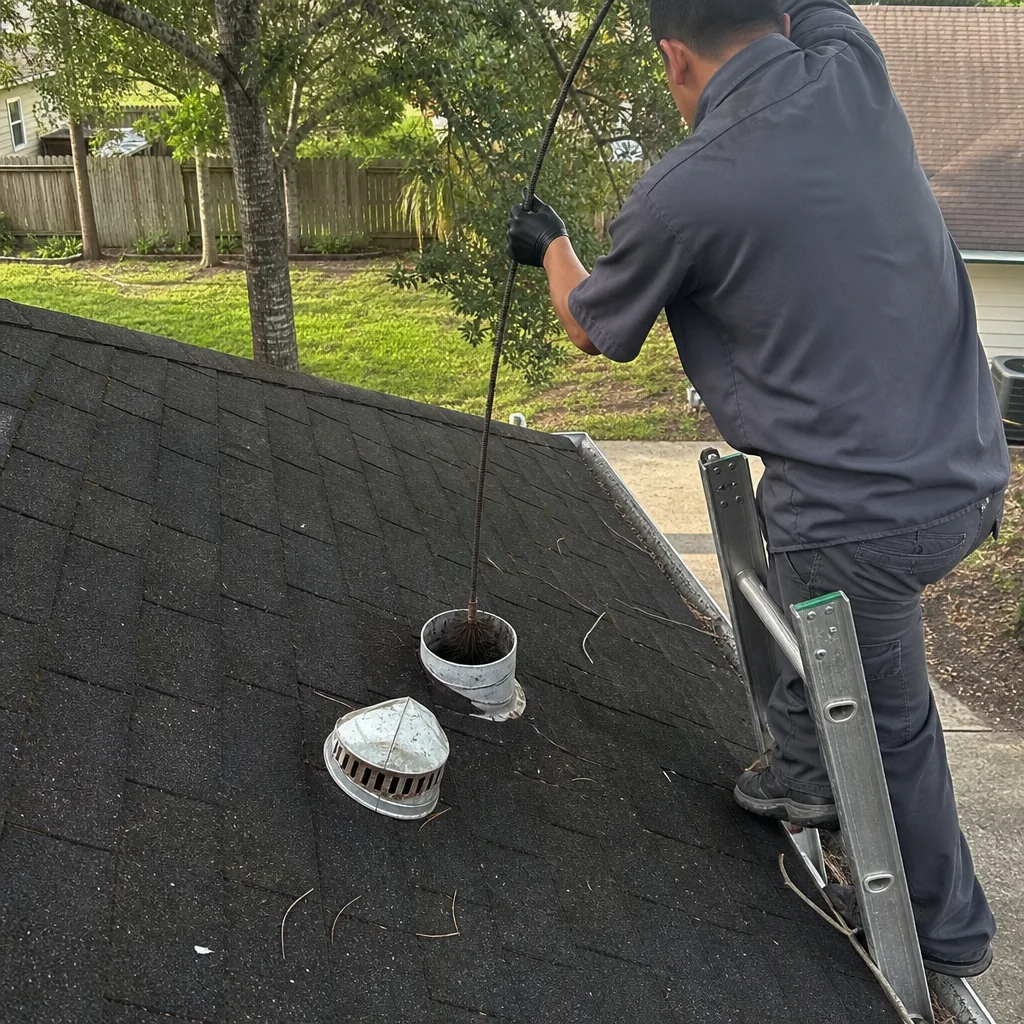
Whole-system air duct cleaning for a typical Pearland home ranges from $450 to $850 depending on system size, accessibility, and contamination level. This covers all supply and return runs, trunk line access, air handler cabinet cleaning, and the complete photo documentation package. CleanRun provides a written price before any work starts - no per-vent add-ons, no post-arrival surprises. Call (346) 253-1822 for an exact quote; estimates are free.
The $79-$149 coupon model typically covers register wiping and brief vacuuming of accessible boot areas, not full-system cleaning. The business model depends on upselling once inside the home. True whole-system cleaning with professional negative-pressure extraction, mechanical agitation, and photo verification cannot be performed at coupon prices without losing money on every job. Ask any low-quote provider specifically: does the price include all runs, trunk lines, photo documentation, and a written guarantee? The answer will reveal the actual scope.
Require before-and-after photos from inside every duct run, not just representative samples. Verify that photos show identifiable features - seams, elbows, support straps - proving they depict your specific ducts. Check a distant register yourself post-service. At CleanRun, the Documented Photo Record is delivered as part of the standard job file, with every run identified by location. If a company cannot or will not provide this, the work is unverified.
Homes with no pets, no recent renovation, and regular filter changes typically need cleaning every 5-7 years. Pearland’s high humidity and pollen load may compress this to 3-5 years for homes with outdoor air intake, multiple pets, or residents with respiratory sensitivity. New construction homes should be cleaned within the first 2-3 years due to construction debris. The most reliable indicator is not calendar time but measurable airflow reduction or visible debris at registers.
You can clean registers, grilles, and the first 12-18 inches of duct boot effectively. Beyond that point, consumer equipment lacks the static pressure to extract debris from full duct runs and will redistribute it deeper into the system, potentially worsening airflow at distant registers. The physics are not controversial - they’re published in equipment specifications any homeowner can verify. For full-system cleaning, professional negative-pressure extraction is required.
The homeowner bears all repair costs. Common DIY damage includes disconnected flex duct (repair: $200-$400), debris introduction into the air handler requiring coil cleaning ($350-$600), and voided HVAC warranties for “unauthorized service.” Professional service carries inverse liability: the provider is responsible for damage occurring during work. CleanRun’s 365-Day Done Right Promise covers correction of any work-related issues at our expense - documented in writing, not subject to manager approval.
The Bottom Line
The DIY-versus-professional question for Pearland homeowners is not about skill or cost tolerance - it’s about equipment physics that cannot be overcome by effort or good intentions. Consumer vacuums clean 18 inches effectively and redistribute debris beyond that point. Professional negative-pressure systems extract debris from full duct runs because they operate at 4-6 times the static pressure. Homeowners should handle registers, filters, and visual inspections themselves. They should hire documented professionals for full-system cleaning, and they should verify that work with photo records from every run. The $79 coupon industry persists because verification is difficult and accountability is rare. CleanRun’s practice since 2013 - written price first, photo record last, 365-Day Done Right Promise in between - exists to make accountability routine rather than exceptional.
Call CleanRun Air Duct Cleaning Pearland at (346) 253-1822 for a free estimate. You’ll receive a written price before any work starts, and if you hire us, a Documented Photo Record of every duct run when the crew leaves.
Written by Tomas Reyes, Owner at CleanRun Air Duct Cleaning Pearland, serving Pearland since 2013.