
Last updated September 23, 2026
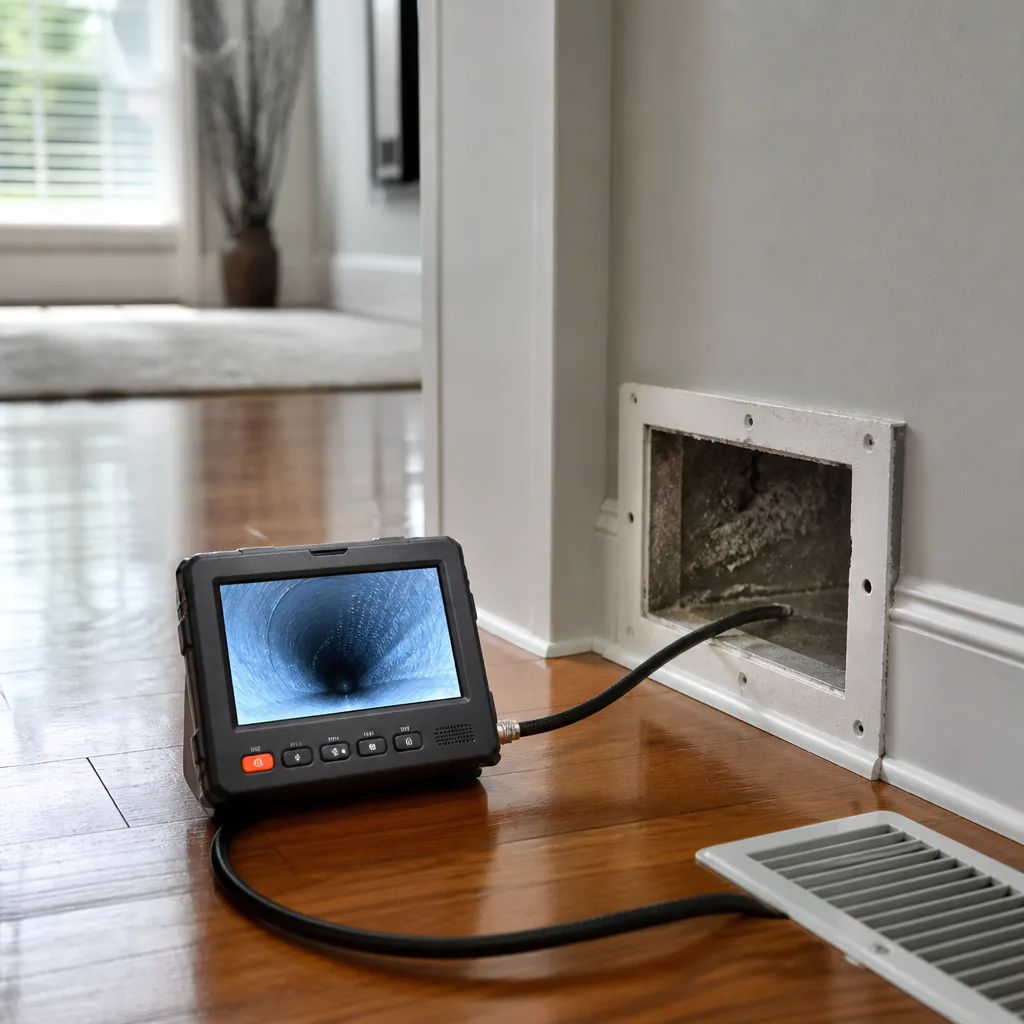
Whole-system duct and dryer vent check with before-and-after photos - you see exactly what came out of your vents
That "$99 whole-house special" is a bait ad - the real number appears once they are in your hallway, or the "clean" is a shop-vac at the register. We photograph the inside of your ducts before and after instead.
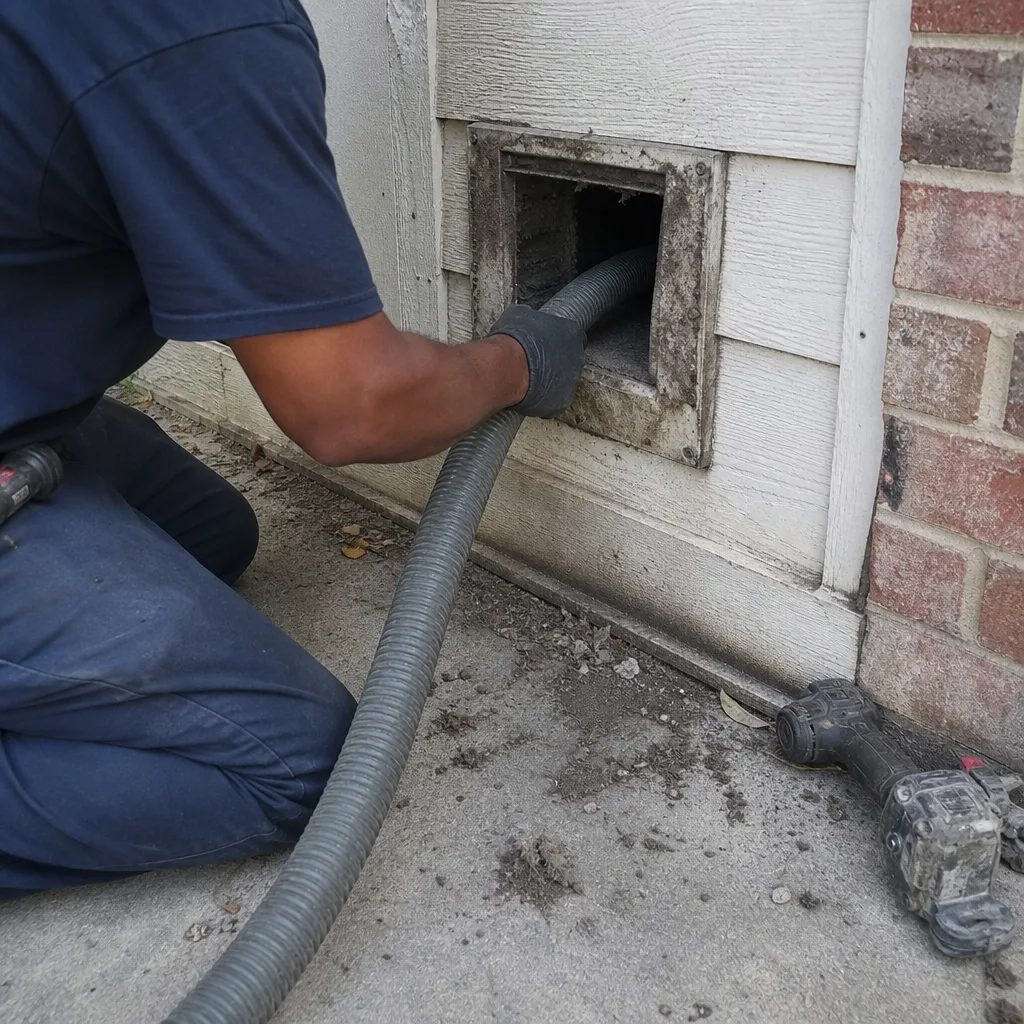 Before
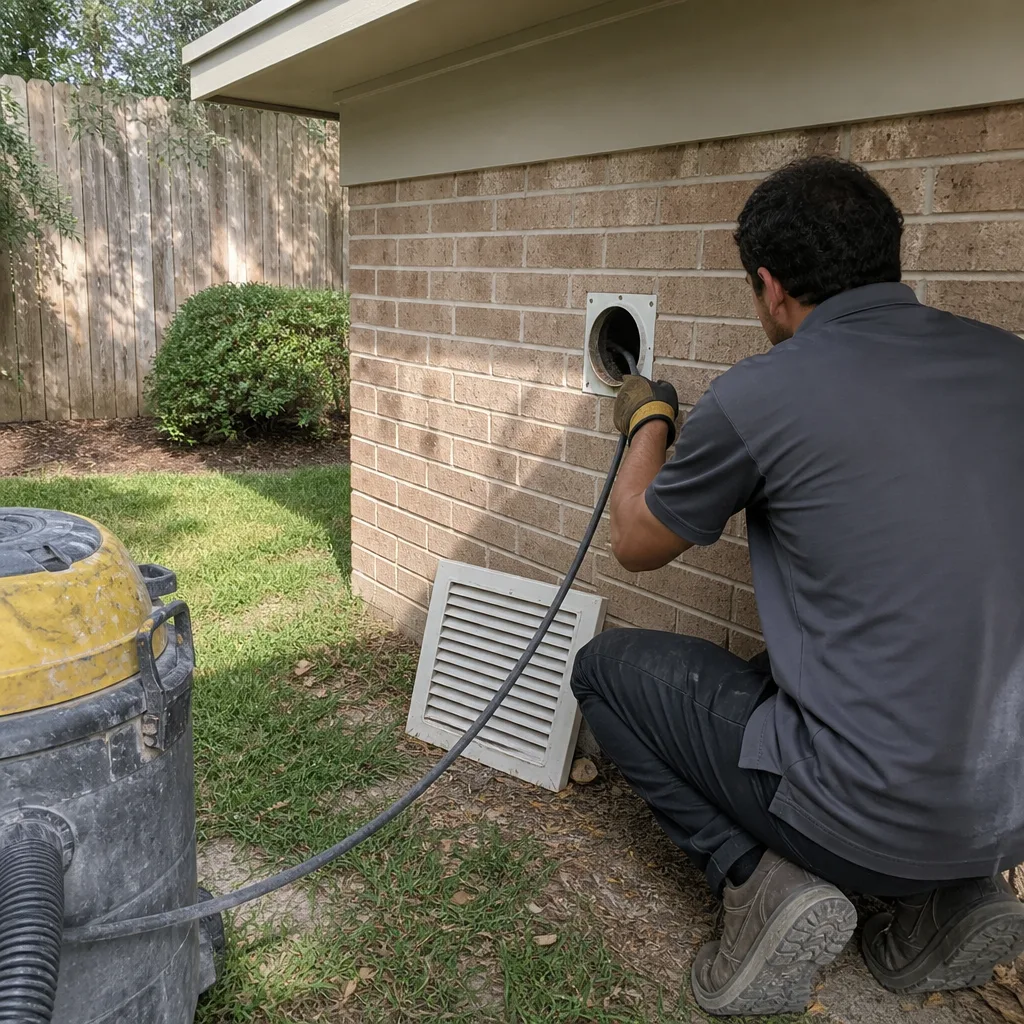 After
After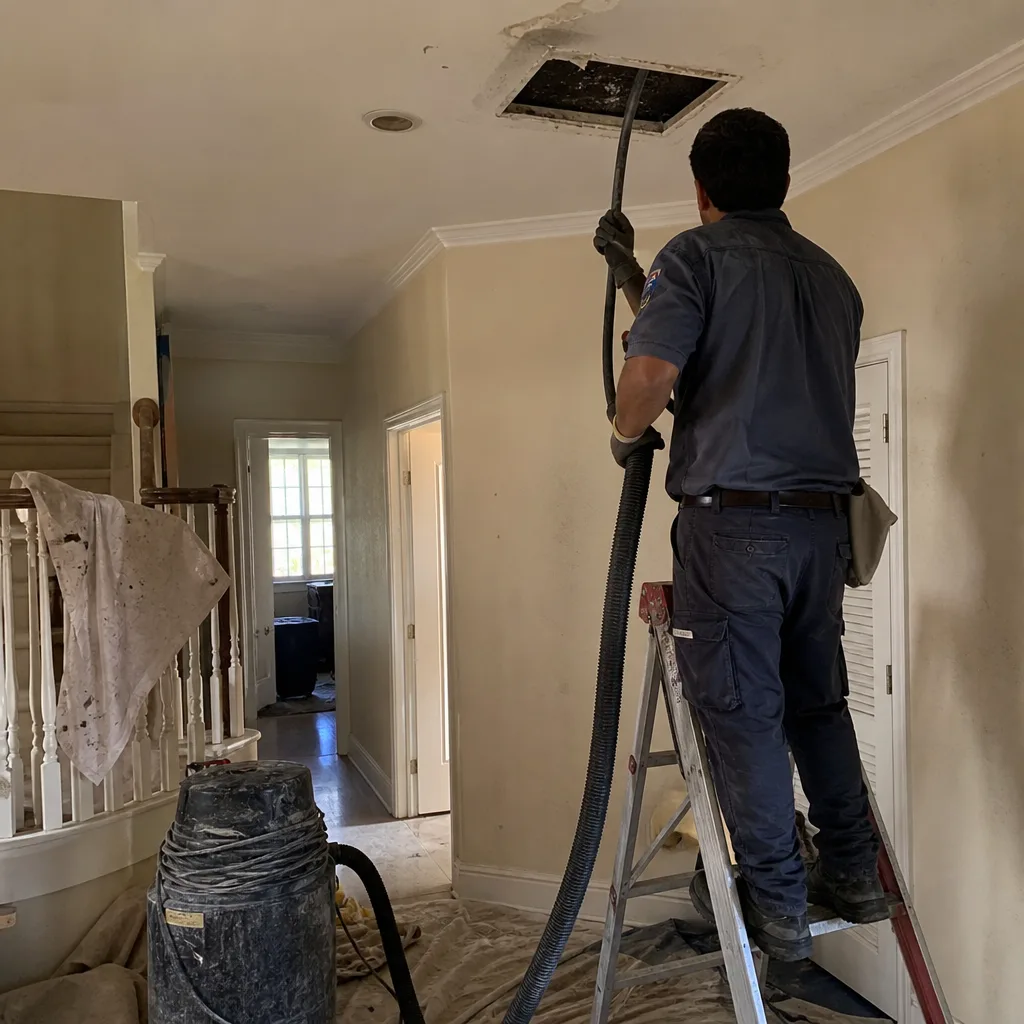 Before
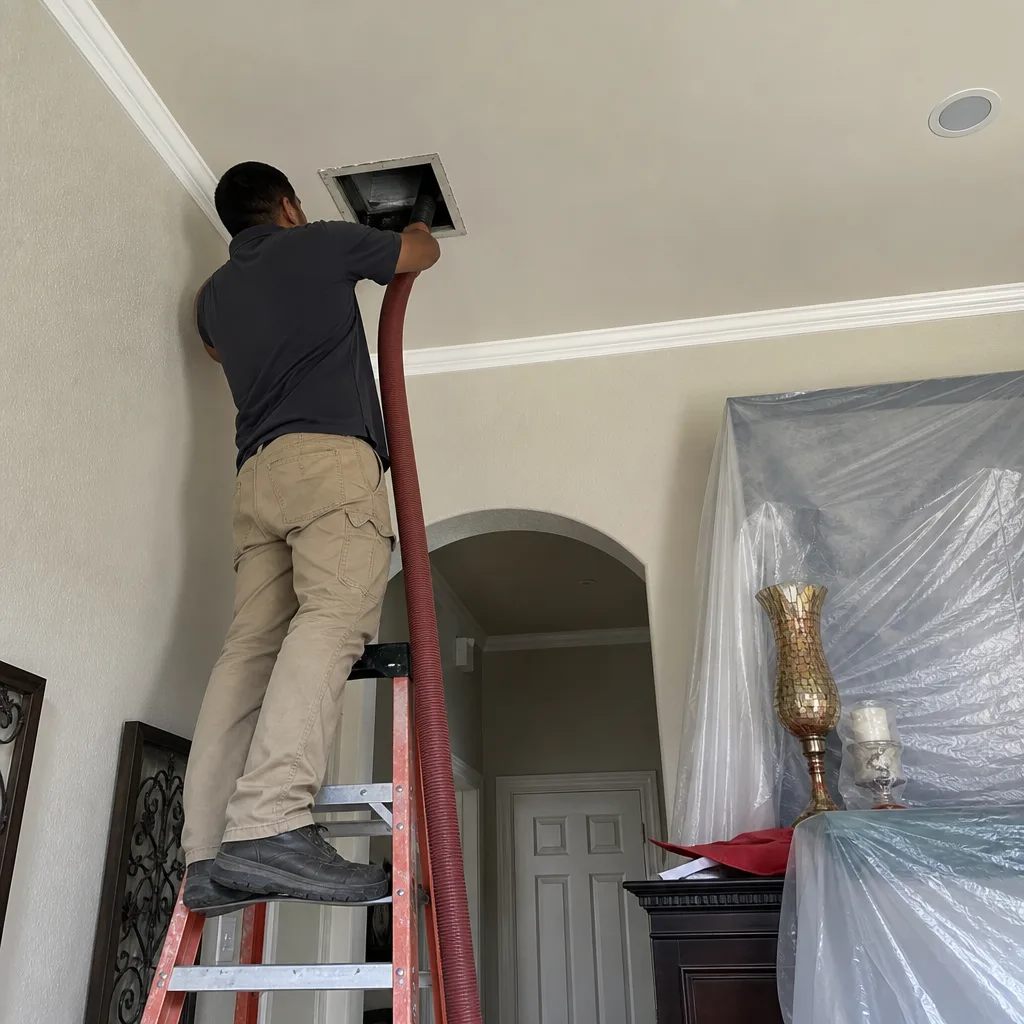 After
After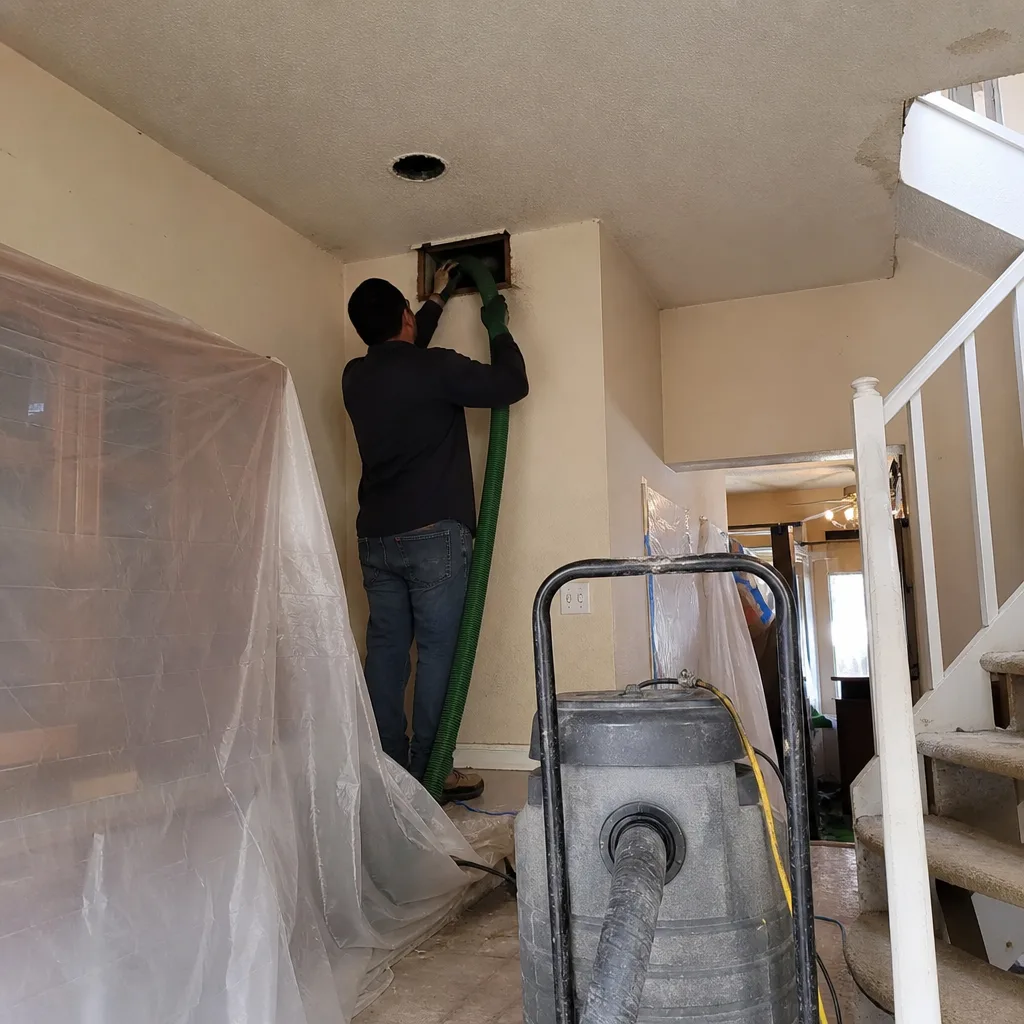 Before
 After
AfterHow to Hire a Air Duct Cleaning Contractor in Pearland: A Step-by-Step Guide
Texas does not license air duct cleaning as a standalone trade. The person quoting you $79 and the person charging $600 hold exactly the same credentials on paper. In Pearland, where rapid new construction in Shadow Creek Ranch and older inventory in Old Pearland sit side by side, that gap matters. Our Seasonal Air Duct Cleaning Care for Pearland: Year-Round Homeowner’s Guide and this page give you a sequential vetting process that exposes low-effort operators before they’re inside your home. You’ll learn the four questions that separate documented professionals from coupon chasers, how to read a written quote line by line, and what a legitimate post-job deliverable actually looks like in this market.
Quick Answer
To hire a legitimate Air Duct Cleaning services contractor in Pearland, verify they use negative-pressure extraction equipment (not just a shop vacuum), provide a written price before work starts that specifies system size and vent count, deliver dated before-and-after photos tied to your address, and back the job with a written callback policy. NADCA membership is meaningful; generic “certified” claims without a named body are not. Get at least two written quotes and compare them on these four dimensions before scheduling.
Table of Contents
- Why the Pearland Market Makes Vetting Essential
- The Four Questions to Ask Before Scheduling
- NADCA Membership vs. Generic “Certified” Claims
- How to Compare Written Quotes Line by Line
- Red Flags Specific to the Pearland Market
- What a Legitimate Post-Job Deliverable Looks Like
- Common Mistakes to Avoid
- When to Call a Professional
- Frequently Asked Questions
- The Bottom Line
BeforeAfterWhy the Pearland Market Makes Vetting Essential
Pearland’s housing stock splits into two distinct categories, and each attracts a different kind of duct cleaning operator.
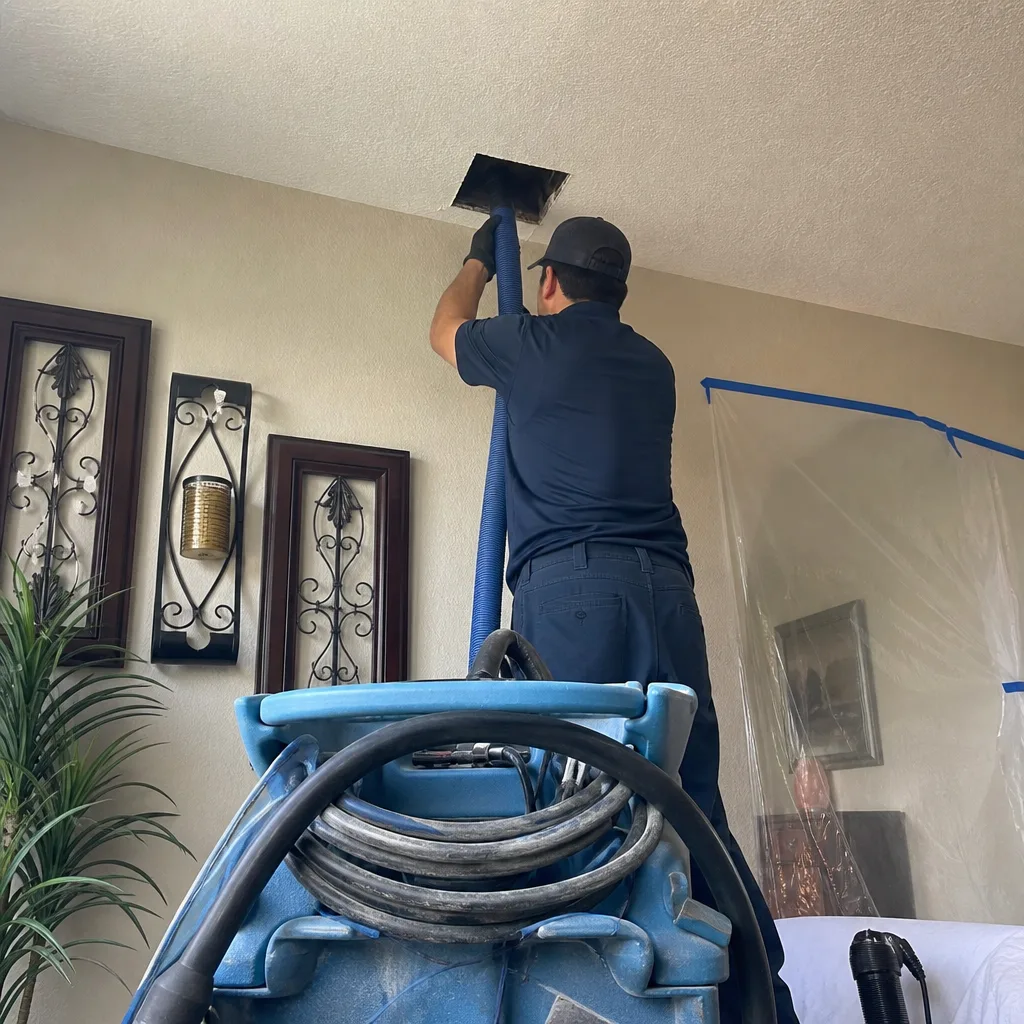
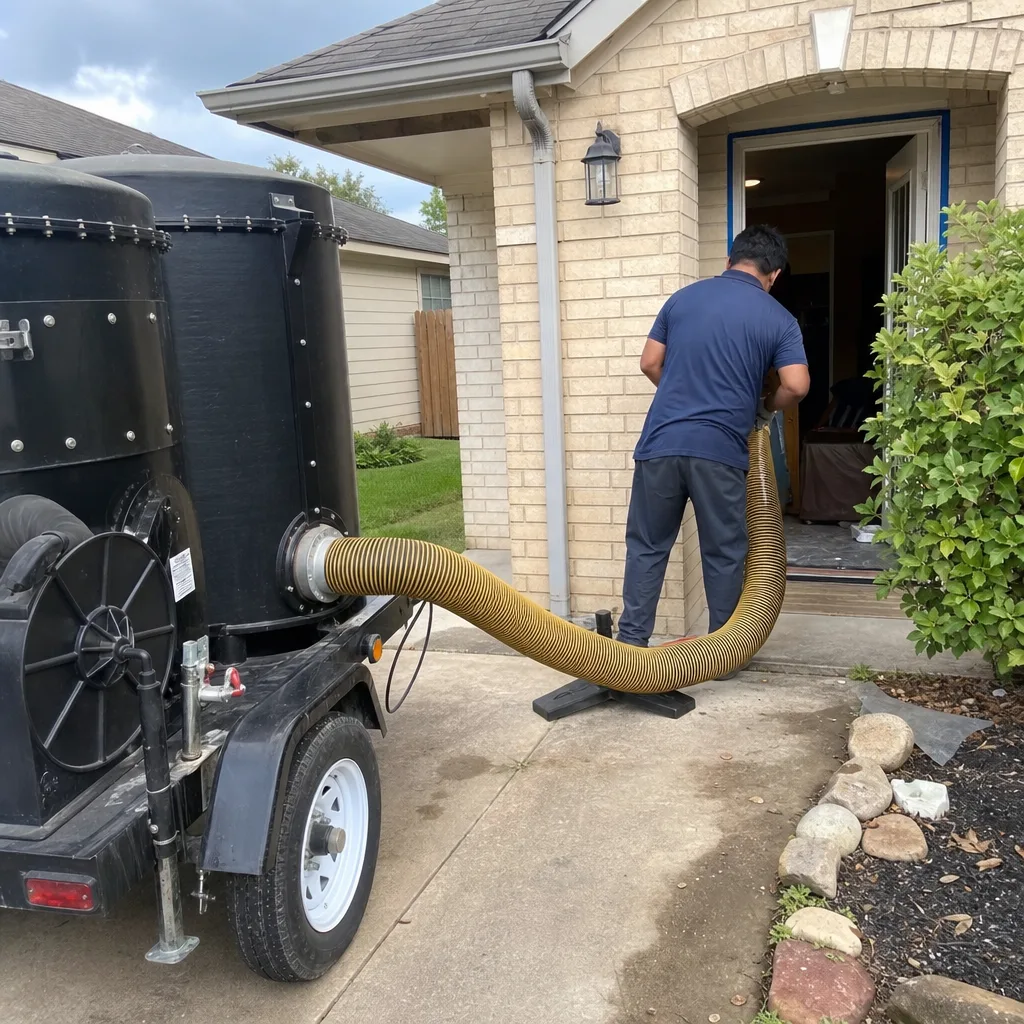
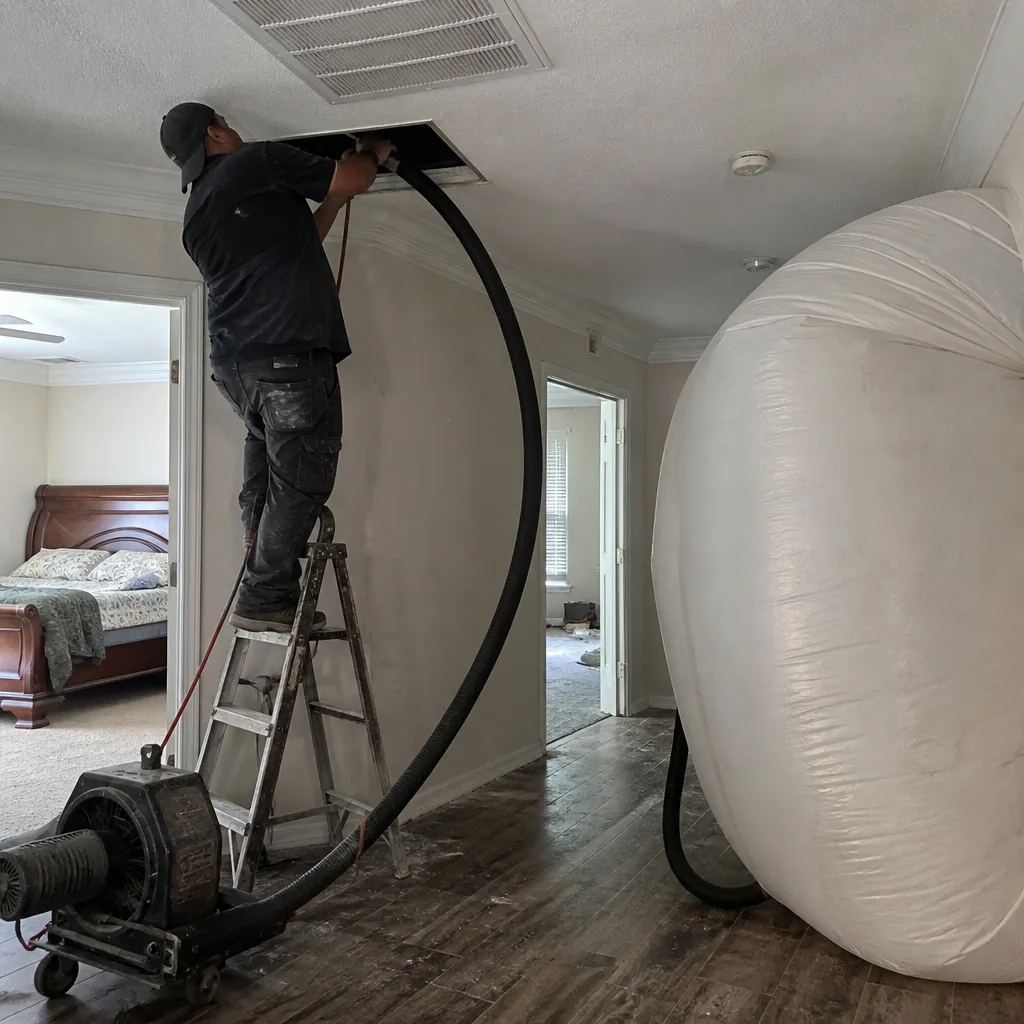
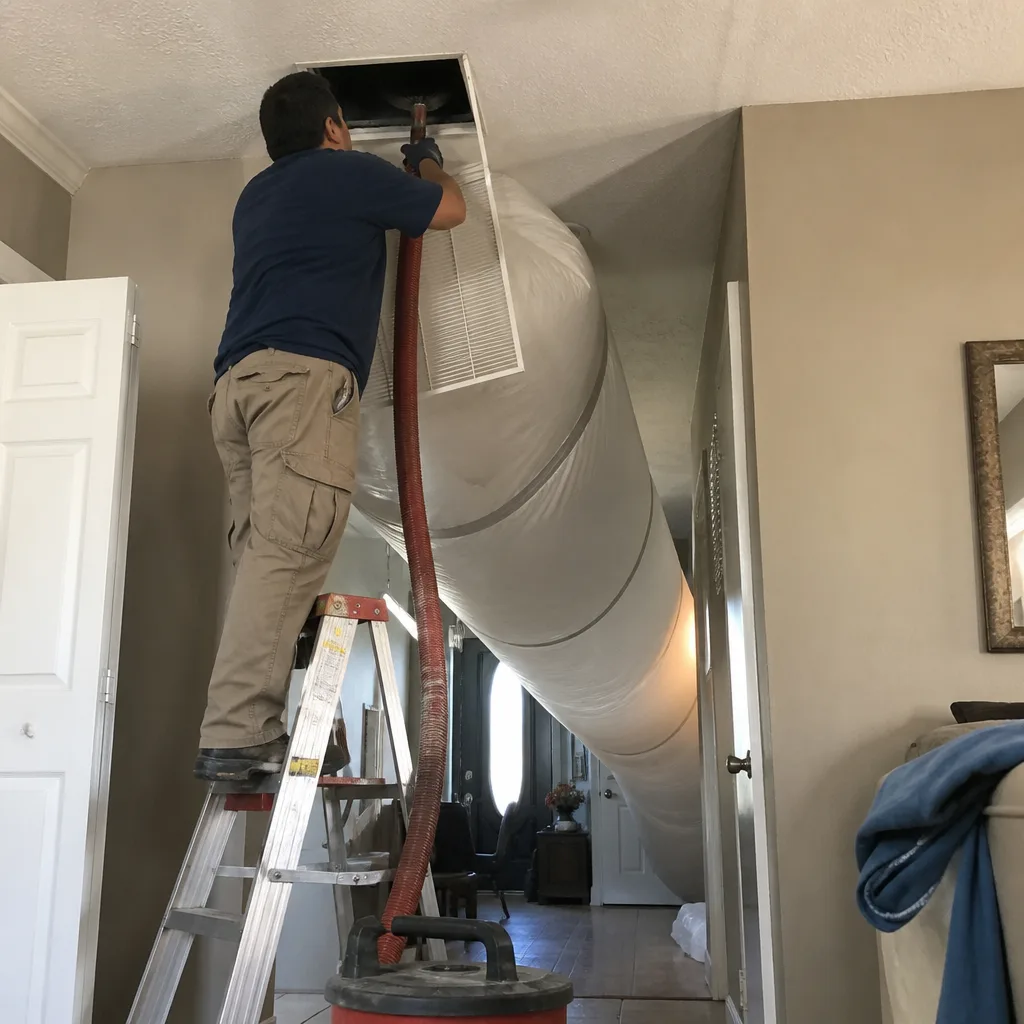
Newer developments like Shadow Creek Ranch, Lakes of Highland Glen, and Silverlake were built between 2005 and 2020. These homes have flexible ductwork, often fiberglass-lined, with plenums - the central distribution box - located in conditioned attics. The duct runs are longer, with more elbows, and the original construction debris (drywall dust, wood particulate, sealant overspray) frequently remains in the system for years. A legitimate cleaning here requires negative-pressure extraction, where a large vacuum unit creates suction at the plenum while agitation tools disturb debris inside each duct run. A shop vacuum with a rotary brush pushed from the register end will not reach the full length of these runs.
Older Pearland neighborhoods, including sections of Old Pearland near the original town site and homes built through the 1990s, often have metal ductwork with shorter runs and different access challenges. Some have asbestos tape at joints, which a trained technician identifies before disturbing. The humidity patterns here, with Gulf moisture pushing in from the southeast and stagnant summer air in attic spaces, create microbial growth conditions that newer operators may misidentify or overstate.
The market itself compounds the problem. Pearland’s population grew from 37,000 in 2000 to over 125,000 today. That growth attracted national lead-generation services that sell customer information to the highest bidder, often an out-of-area contractor with a local-looking phone number. The barrier to entry is a van, a portable machine, and a Facebook ad. No state license means no mandatory training, no insurance verification, and no recourse through a regulatory board if the job goes wrong.
We’ve been working in Pearland since 2013, and the pattern is consistent: homeowners who do ten minutes of verification before scheduling avoid nearly all the problems that generate our callback requests. For more guides & resources, see our blog. The verification process below is built from those observations.
The Four Questions to Ask Before Scheduling
These four questions expose evasion. A legitimate contractor answers directly. An operator cutting corners deflects, generalizes, or becomes vague. Ask them in this order.
Question 1: What equipment will be used, and can I verify the brand?
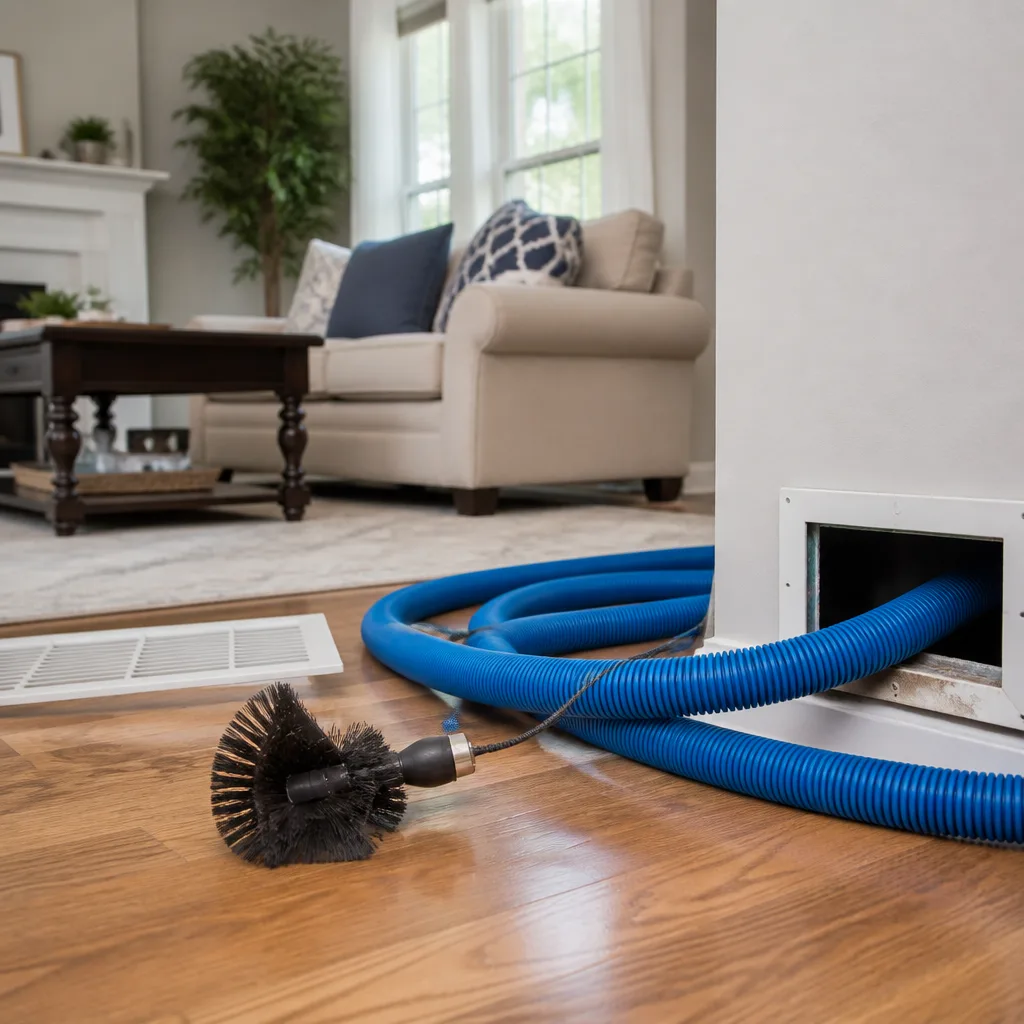
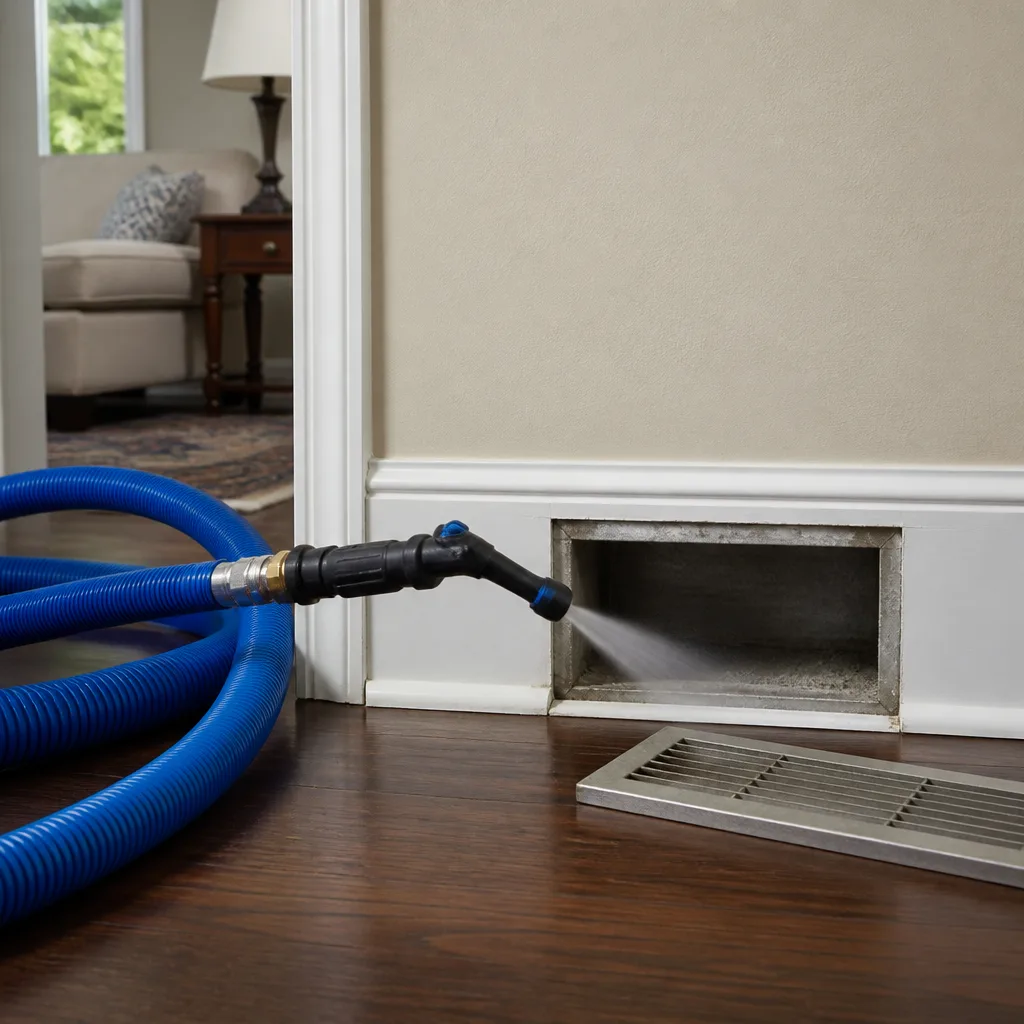
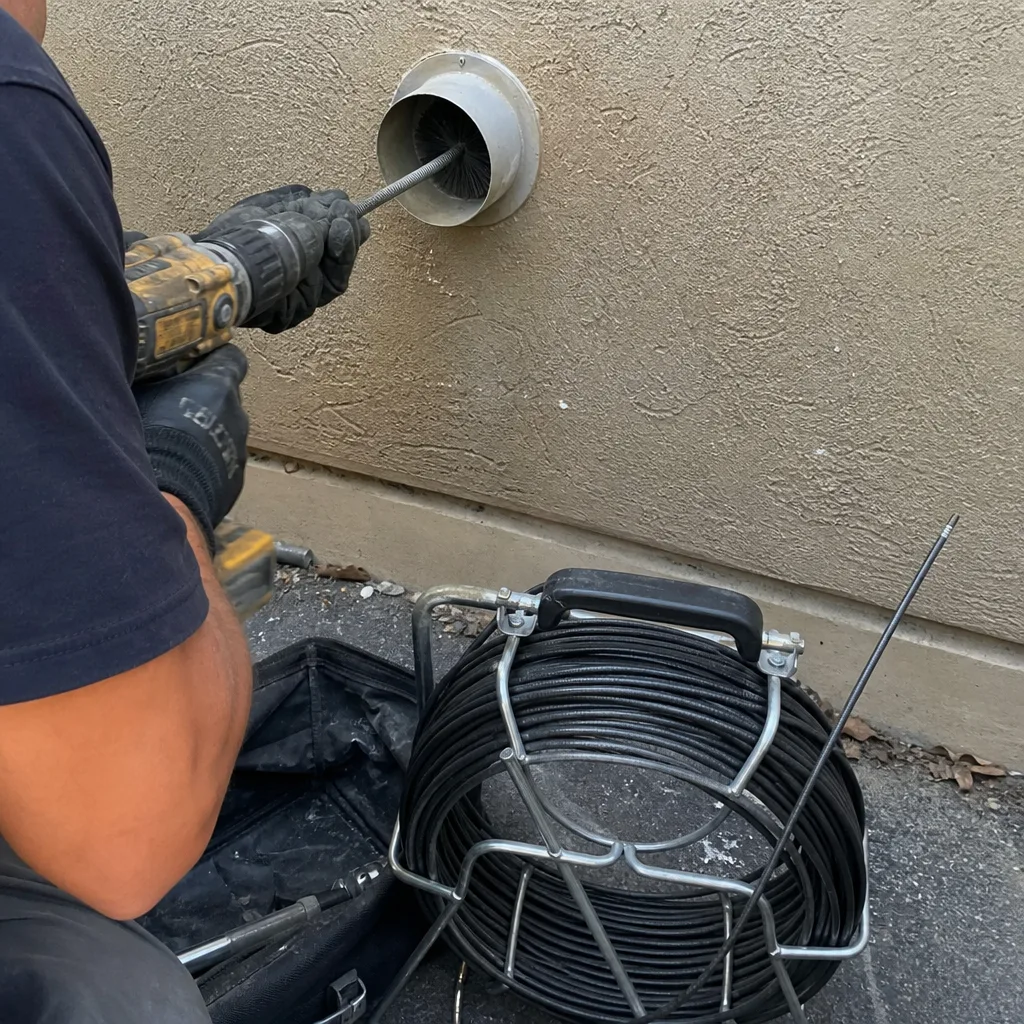
Negative-pressure extraction is the industry-recognized method for residential duct cleaning. The system connects a high-capacity vacuum (typically mounted on a truck or a portable unit with sufficient CFM) to the plenum, creating suction throughout the duct network. Agitation tools - rotary brushes, air whips, or compressed-air skip balls - are inserted at each register to dislodge debris that the vacuum pulls away.
Ask specifically: “What brand and model of extraction equipment do you use?” Professional-grade names include Rotobrush, Nikro, and Abatement Technologies. These are verifiable. The contractor should be able to name what they operate without hesitation.
What evasion looks like: “We use commercial-grade equipment” (no brand named), “Our machines are top-of-the-line” (no specification), or “The technician will explain when he arrives” (shifting accountability to a future moment when you’re less likely to cancel). A shop vacuum with a long hose is not negative-pressure extraction. It will make noise at your register and leave the plenum untouched.
Question 2: What documentation do I receive, and what does it include?
The answer should specify three items: a written scope of work agreed to before start, dated before-and-after photographs of the interior of each duct run, and a written warranty or callback policy.
Ask: “Will I receive photos of the inside of my ducts, tied to my address and the date of service?” Generic “completion certificates” or printed checklists with checkmarks are not documentation. They prove a technician visited, not that cleaning occurred.
What evasion looks like: “We provide a full report” (no specifics on photo content), “The technician will show you on his tablet” (no permanent record for your files), or “We guarantee our work” (verbal, not written). At CleanRun Air Duct Cleaning Pearland home, every job concludes with a Documented Photo Record - interior of every duct run, before and after, delivered as a standard part of the job record. We’ve held this practice since 2013.
Question 3: What exactly is included in the quoted price?
The quote should specify: number of supply vents, number of return vents, whether the plenum is included, whether the blower compartment and evaporator coil are included (these are separate from duct cleaning), and whether any sanitizer or sealant application is included or optional.
Ask for the quote in writing before scheduling. Haven Standard Clause 1 requires this: a written price delivered before any work starts, every time. If the contractor says “We’ll assess when we get there,” you are accepting open-ended pricing.
What evasion looks like: “It’s $X per vent” (per-vent pricing invites bait-and-switch - additional vents “discovered” on arrival), “We have a special running” (no written scope attached), or “The technician will write it up on site” (pressure to accept in the moment). CleanRun’s written price specifies the system size assumption, the exact components included, and the flat price for the complete job. No per-vent math. No surprises.
Question 4: What happens if I find a problem after you leave?
The answer should be specific: a written callback policy with a time period, a named process for initiating it, and no requirement that you pay additional fees for legitimate rework.
What evasion looks like: “Just call us, we’ll take care of it” (no time limit, no written terms), “We stand behind our work” (no mechanism), or “The manager will review it” (discretionary, not guaranteed). CleanRun’s 365-Day Done Right Promise is backed in writing on every job: if it’s not done right, we make it right. Not a policy subject to manager approval. A written guarantee.
NADCA Membership vs. Generic “Certified” Claims
The National Air Duct Cleaners Association (NADCA) is the only nationally recognized body with substantive technical requirements for residential duct cleaning. Understanding what membership actually requires helps you evaluate claims that sound similar but mean nothing.
NADCA membership requires:
- Adherence to NADCA Standard 2021, which specifies inspection methods, cleaning procedures, and post-job verification
- Maintaining general liability insurance at specified minimums
- Completion of NADCA’s Air Systems Cleaning Specialist (ASCS) certification by at least one company representative
- Agreement to NADCA’s code of ethics, which includes prohibitions on false advertising and scare tactics
These requirements are verifiable. You can search NADCA’s member directory by company name and confirm active status. The ASCS certification requires passing a proctored examination on HVAC system design, contamination assessment, and cleaning methodology.
Generic “certified” claims are different. Common variants include:
- “Certified technicians” - certified by whom? What body? What did the certification require?
- “EPA certified” - the EPA does not certify duct cleaning contractors. It provides guidance documents. This claim is false.
- “Licensed and insured” - as noted, Texas does not license air duct cleaning as a standalone trade. The “license” may be a general business registration or an HVAC contractor license that does not cover duct cleaning specifically.
In Pearland, we’ve encountered operators who display badges from online “certification mills” that require a payment and a brief video course, with no examination or practical assessment. These are not equivalent to NADCA membership, and the operators know most homeowners won’t check.
When a contractor claims certification, your response should be: “Which body issued the certification, and what did it require?” A legitimate answer arrives in seconds. Evasion indicates the claim is decorative.
How to Compare Written Quotes Line by Line
Written quotes protect you. Verbal estimates, even friendly ones, leave no record of what was promised. When you have two or more written quotes for Air Duct Cleaning in Pearland, compare them on these specific line items.
System size assumptions
Does the quote specify the assumed square footage of your home? Duct systems scale with conditioned space. A quote based on 2,500 square feet will not cover a 4,000-square-foot home without adjustment. If your home is larger than the assumption, the final invoice often exceeds the quote. CleanRun’s written price specifies the square footage assumption and adjusts transparently if the actual system differs.
Number of vents
Count your supply registers and return grilles before calling. A quote should specify how many of each are included. “Up to X vents” language is common; verify whether your home exceeds that count. Per-vent pricing, as noted, is a bait-and-switch structure. Flat pricing per system, with the system size defined, is more reliable.
Access point fees
Some contractors quote a base price, then add fees for “additional access points” needed to reach the full duct network. Ask: “Under what circumstances would access point fees apply, and how much are they?” A legitimate contractor explains this before arrival, not after cutting into ductwork.
Sanitizer upsells
Antimicrobial application is optional in most cases. The quote should state whether it is included or additional. If additional, the price should be specified in writing, not quoted verbally after the technician has shown you a microbial sample. In Pearland’s humid climate, microbial growth in attic plenums is real, but its presence should be documented with photos, not asserted with a flashlight and urgency.
What happens if more is found
Duct cleaning sometimes reveals damage: disconnected runs, deteriorated flex duct, asbestos tape, or significant mold colonization. The quote should specify how these findings are handled. CleanRun’s written scope includes a protocol: findings are photographed, explained, and a separate written estimate provided before any additional work. No work proceeds without a second written agreement.
Here’s how to structure your comparison:
- Verify each quote includes the four elements above.
- Cross-check vent counts against your actual home.
- Note any “subject to” language or open-ended adjustments.
- Confirm callback policies in writing, not verbally.
- Ask each contractor the same four questions from the previous section and record the answers.
The quote that answers most clearly is usually the most reliable, regardless of price position.
Red Flags Specific to the Pearland Market
Some warning signs are national. Others are specific to how this market operates.
Out-of-area phone numbers with local-looking ads
Lead-generation services buy local phone numbers that forward to call centers in other states or cities. The contractor who arrives may be from Houston, Beaumont, or farther, with no local accountability. Verify the business address: is it in Pearland, or is it a PO box or virtual office? CleanRun operates from a Pearland base and has since 2013. Our technicians live in the area they serve.
No physical address
A legitimate contractor has a physical location where equipment is stored and maintained. A residential address is acceptable for smaller operations; a commercial facility is common for established companies. No address at all, or only a city name with no street, is a warning sign. You have no recourse if the operator disappears.
Quotes given without asking square footage
It is impossible to estimate duct cleaning accurately without knowing system size. A contractor who quotes $199 over the phone without asking your home’s square footage, number of vents, or system type is not estimating. They are marketing a price point that will adjust dramatically on arrival. This is the $79 coupon model: arrive low, invoice high.
Pressure to schedule immediately
“I have an opening this afternoon” or “This price expires tomorrow” are urgency tactics, not service offers. Legitimate duct cleaning is scheduled, not dispatched. The work requires preparation, equipment loading, and route planning. Same-day pressure often indicates a technician already in your area with time to fill, not a business with structured operations.
Payment required before work
Standard practice is payment upon completion, after you’ve reviewed the work and received documentation. Full payment before start, or large deposits for residential jobs, is atypical and risky.
Vague equipment descriptions
As noted, “commercial-grade” and “professional equipment” are meaningless without brand names and specifications. In Pearland’s newer homes with longer duct runs, equipment capability directly affects results. A Rotobrush or Nikro system with documented CFM rating is verifiable. “Our powerful machine” is not.
What a Legitimate Post-Job Deliverable Looks Like
The job is complete. The crew has left. What should be in your hands?
A legitimate deliverable contains four components, each with specific characteristics:
1. Written scope of work, signed before start
This document specifies what was agreed to: number of vents, components included (plenum, blower, coil), flat price, and any exclusions. It is dated and signed by both parties before work begins. It is not generated after completion.
2. Dated before-and-after photographs, tied to your address
Each photo shows the interior of a specific duct run, with a timestamp and address identifier. Generic stock photos, photos without timestamps, or photos that could be from any home are not documentation. At CleanRun, the Documented Photo Record on Every Visit includes interior shots of every duct run, before and after, with address and date metadata. Customers receive this as a standard deliverable, not an upsell. We’ve done this since our first job in 2013.
3. Written warranty or callback policy
This specifies the time period, the process for initiating a callback, and what the contractor will do. “Call if you have problems” is not a warranty. CleanRun’s 365-Day Done Right Promise is printed, dated, and specific: if the work is not right, we make it right.
4. Equipment and material record
For jobs involving sanitizers, sealants, or repairs, the deliverable should note what products were applied, where, and in what quantity. This matters for warranty claims, for future HVAC service, and for your own records. Guardsman and Honeywell products, for example, have specific application requirements and warranty terms that reference proper documentation.
What a deliverable should not include: a generic “certificate of completion” with no photo content, a handwritten receipt with no scope detail, or verbal assurances with no written backup. These prove attendance, not performance.
Common Mistakes to Avoid
- Choosing by price alone. The $79-$129 coupon range in Pearland nearly always converts to $400-$800 on arrival through vent count adjustments, “required” sanitizers, and access fees. The lowest initial quote is typically the highest final invoice.
- Not counting vents beforehand. Know your supply and return counts. A contractor who counts for you may find more than you expected, especially with returns hidden in ceilings or behind furniture.
- Accepting verbal estimates. Without written documentation, you have no record of what was promised. Disputes become your word against theirs. Every CleanRun quote is written before work starts, no exceptions.
- Ignoring equipment specifics. “They had a big vacuum” is not a specification. Ask brands, ask models, ask CFM ratings. If the contractor cannot answer, they may not know their own equipment.
- Scheduling without checking NADCA membership. The two minutes to verify membership status in NADCA’s online directory eliminates most operators who claim certification falsely.
- Not asking about the callback policy until after payment. Ask before scheduling. A contractor with no written callback policy has no mechanism for accountability. The time to discover this is before they’re in your home.
- Confusing duct cleaning with HVAC maintenance. Duct cleaning addresses the distribution network. Blower compartment cleaning, coil cleaning, and filter replacement are separate services with separate pricing. A quote that bundles them without clarity may be inflating scope.
When to Call a Professional
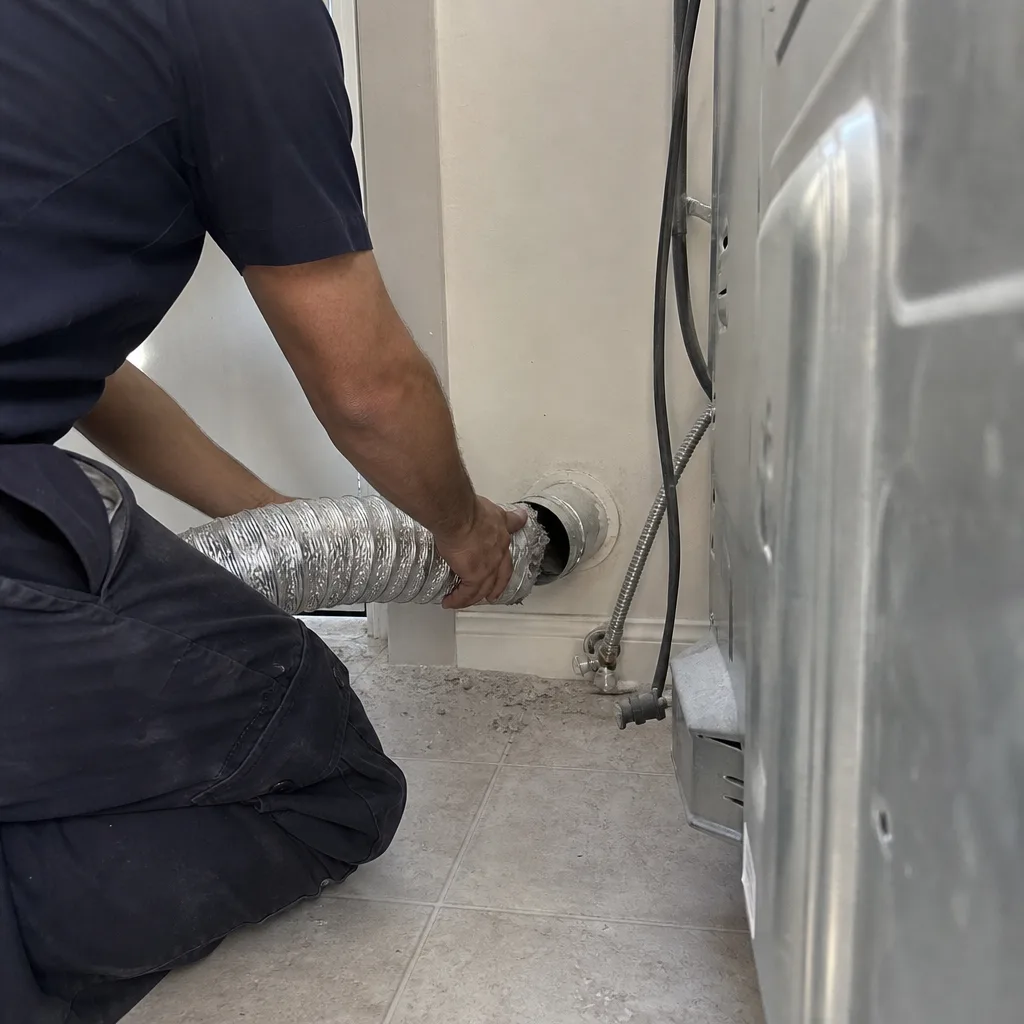
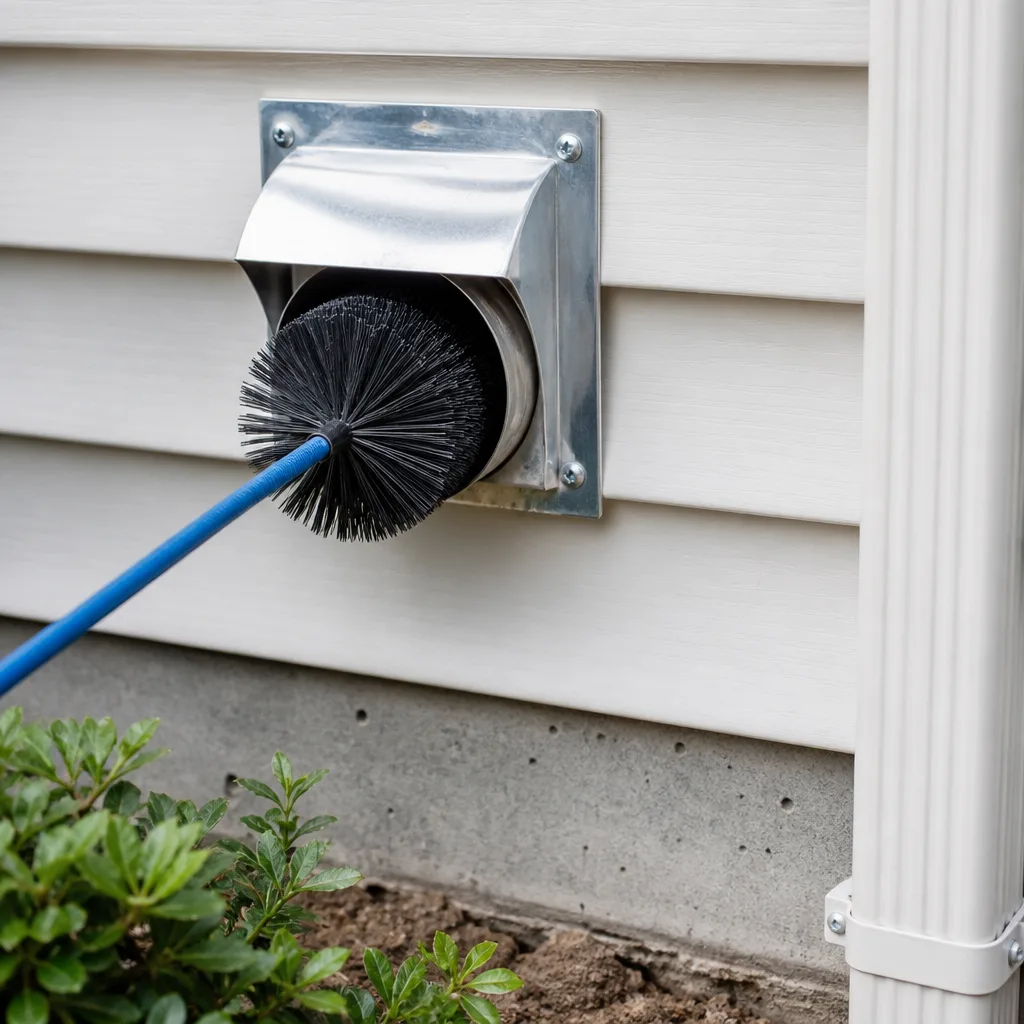
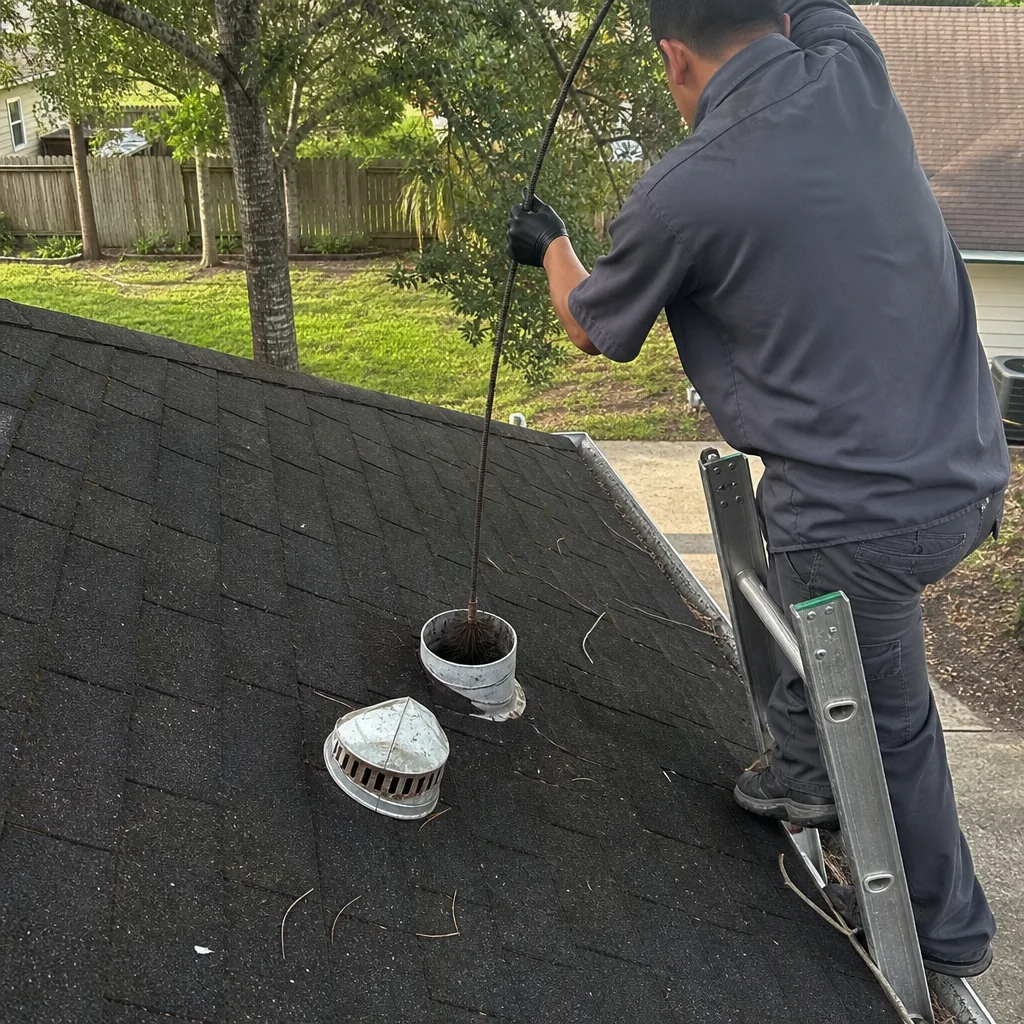
Some conditions indicate it’s time to schedule service rather than continue researching. Visible dust emission from registers when the system cycles, persistent musty odor that filters don’t resolve, uneven heating or cooling that duct obstruction may explain, or recent renovation with documented drywall or construction debris in the system. For Dryer Vent Cleaning in Pearland, lint accumulation visible at the exterior termination or longer drying cycles are clear signals.
If you’ve received a written estimate from another contractor and want comparison, CleanRun Air Duct Cleaning Pearland offers a Free Second Opinion on any written estimate. We put our number next to theirs, in writing, with no obligation. Call (346) 253-1822 to schedule. All calls are answered by a live person, and our technicians are background-checked, uniformed, and identified by name before arrival under Haven Standard Clause 3: Verified Crews.
Frequently Asked Questions
Whole-system duct cleaning for a typical Pearland home ranges from $400 to $800, depending on system size, accessibility, and whether the plenum and blower compartment are included. Homes in newer developments like Shadow Creek Ranch often fall in the upper half due to longer duct runs and more complex plenum configurations. Per-vent pricing below $20 per vent typically indicates minimal equipment and no documentation. Call (346) 253-1822 for a written quote with no per-vent math - estimates are free.
Low initial quotes use a bait-and-switch structure: a teaser price that covers minimal scope, with upsells for additional vents, “required” sanitizers, and access fees added on arrival. The $79-$129 coupon model depends on this conversion. A legitimate quote specifies the complete scope and flat price before work starts. CleanRun’s written price under Haven Standard Clause 1 includes everything agreed to, with no adjustment pressure on site.
Require dated before-and-after photographs of the interior of each duct run, tied to your address. A generic completion certificate or technician’s verbal assurance is not verification. At CleanRun, the Documented Photo Record is standard on every job, delivered as part of the job record, with every duct run photographed before and after.
Every three to five years for typical residential systems, or after significant renovation, pest intrusion, or visible contamination. Homes in Pearland’s newer construction may need initial cleaning within the first two years to remove construction debris that remains in the system. Older homes with metal ductwork may extend toward the longer interval if filters are changed regularly and no contamination events occur.
No. Texas does not license air duct cleaning as a standalone trade. This means no state-mandated training, no insurance verification, and no recourse through a regulatory board. NADCA membership and written documentation become your primary quality controls. Verify NADCA membership independently; don’t accept claims at face value.
Duct cleaning addresses the distribution network: supply and return duct runs, plenum, and registers. HVAC Cleaning in Pearland addresses the mechanical components: blower compartment, evaporator coil, and sometimes the condensate system. They are distinct services with distinct pricing. A quote that conflates them without specifying what’s included in each may be obscuring scope. CleanRun quotes each separately when both are requested, with written clarity on what’s included.
The Bottom Line
Hiring a duct cleaning contractor in Pearland is a quality-control decision, not a price-shopping exercise. Texas’s lack of licensing means your vetting process is the only filter between legitimate work and vacuum noise. Ask the four questions. Verify NADCA membership. Compare written quotes on system size, vent count, access fees, and callback policy. Require a post-job deliverable with dated, address-tied photographs. The operators who answer clearly and document everything in writing are the ones who stand behind their work. The ones who deflect, generalize, or pressure you to decide quickly are showing you exactly who they are. Believe them.
Written by Tomas Reyes, Owner at CleanRun Air Duct Cleaning Pearland, serving Pearland since 2013.