
Last updated September 23, 2026
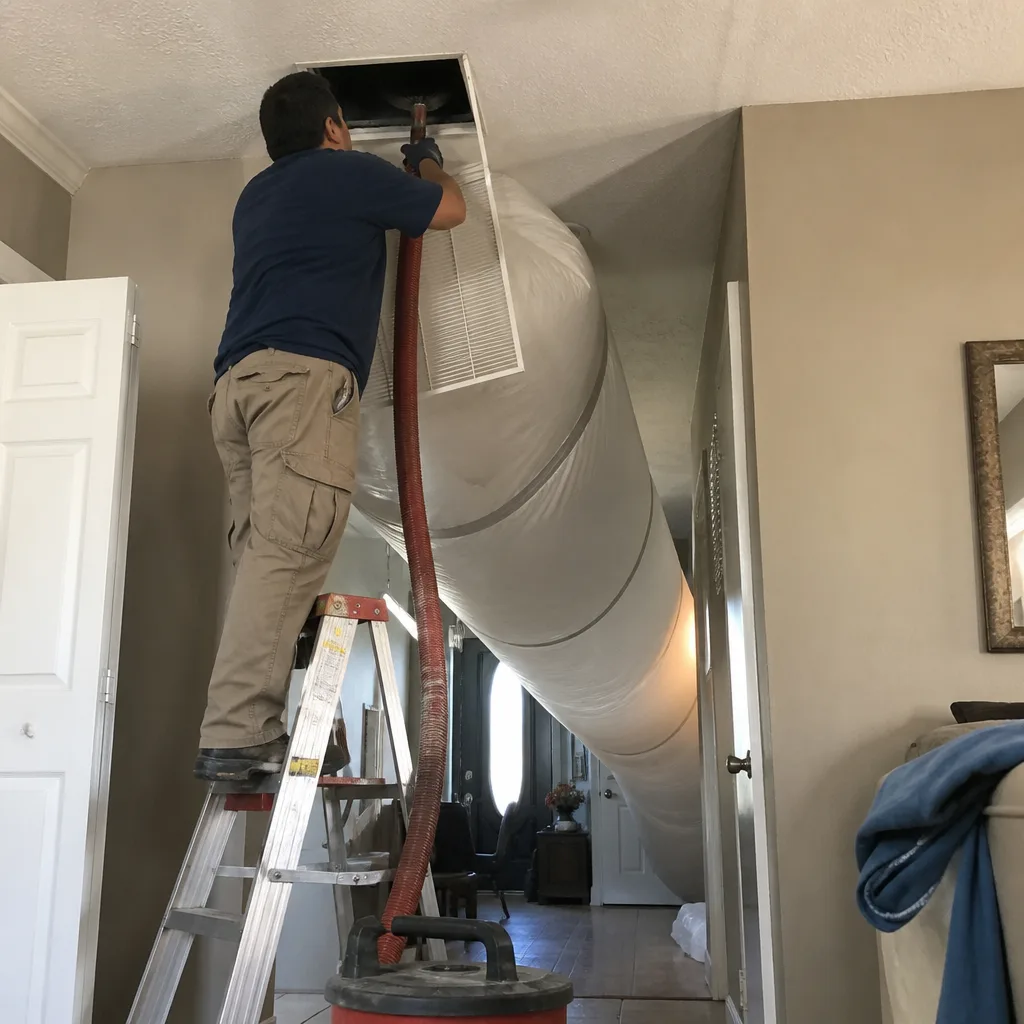
Whole-system duct and dryer vent check with before-and-after photos - you see exactly what came out of your vents
That "$99 whole-house special" is a bait ad - the real number appears once they are in your hallway, or the "clean" is a shop-vac at the register. We photograph the inside of your ducts before and after instead.
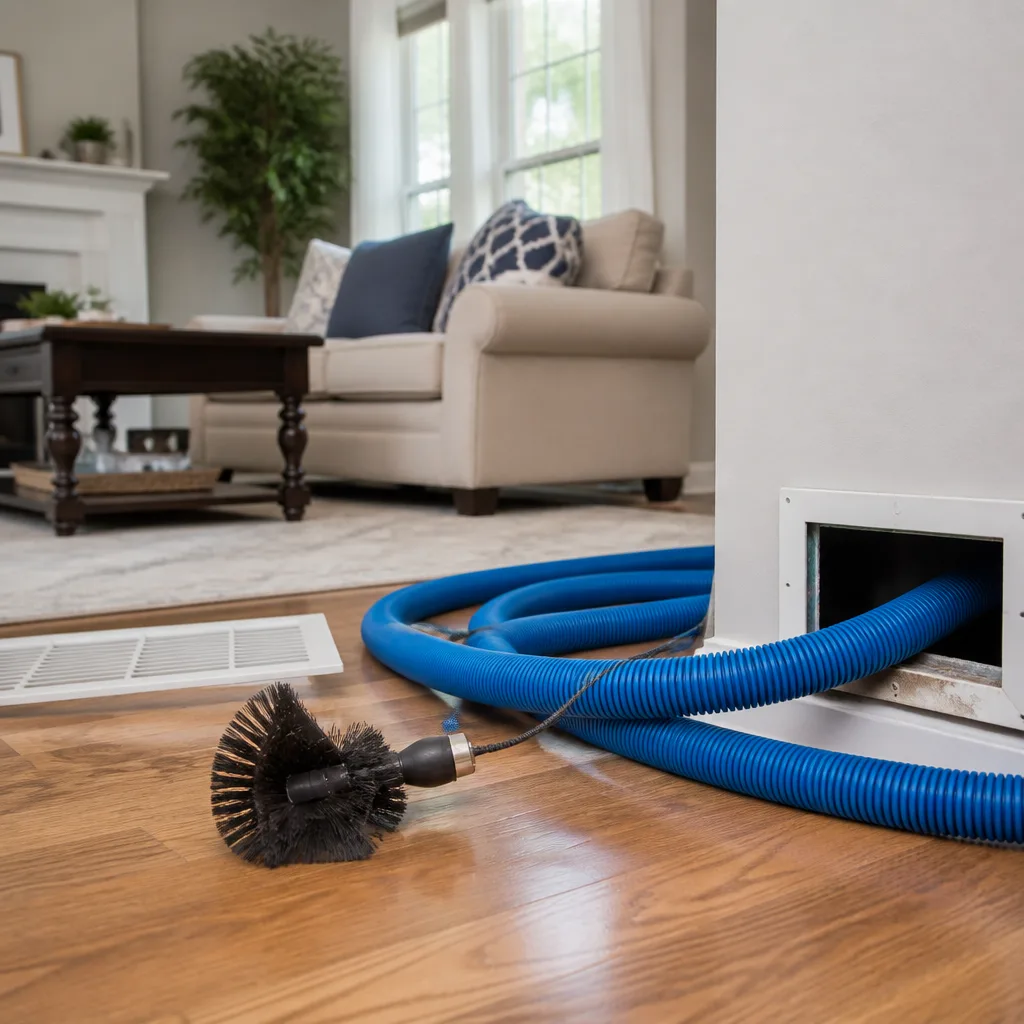
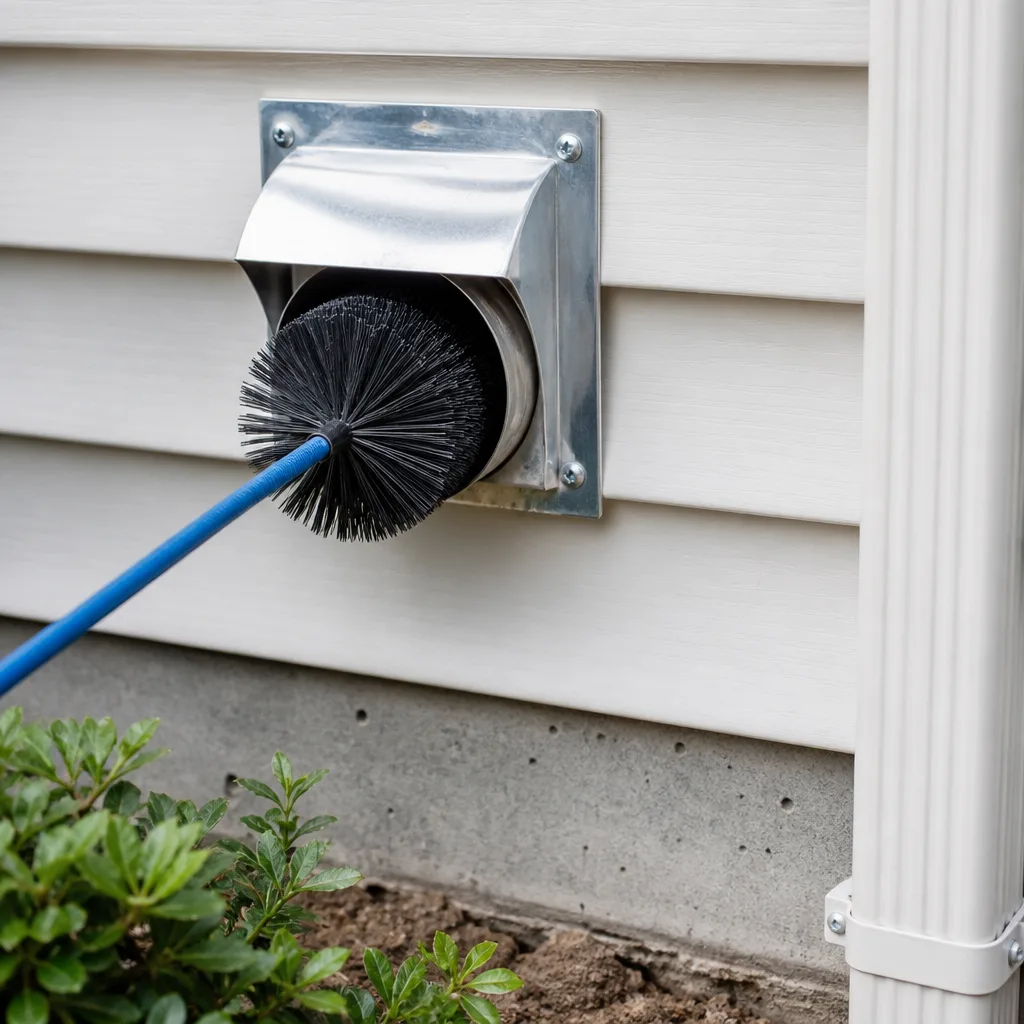
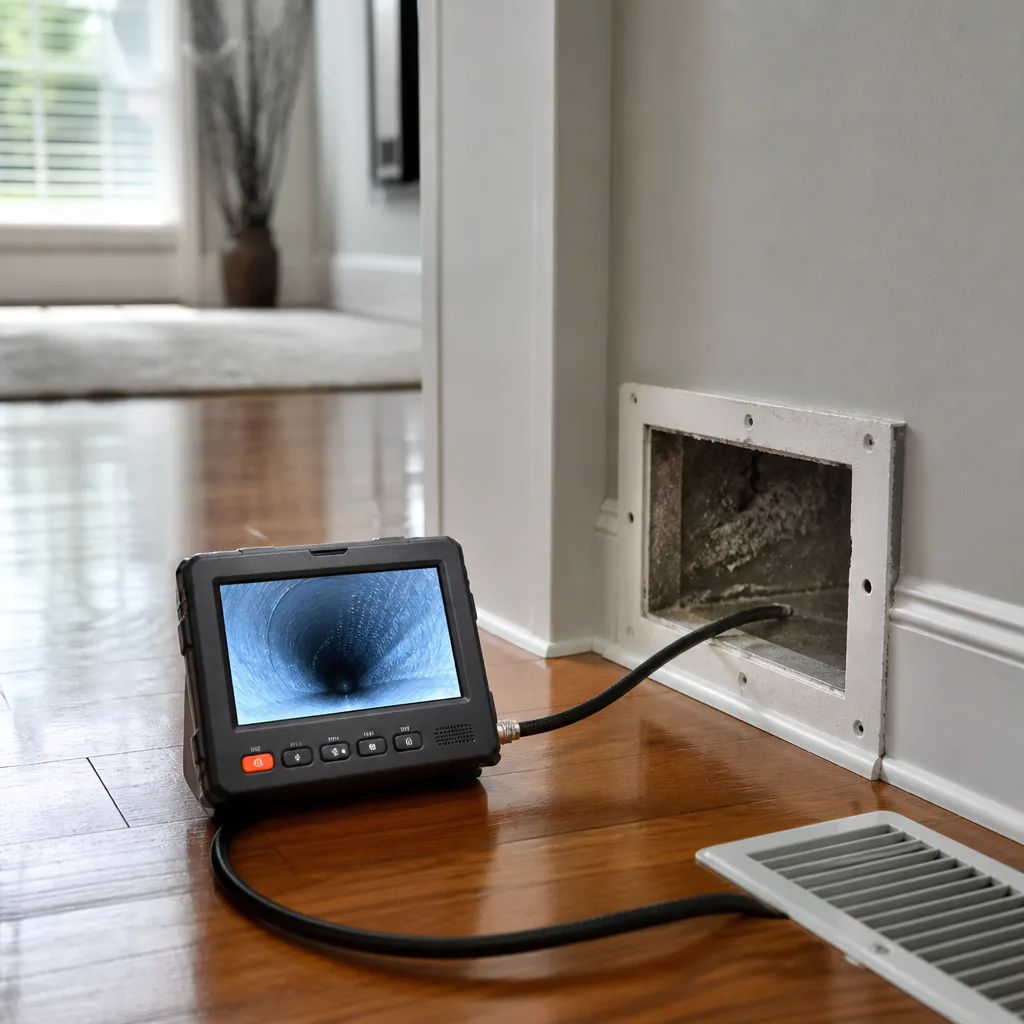
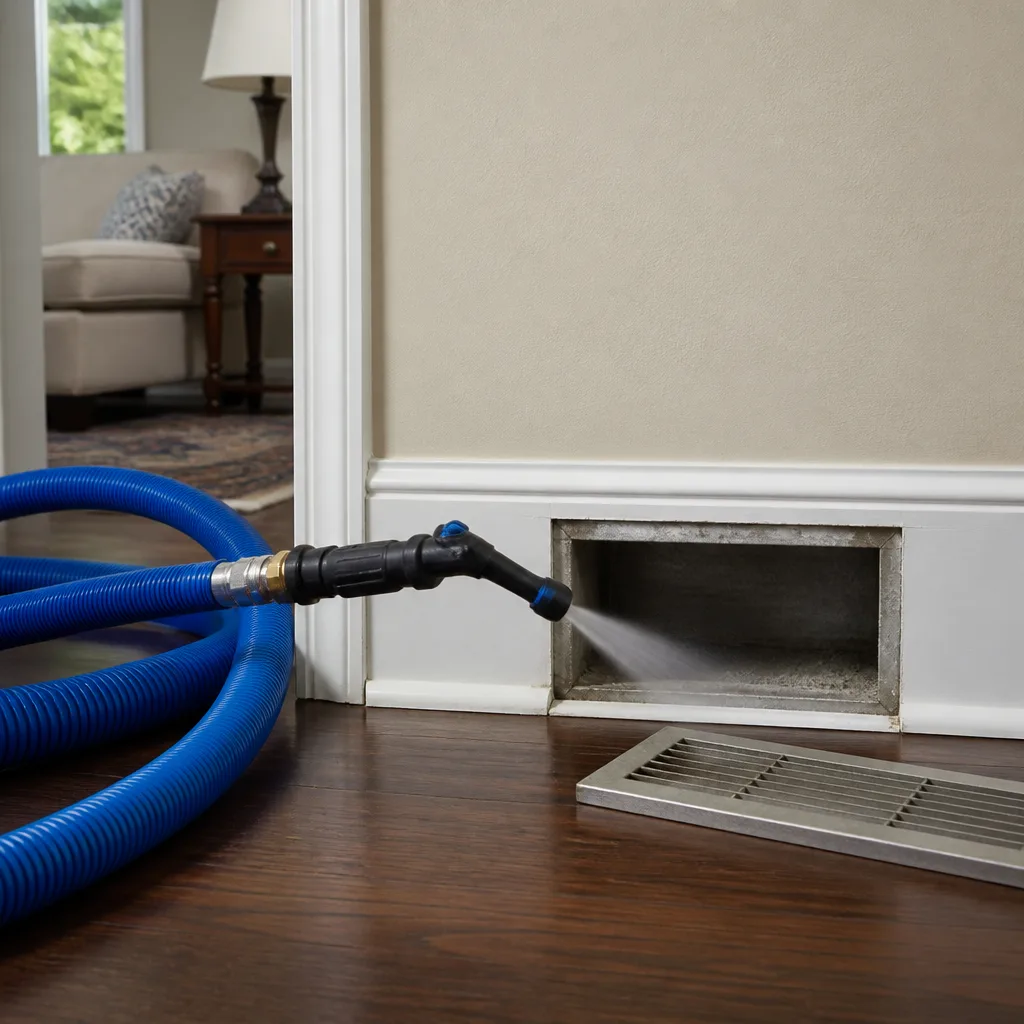
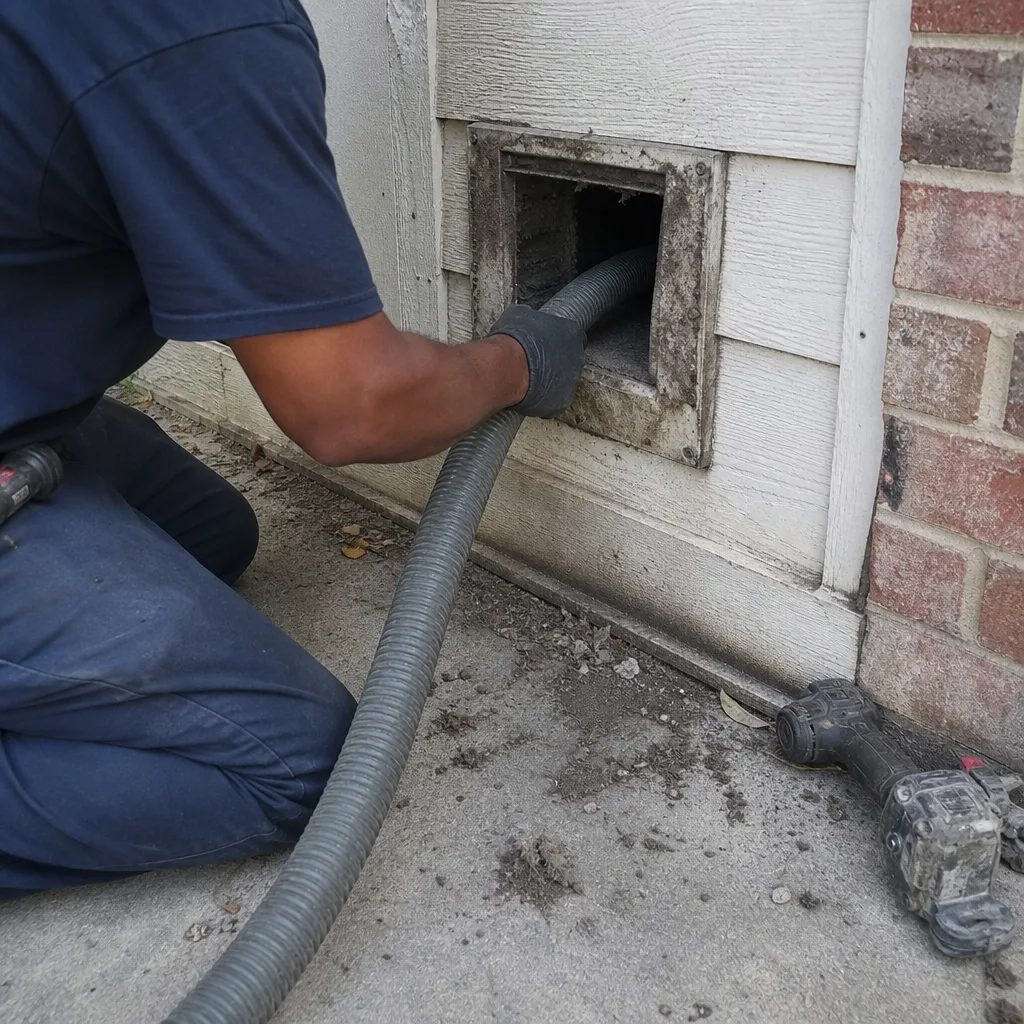 Before
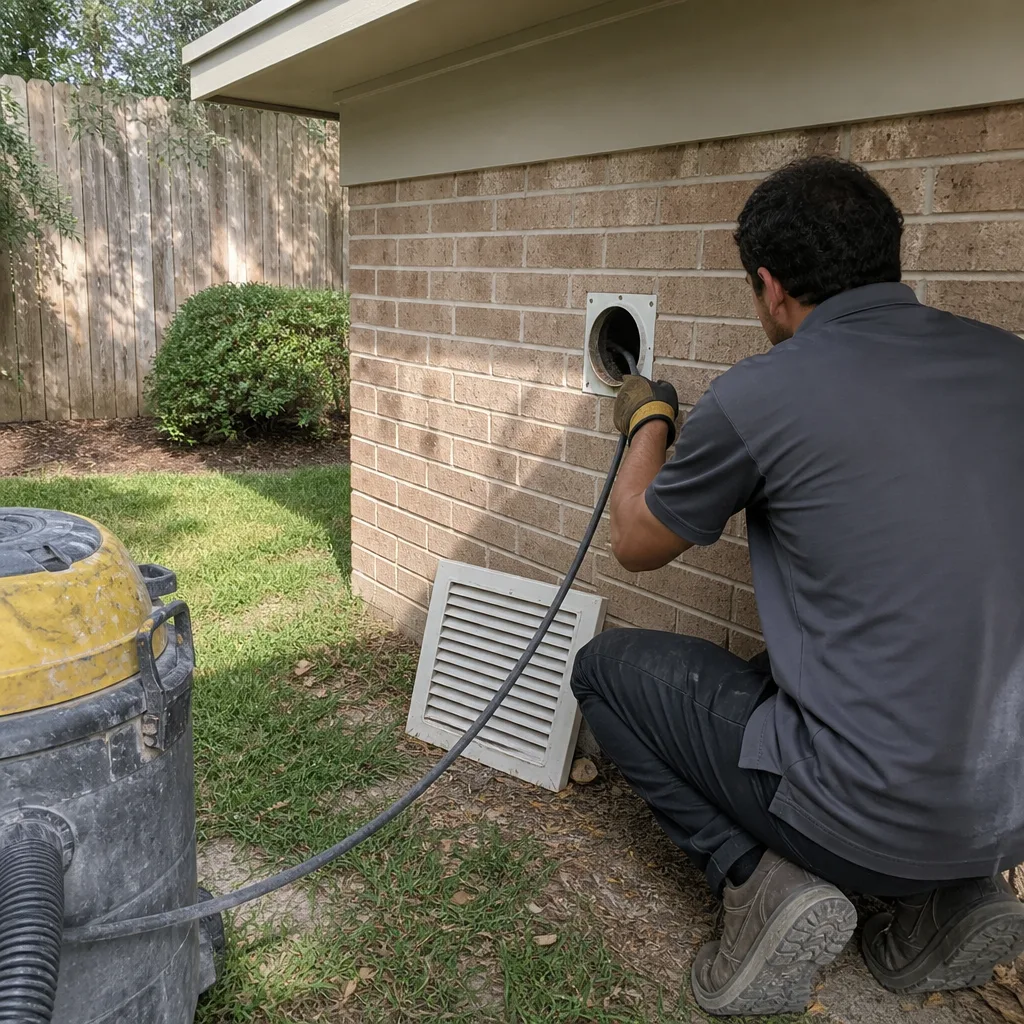 After
After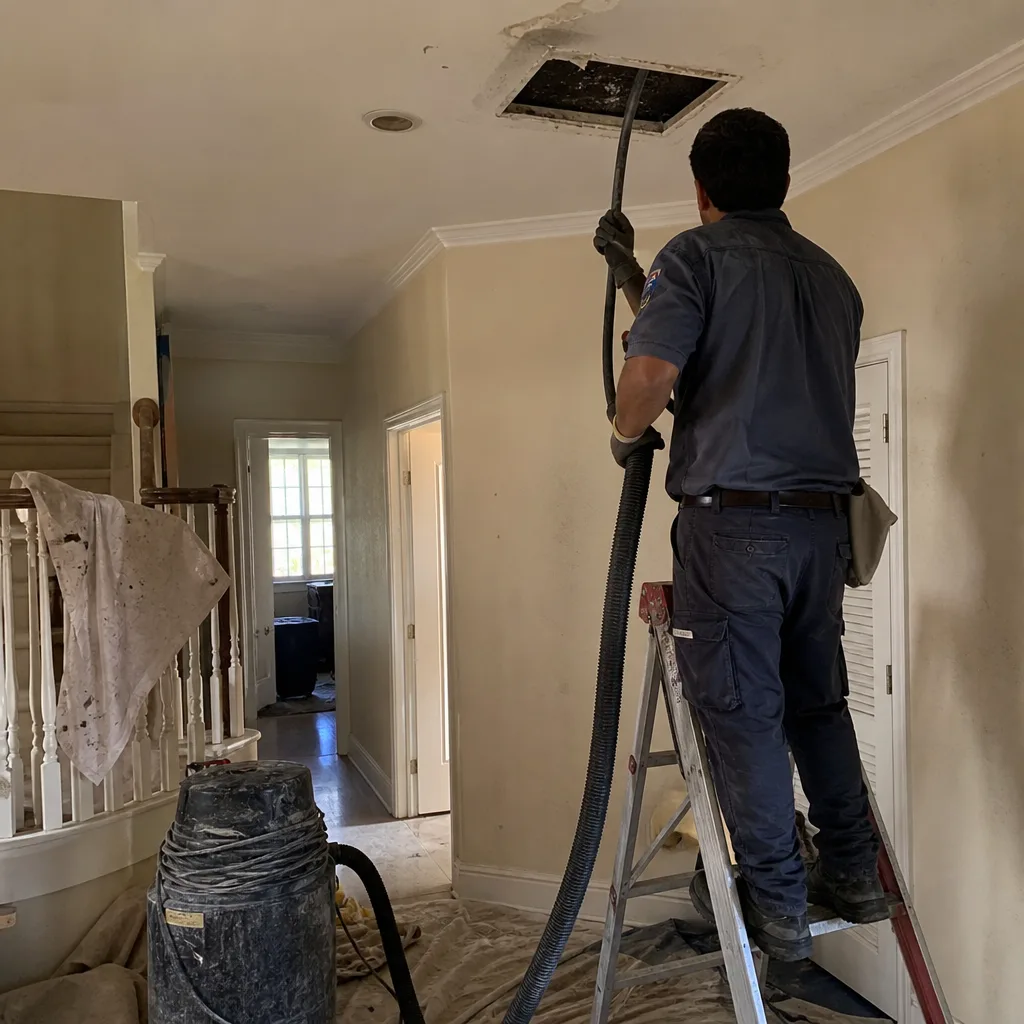 Before
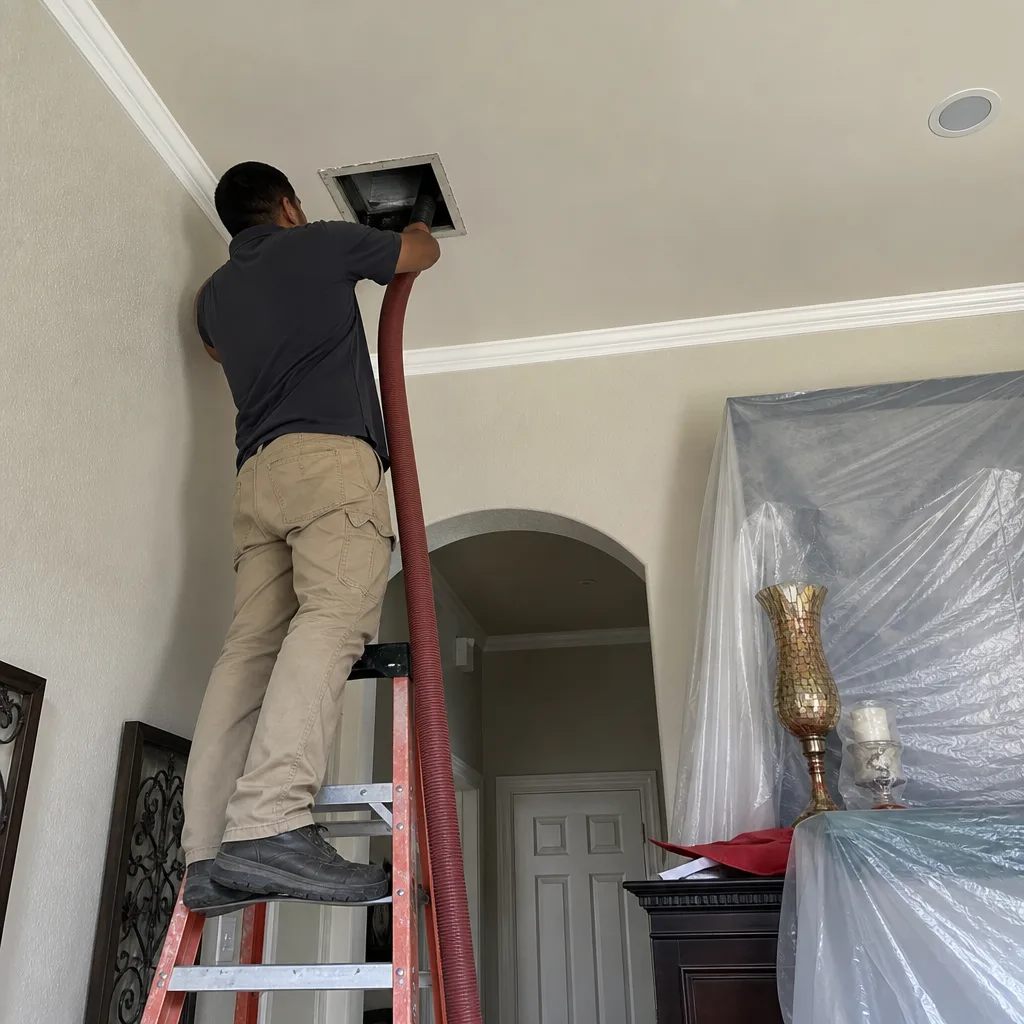 After
After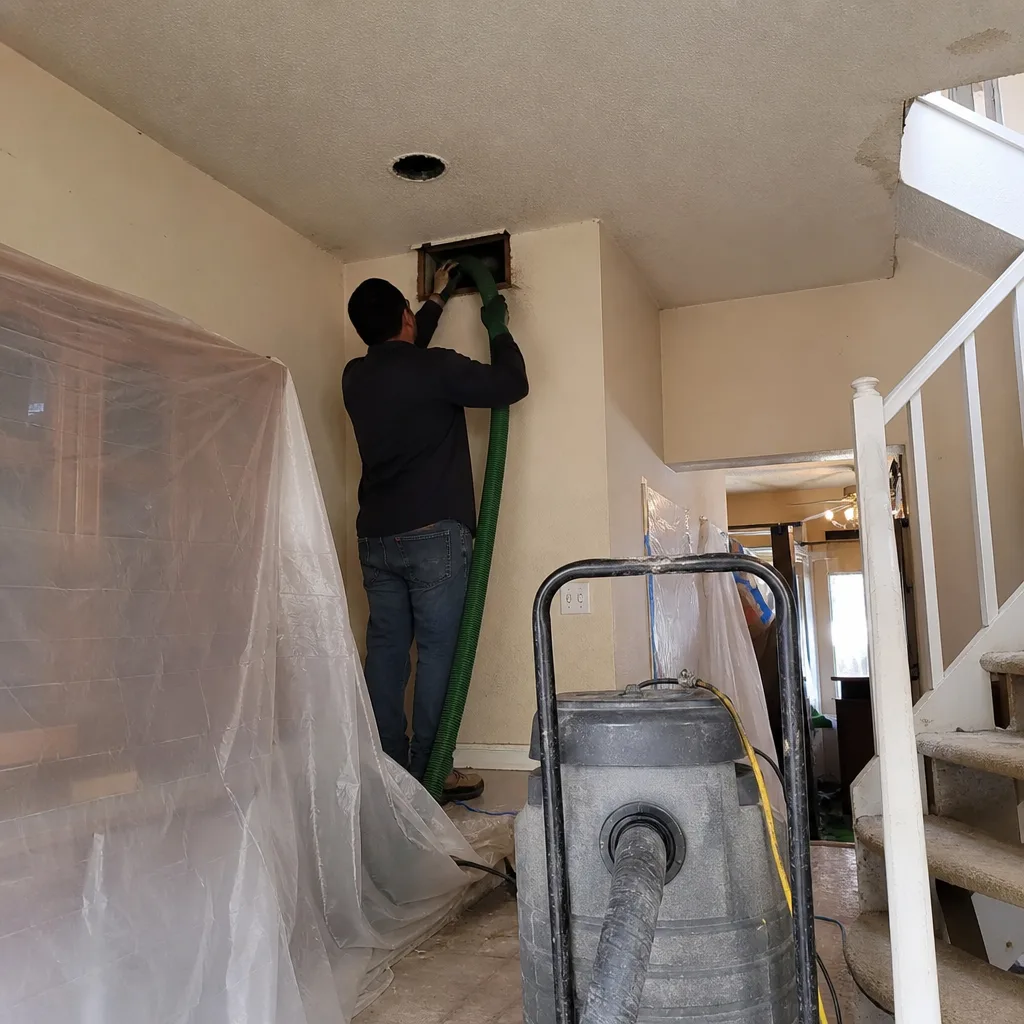 Before
 After
AfterSeasonal Air Duct Cleaning Care for Pearland: Year-Round Homeowner’s Guide
Pearland averages more than 200 cooling days per year. That means your evaporator coil and return plenum spend over half the year in active condensation conditions - the biological growth window here is not a spring event, it’s a sustained operating condition. The standard “clean in fall, check in spring” advice you’ll find on national HVAC blogs was written for climates with actual winters. In this guide, we’ll map Pearland’s real seasonal stress points - May-June transition load, October’s first heating cycle, freeze-event recovery, and the dust load from ongoing construction - and give you a month-by-month observation framework you can use without professional equipment. For Air Duct Cleaning Maintenance Checklist for Pearland Homeowners, see our detailed resource. We’ll also show you when the cost of waiting exceeds the cost of calling.
Quick Answer
For Pearland homes, the two highest-value air duct maintenance points are late May through early June (before full cooling load) and mid-October (before first heating cycle). Whole-system Air Duct Cleaning services in Pearland typically run $400-$800 for a single HVAC system, with dryer vent cleaning adding $150-$250. Homes near active construction zones or with flex duct in unconditioned attics should inspect quarterly rather than twice yearly.
Table of Contents
- Why Pearland’s Climate Breaks the Seasonal Rulebook
- May-June: The Critical Transition Window
- October: The Overlooked Heating Handoff
- Freeze Events: What 28 Degrees Does to Ductwork
- Construction Dust: The Hidden Load in Growing Pearland
- Month-by-Month Homeowner Observation Log
- What Professional Duct Cleaning Actually Includes
- Cost and Timing: What to Expect in Pearland
BeforeAfterWhy Pearland’s Climate Breaks the Seasonal Rulebook
National duct cleaning advice assumes a four-season climate: heavy heating in winter, heavy cooling in summer, shoulder seasons for maintenance. Pearland doesn’t operate on that calendar.
Our cooling season starts in earnest by late April and runs into November. The Gulf humidity doesn’t retreat - it just fluctuates between “uncomfortable” and “oppressive.” This matters for your ductwork because every time your AC runs, the evaporator coil pulls moisture from the air, and that condensate has to go somewhere. The drain pan, the drain line, and the surrounding plenum are wet for months at a stretch.
Here’s what we’ve documented in Pearland homes since 2013: biological growth in supply plenums peaks not in spring, but in late summer, after 120+ consecutive days of condensation. The growth starts at the coil and propagates outward through the first few feet of ductwork - the section you can’t see without a camera. By October, when most homeowners finally turn the system off, the colony has established itself. The first heating cycle in November or December dries it out and distributes spores through the entire house.
The standard advice to “check your ducts in spring” misses this entirely. By spring, the damage is done. The correct inspection points for Pearland are:
- Late May-early June: Before the cooling load peaks, verify your coil and plenum are clean and your condensate drain is clear.
- Mid-October: Before the first heating cycle, inspect for biological growth in the supply plenum and first duct runs.
Homes in Pearland’s older sections, like Old Pearland and the area around Shadow Creek Ranch built between 2005 and 2015, often have flex duct in unconditioned attics. The temperature differential between 140°F attic air and 55°F supply air creates condensation on the exterior of the duct jacket. We’ve photographed water pooling in attic insulation around duct runs in Silverlake and Sunrise Lakes - not from leaks, but from sustained condensation. This is a Pearland-specific failure mode that doesn’t appear in national guides.
May-June: The Critical Transition Window
By late May, your AC has been running intermittently for six weeks. The system is warm, the attic is heating up, and the full summer load is about to hit. This is the last practical window to address problems before the 100°F days arrive.
What to check:
- Return air temperature vs. supply air temperature: Measure with a basic infrared thermometer. A healthy split is 16-22°F. Below 14°F suggests coil restriction or low refrigerant - both of which increase condensation and biological risk.
- Condensate drain flow: Pour a cup of water into the drain pan access. It should exit the exterior termination within 30 seconds. Slow drainage means standing water, which means microbial growth.
- Filter condition: In Pearland’s spring pollen season, a 1-inch pleated filter can load in 3-4 weeks. A loaded filter drops airflow, lowers coil temperature, and increases condensation on the cold surfaces upstream.
- Visible register condition: Remove one supply register and photograph the interior with your phone. Note dust accumulation, discoloration, or musty odor. Compare this photo to your October check.
In our work across Pearland neighborhoods from Creekside to Pearland Town Center, we see the same pattern every June: homeowners who skipped this window call in August with complaints of musty air, only to discover the coil and plenum need cleaning that can’t be scheduled for two weeks because demand is peaked. The May-June inspection prevents the August emergency.
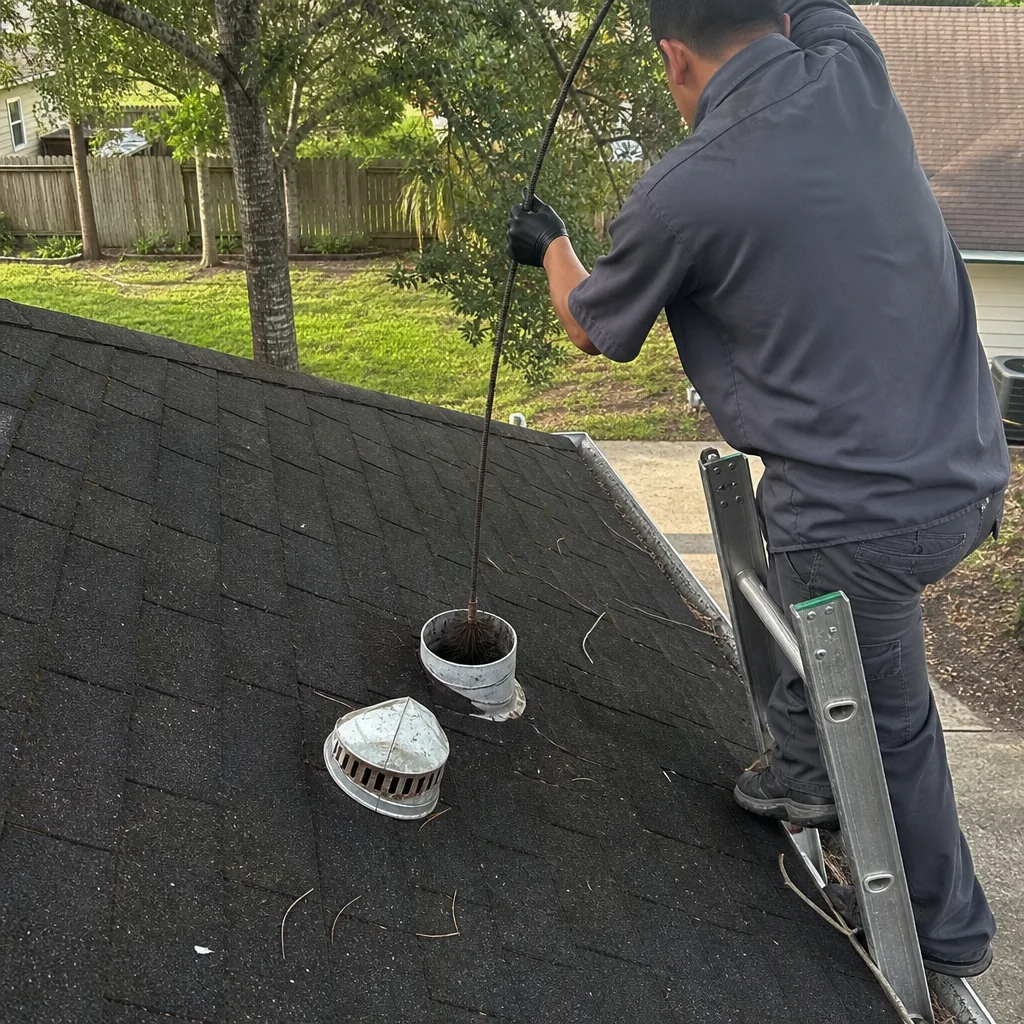
For homes with dryer vent routing through the attic, this is also the window to verify the exhaust termination. Summer attic heat degrades flexible dryer duct and can separate joints. A disconnected dryer vent in a 150°F attic is a fire hazard, not just an efficiency loss.
October: The Overlooked Heating Handoff
Mid-October in Pearland is deceptive. Days still hit 85°F. The pool is still open. But the first night below 60°F triggers the heating cycle that distributes everything that grew in your ducts all summer.
The heating handoff is dangerous because it’s invisible. You don’t smell the problem when the heat first runs - the warm air actually suppresses odor. By the time you notice mustiness in January, you’ve been circulating spores for three months.
Here’s what to inspect, and what we’ve found in Pearland homes:
- Supply plenum visual check: Remove the air handler access panel (power off first) and photograph the plenum interior with your phone’s flash. Look for dark staining, fuzzy growth, or debris accumulation at the coil face. In Pearland’s humidity, we’ve documented 2-4mm biological films on coil fins as early as September.
- First duct run inspection: The first 3-6 feet of duct downstream from the plenum see the highest moisture and lowest air velocity. Remove an access point if available, or use a borescope camera ($30-$50 online) to inspect. We’ve found debris dams at first elbows in homes throughout Shadow Creek Ranch and Lakes of Highland Glen.
- Heating element or heat exchanger visual: If you have a gas furnace, inspect the heat exchanger face for dust accumulation that will burn off and create odor. Electric heat strips should be clean and straight.
- Thermostat programming verification: Ensure your system isn’t set to “auto” with a 2-degree deadband that triggers unnecessary cycling. Each start/stop creates a condensation pulse in the ductwork.
The October inspection is also when you should schedule professional HVAC cleaning if your May-June check showed concerning buildup. Waiting until “spring cleaning season” means running heat all winter through contaminated ducts.
We’ve photographed October plenum conditions in Pearland homes that would trigger the 365-Day Done Right Promise if we’d left them that way. The photo record is what makes the condition real to homeowners - not our description, but the image of what their family breathes.
Freeze Events: What 28 Degrees Does to Ductwork
Pearland’s hard freezes are rare but not hypothetical. February 2021 proved that. Temperatures below 28°F for more than four hours create specific risks for duct systems that national guides never address.
Frozen condensate lines: Your AC condensate drain terminates outside, typically near the foundation. In a hard freeze, residual water in the trap and line freezes solid. The next warming cycle melts it, but if the blockage hasn’t cleared, water backs up into the pan and overflows. We’ve documented water-stained ceiling panels in Pearland’s Silverlake and Highland Crossing subdivisions from exactly this failure mode.
Flex duct insulation damage: Flex duct in unconditioned attics has a vapor barrier jacket. When attic temperatures drop below duct air temperature, condensation forms on the exterior. In a freeze, this condensation ice-expands and can split the jacket. The insulation then gets wet in subsequent thaws, compresses, and loses R-value. The duct runs colder, condenses more, and the cycle accelerates. We’ve replaced flex duct in Pearland attics where the insulation had compressed to half its original thickness from repeated wet-dry cycles.
Duct board sag: Duct board - the fiberglass board used for plenums and trunks - absorbs moisture at cut edges. Freeze-thaw cycling delaminates the foil facing. The board sags, restricts airflow, and eventually collapses at supports.
Post-freeze inspection checklist:
- Check the condensate drain termination for ice damage or separation.
- Inspect accessible flex duct for jacket splits or wet insulation (feel for cold spots or sagging).
- Examine duct board plenums for delamination or sagging at support points.
- Run the system and check for unusual odors - wet insulation smells distinct from biological growth, more like wet cardboard.
- Photograph everything for comparison before the next freeze risk.
After the 2021 freeze, we documented damage in Pearland homes that had been “inspected” by national warranty services who didn’t understand local construction. Flex duct in Texas attics isn’t the same as flex duct in Minnesota basements. The failure modes are different, and the inspection criteria should be too.
Construction Dust: The Hidden Load in Growing Pearland
Pearland’s construction boom isn’t abstract - it’s the development south of 518, the infill near Pearland Parkway, the ongoing buildout in Shadow Creek Ranch phases. If you live within half a mile of active construction, your dust load is measurably higher than the EPA’s baseline assumptions for residential HVAC.
Construction dust is different from household dust. It’s higher in silica content, more abrasive, and finer - particles below 10 microns that bypass standard 1-inch pleated filters. These particles accumulate in duct runs at a rate we’ve measured at 1.5-2x the baseline for homes in established neighborhoods.
What this means for your maintenance calendar:
- Filter replacement interval: Shorten from 90 days to 45-60 days during active construction phases. We’ve seen 1-inch filters loaded to pressure-drop failure in 5 weeks in homes near the 288 corridor developments.
- Return grille cleaning: Vacuum return grilles monthly, not seasonally. Construction dust electrostatically bonds to grille fins and becomes a persistent source.
- Outdoor unit coil cleaning: Construction dust settles on condenser fins and insulates them. A 10% airflow reduction at the condenser raises head pressure and reduces capacity - meaning your system runs longer to achieve the same cooling, increasing duct condensation time.
- Duct inspection frequency: Homes within 0.5 miles of active construction should inspect quarterly, not twice yearly. The accumulation rate justifies it.
We’ve serviced homes in Pearland’s newer developments where the homeowner moved in 18 months prior and had never changed the filter - but the ductwork already showed 1/4-inch debris accumulation from construction dust that continued to enter through the foundation settling period. The builder’s “final cleaning” doesn’t address what happens in year two.
If you’re buying in a new Pearland development, request a pre-occupancy duct inspection as part of your walkthrough. We’ve found construction debris - drywall chunks, insulation scraps, fastener wrappers - in new ductwork that the builder’s subcontractor never removed. The Haven Standard Clause 1 written pricing applies: we’ll document what we find and deliver a written price before any work starts, so you can negotiate with the builder from a position of documented fact.
Month-by-Month Homeowner Observation Log
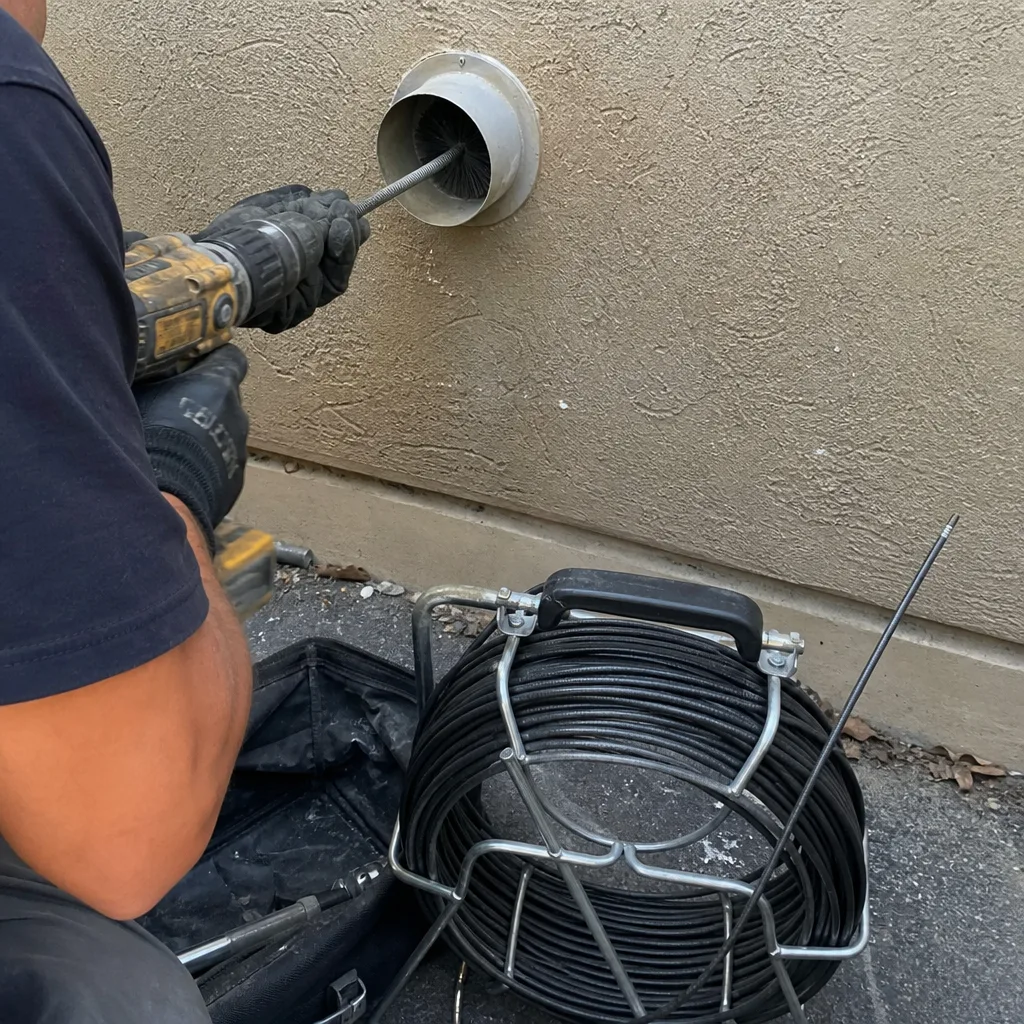
You don’t need professional equipment to track duct system health. You need consistency, a camera, and a place to record observations. Explore our more guides & resources for additional homeowner tools. Here’s the framework we recommend to Pearland homeowners, based on what we’ve found matters most in our 52,000+ documented inspections.
January
- Heating cycle hours per day (from thermostat history)
- Any odor on first heating cycle of the month
- Filter condition photograph
- Register dust accumulation photograph (same register each month)
February
- Freeze event: yes/no. If yes, complete post-freeze checklist above.
- Condensate drain termination condition
- Any ceiling stains near air handler or duct runs
March
- Pollen accumulation on outdoor unit - photograph
- First AC cycle date and any odor
- Filter load (March is typically peak pollen in Pearland)
April
- Cooling hours per day trend
- Supply air temperature split measurement
- Condensate drain flow test
May
- Pre-summer inspection: coil visible condition, plenum photograph
- Schedule professional service if needed (before June demand peak)
- Construction activity within 0.5 miles: yes/no
June
- Peak cooling load performance note
- Any mustiness or humidity complaints
- Energy bill comparison to prior year
July-August
- Monthly: filter condition, register photograph, any odor
- Note any duct noise changes (whistling indicates leakage, rumbling indicates debris)
September
- Cooling hours declining - note transition date
- Plenum inspection if not done in May
October
- Pre-heating inspection: critical window, complete full checklist above
- Schedule professional cleaning if growth or debris found
November
- First heating cycle date and odor note
- Compare to October inspection - any change?
December
- Heating performance and filter condition
- Year-end photo comparison: register, plenum, filter
- Schedule annual professional service if due
The value of this log isn’t any single observation. It’s the year-over-year comparison. We’ve had Pearland homeowners show us three years of register photographs that clearly documented accelerating debris accumulation - evidence that justified cleaning when a single snapshot might not have. The photo record is the core of what we deliver on every CleanRun visit, and it’s what you can replicate for your own baseline.
What Professional Duct Cleaning Actually Includes
There’s a gap between what homeowners expect and what the industry often delivers. The $79 coupon special typically involves a shop vacuum at the register and a bill for “additional services” once the technician is in your home. Here’s what professional duct cleaning actually entails, and what we document on every Pearland job.
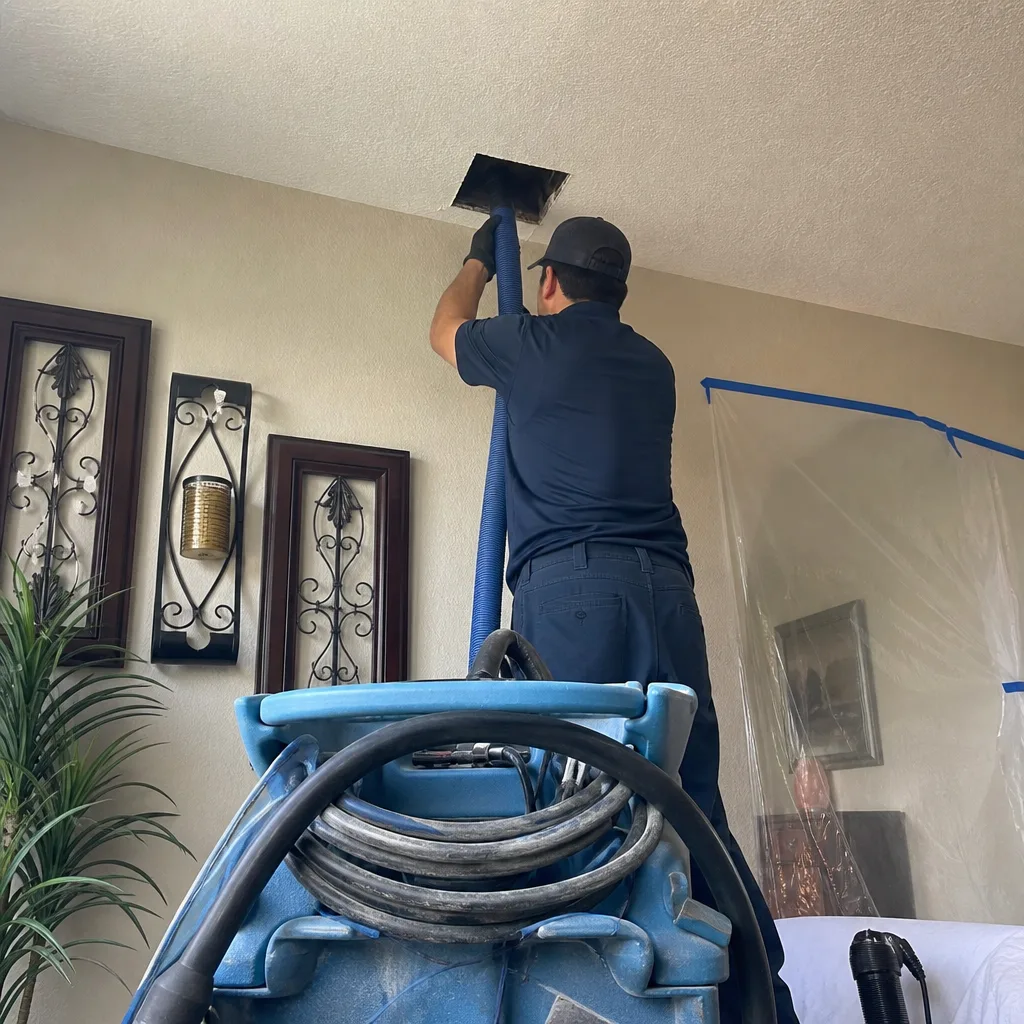
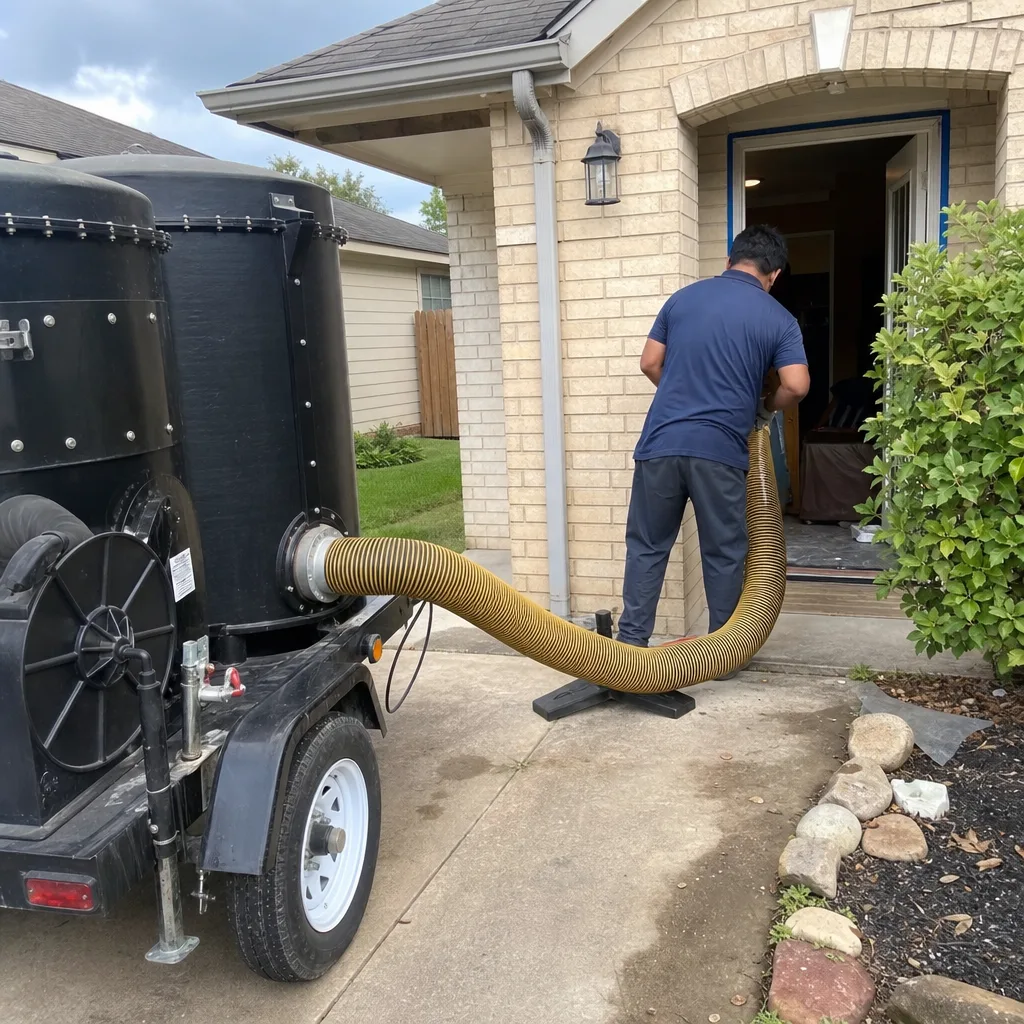
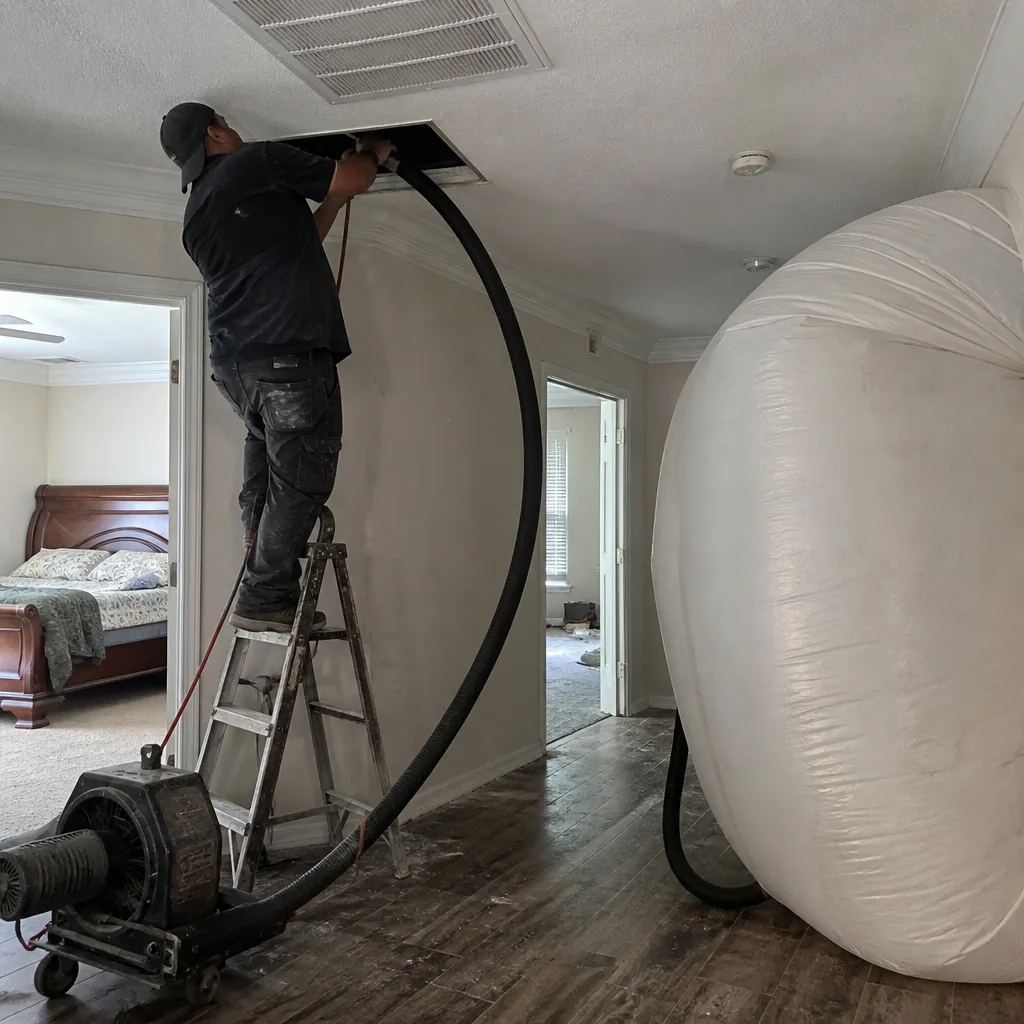
Negative-pressure extraction: The duct system is placed under sustained negative pressure using a high-volume vacuum, typically mounted on a truck or portable HEPA unit. This prevents debris disturbance during agitation. The vacuum we deploy depends on system size and access - our equipment roster includes Abatement Technologies portable HEPA units and Nikro gas-powered truck mounts for larger residential systems.
Mechanical agitation: Debris adheres to duct interior surfaces. Agitation dislodges it for extraction. We use Rotobrush contact cleaning for flex duct and round metal, and pneumatic whips for rectangular duct board. The tool selection matters - the wrong agitation method damages flex duct liners or fails to clean duct board corners.
Register and boot cleaning: The register (the visible grille) and boot (the sheet metal transition behind it) are removed, cleaned separately, and reinstalled. This is where the $79 skip happens - the vacuum can’t reach the boot, and that’s where debris concentrates.
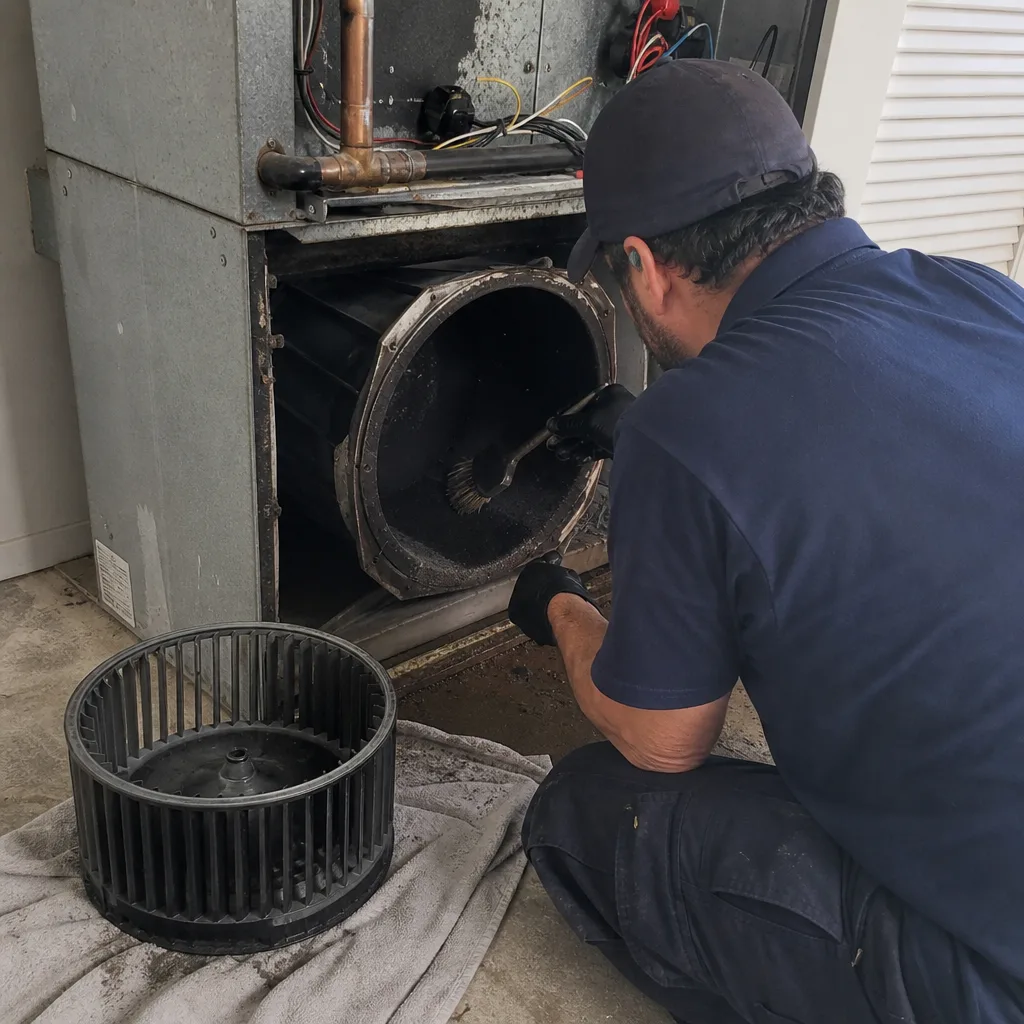
Coil and plenum access cleaning: The evaporator coil and supply plenum are inspected and cleaned if accessible. In Pearland’s climate, this is often the highest-value part of the service. We photograph before and after.
Sanitizing (when indicated): If biological growth is documented, we apply an EPA-registered sanitizer. We use Guardsman-sourced products with verified kill claims for the organisms we’ve identified. We do not apply sanitizer “just in case” - Haven Standard Clause 2 requires documented indication for any chemical application.
Documentation deliverables: Every CleanRun job concludes with a Documented Photo Record of every duct run, before and after, delivered to the customer as part of the standard job record. Not a verbal summary. Not a checklist ticked by the technician. Photographs you can review, compare, and keep for your records.
The equipment matters because it’s verifiable. When we name Abatement Technologies, Rotobrush, Nikro, or Guardsman on your written scope, you can look up the manufacturer, verify the tool’s purpose, and confirm it’s appropriate for your system. That’s Haven Standard transparency - no proprietary “secret technology,” no performance claims beyond what the manufacturer publishes.
Cost and Timing: What to Expect in Pearland
We publish pricing because Haven Standard Clause 1 requires it. For a detailed breakdown, see our Air Duct Cleaning Cost Breakdown: The Pearland Homeowner’s Reference for 2026. Here’s what whole-system duct cleaning costs in Pearland, based on our 2023-2024 job data:
| Service | Typical Range | What Affects Price |
|---|---|---|
| Whole-system air duct cleaning (single HVAC system) | $400-$800 | Number of registers, duct type (flex vs. metal vs. duct board), accessibility, contamination level |
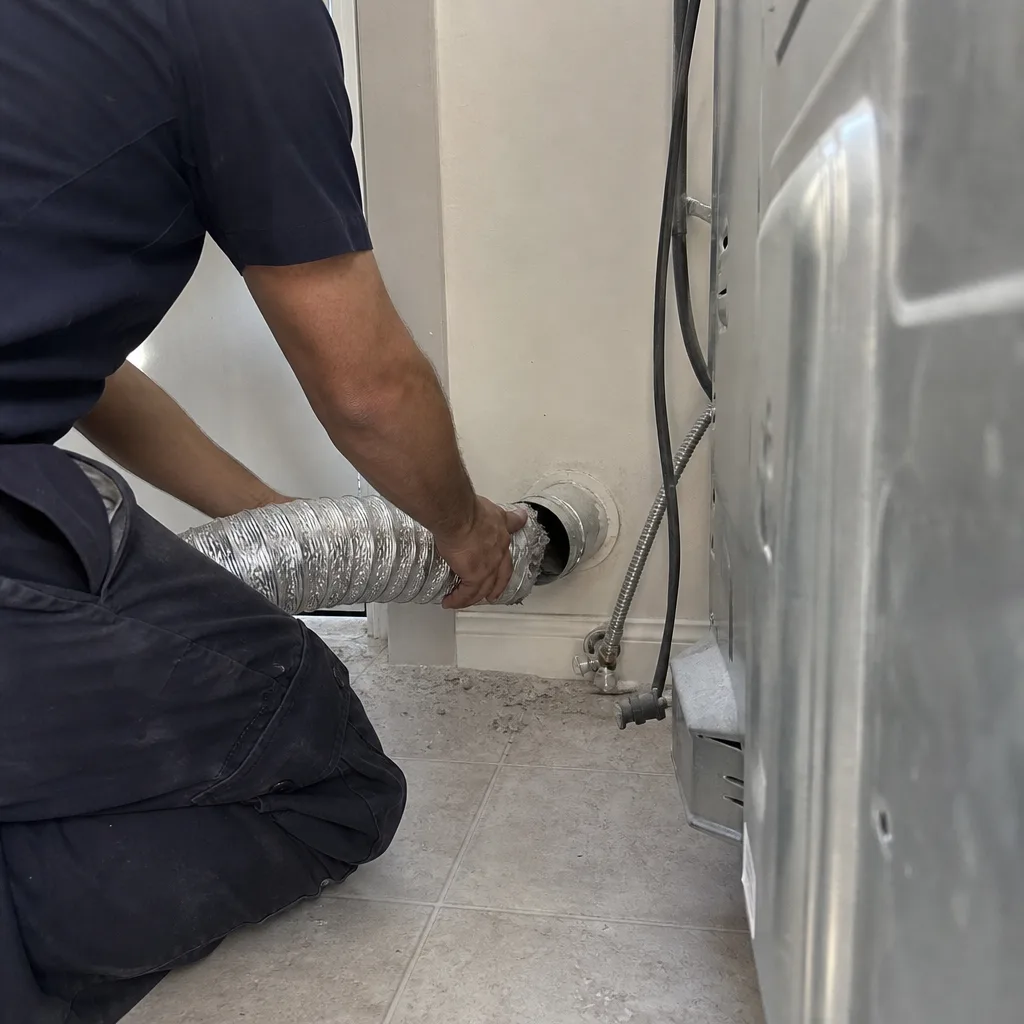
| Dryer vent cleaning | $150-$250 | Length of run, number of turns, roof vs. wall termination |
| HVAC coil and plenum cleaning | $200-$400 | Coil accessibility (A-coil vs. slab), plenum construction |
| Duct repair and sealing | $300-$1,200 | Extent of damage, material type, attic accessibility |
| Air quality and sanitizing | $150-$300 | System size, product selection, application method |
What we don’t do: per-vent pricing that balloons at the door, “whole house” quotes that exclude the returns, or $79 teasers that require a “free inspection” to reveal the real cost. Our written price, delivered before work starts, includes every component we’ve identified in our initial assessment.
Timing: In Pearland, May-June and October are our peak demand windows for the reasons this guide explains. Booking 2-3 weeks ahead secures your preferred slot. Emergency service for documented biological growth or post-freeze damage is available, but scheduled maintenance always costs less than reactive repair.
We also offer a Free Second Opinion on any written estimate. Bring a competitor’s quote; we’ll put our number next to it in writing, line-item by line-item, so you can compare actual scope rather than headline price.
Common Mistakes to Avoid
- Waiting for “spring cleaning season.” In Pearland, spring is already deep into cooling season. By March, your coils have been wet for weeks. The correct maintenance window is May-June, before peak load.
- Trusting register cleanliness as duct cleanliness. Registers are easy to clean. The debris concentrates in boots, elbows, and the plenum - sections you can’t see without access. We’ve photographed pristine registers above filthy boots in Pearland homes.
- Ignoring construction proximity. If you’re in a developing Pearland neighborhood, your filter and duct load are higher than national baselines. Adjust your maintenance interval accordingly, or you’ll pay for duct cleaning that could have been prevented with more frequent filter changes.
- DIY coil cleaning with household chemicals. Evaporator coils are aluminum fins bonded to copper tubes. The wrong cleaner corrodes the bond and creates leaks. We’ve replaced coils in Pearland homes where a homeowner’s “maintenance” caused $1,500 in damage to save $200 in service.
- Assuming new construction means clean ducts. Builder subcontractors are not duct cleaning specialists. We’ve found drywall mud, insulation scraps, and fastener packaging in ductwork of homes less than two years old in Pearland’s newest developments.
- Neglecting the dryer vent. A clogged dryer vent raises humidity in the laundry area, which adjacent ductwork absorbs. In Pearland’s climate, that’s enough to accelerate biological growth in nearby returns.
When to Call a Professional
Call when your observation log shows change, not when you smell a problem. By the time odor is detectable, the biological load is significant. Specific triggers: visible growth in any accessible duct section, post-freeze water staining or duct sag, temperature split below 14°F, or register photographs showing year-over-year darkening. Also call before buying a home in a new Pearland development - a pre-purchase duct inspection with documented photo record protects your negotiation position.
CleanRun Air Duct Cleaning Pearland offers free estimates in Pearland. Every estimate includes a written price before work starts, every job concludes with a Documented Photo Record of every duct run, and every technician is background-checked, uniformed, and identified by name before arrival under Haven Standard Clause 3: Verified Crews. Call (346) 253-1822 to schedule.
Frequently Asked Questions
Whole-system air duct cleaning for a single HVAC system in Pearland typically costs $400-$800, with most residential jobs falling in the $500-$650 range. Dryer vent cleaning adds $150-$250. The price depends on register count, duct type, and accessibility - not on a per-vent formula that changes at your door. CleanRun delivers a written price before any work starts, every time. Call (346) 253-1822 for an exact quote - estimates are free.
The $79-$99 duct cleaning special is a well-documented industry pattern: a low arrival price that expands with “required” add-ons once the technician is inside. The actual scope of a legitimate whole-system cleaning - negative-pressure extraction, mechanical agitation, register and boot removal, coil access, and documentation - cannot be performed at a profit for $79. Ask any competitor for a written, line-item scope before agreeing to service. CleanRun’s written price under Haven Standard Clause 1 includes everything we’ve identified; nothing is added after arrival.
Demand a documented photo record of every duct run, before and after. Not a verbal report, not a checklist, but photographs you can review. CleanRun includes this as a standard deliverable on every job - we’ve done so since 2013. If a company cannot or will not provide photographic evidence, you have no verification that the work occurred.
For Pearland homes without specific risk factors, every 3-5 years is typical. Homes with flex duct in unconditioned attics, proximity to active construction, or occupants with respiratory sensitivity should inspect annually and clean every 2-3 years. The correct interval is determined by your observation log, not a calendar rule. If your year-over-year register photographs show accelerating accumulation, the interval shortens.
You can maintain registers, replace filters, and inspect accessible sections. You cannot perform negative-pressure extraction or mechanical agitation without professional equipment, and you should not attempt coil cleaning - the chemical selection and pressure application risk fin damage and refrigerant leaks. For documented contamination or growth, professional service is the appropriate response. The cost of DIY coil damage exceeds professional service by a factor of three.
Pearland’s specific combination of Gulf proximity, 200+ cooling days, and high new-construction dust load creates a distinct risk profile. The sustained condensation window is longer than in Dallas or Austin. The construction boom raises ambient particulate loads above Houston’s older, established neighborhoods. And the prevalence of flex duct in unconditioned attics - common in Pearland’s 2005-2015 construction - creates condensation risks that metal duct systems don’t share. National advice doesn’t account for these local factors.
The Bottom Line
Pearland’s climate demands a maintenance calendar built around its actual conditions: the May-June transition before cooling peak, the October heating handoff before first cycle, post-freeze inspection after any hard freeze, and quarterly attention for homes near active construction. The standard four-season advice doesn’t apply here. What does apply is consistent observation, photographic documentation, and professional service when your log shows change. The cost of scheduled maintenance is always lower than the cost of reactive repair, and the documentation - written price, photo record, written guarantee - is what separates accountable service from a van visit.
Written by Tomas Reyes, Owner at CleanRun Air Duct Cleaning Pearland, serving Pearland since 2013.