
Last updated September 23, 2026
Whole-system duct and dryer vent check with before-and-after photos - you see exactly what came out of your vents
That "$99 whole-house special" is a bait ad - the real number appears once they are in your hallway, or the "clean" is a shop-vac at the register. We photograph the inside of your ducts before and after instead.
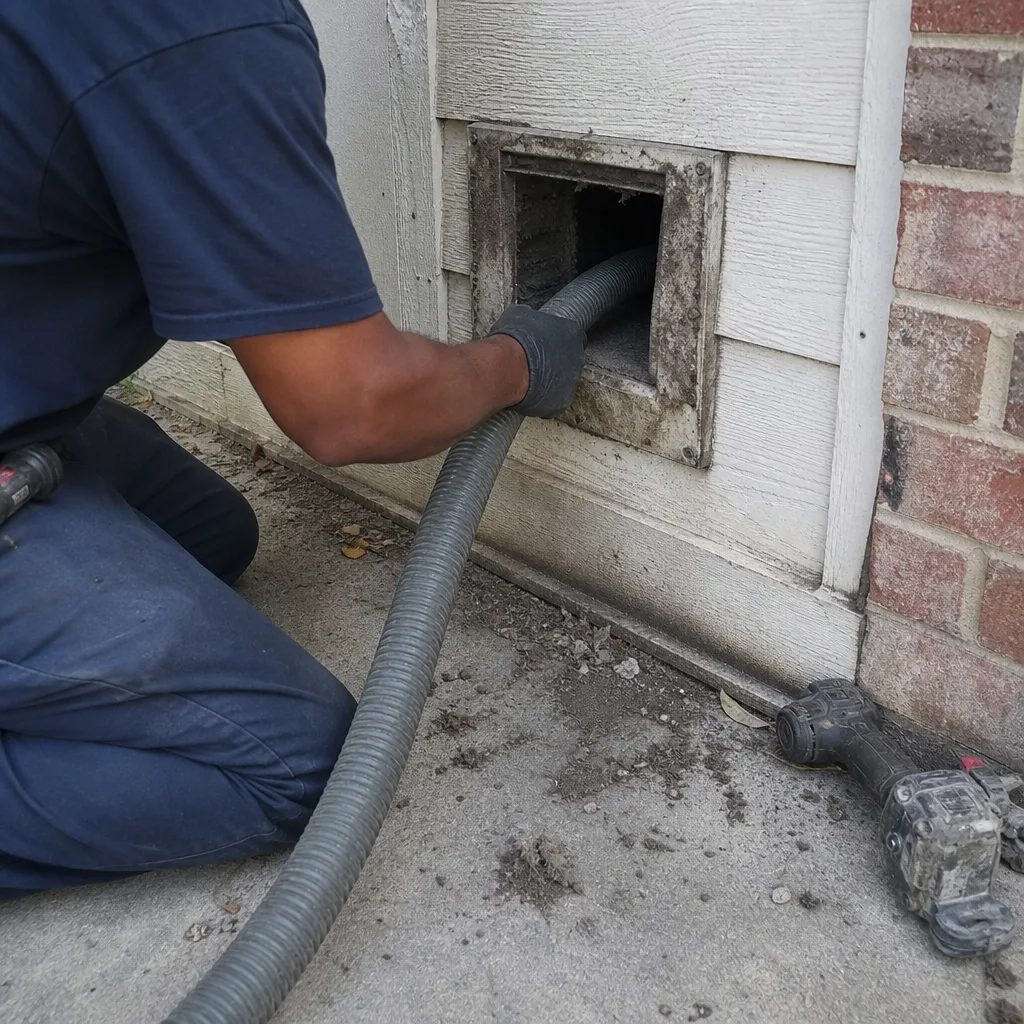 Before
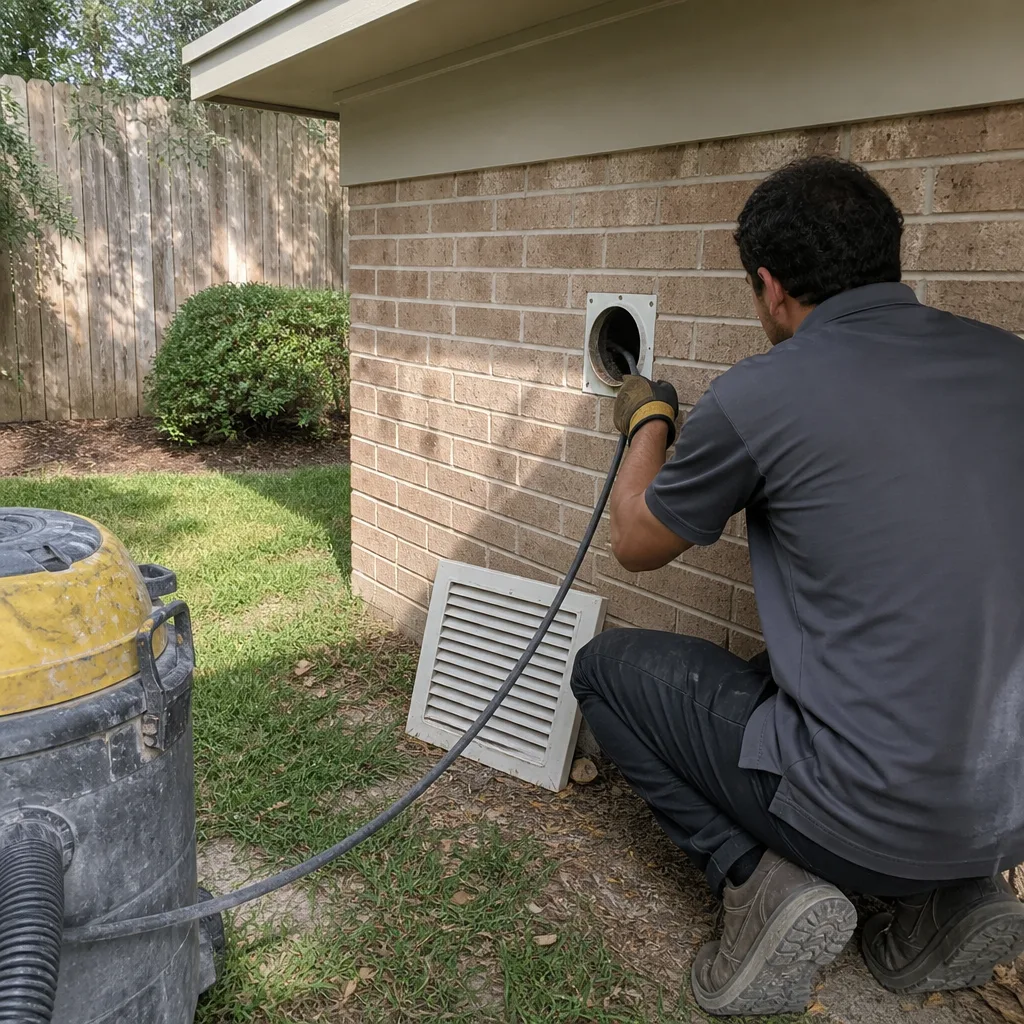 After
After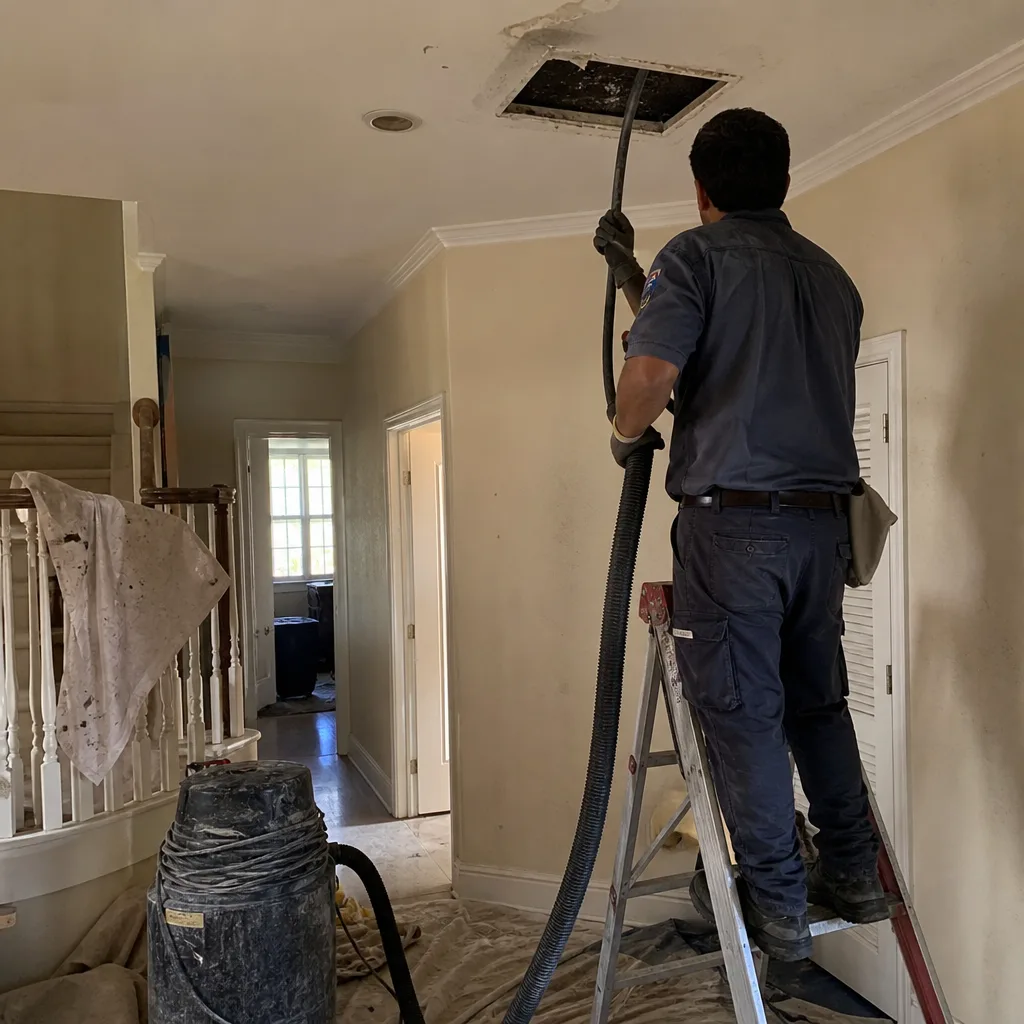 Before
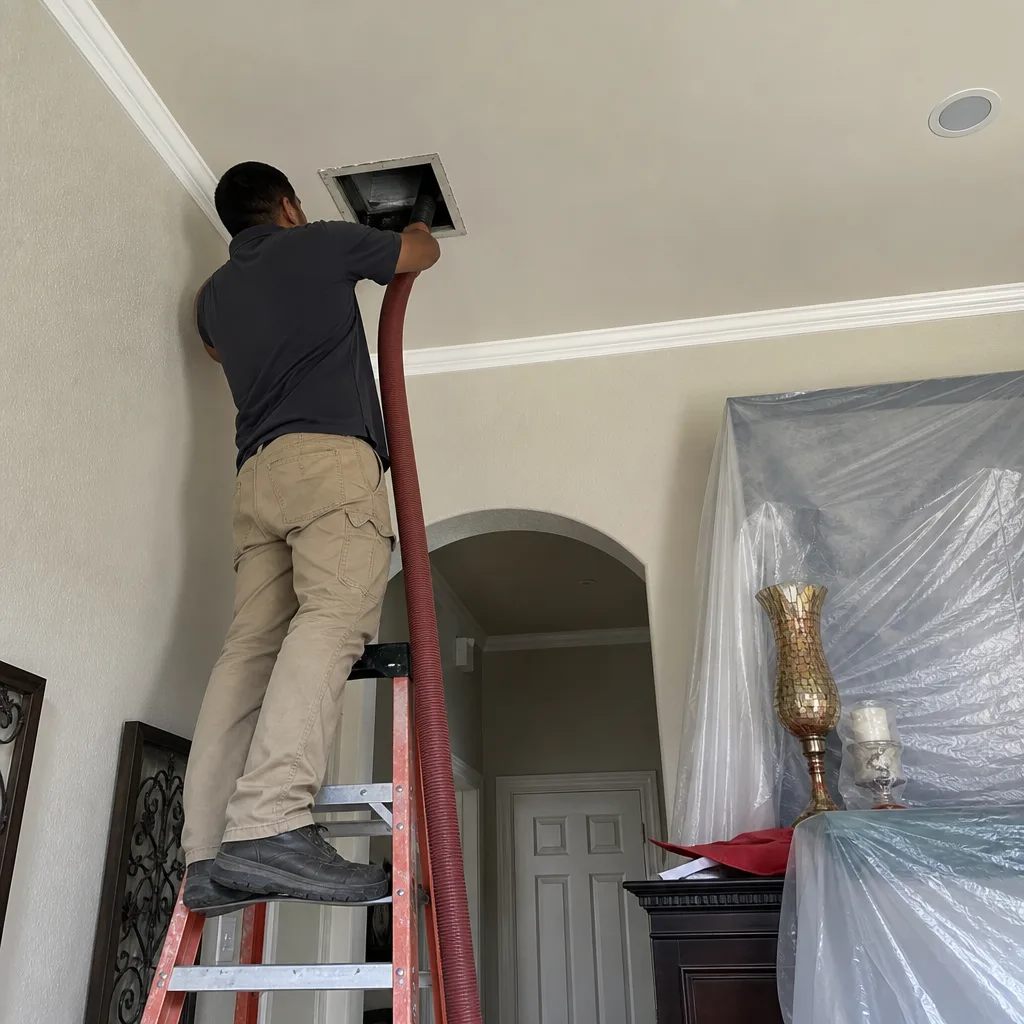 After
After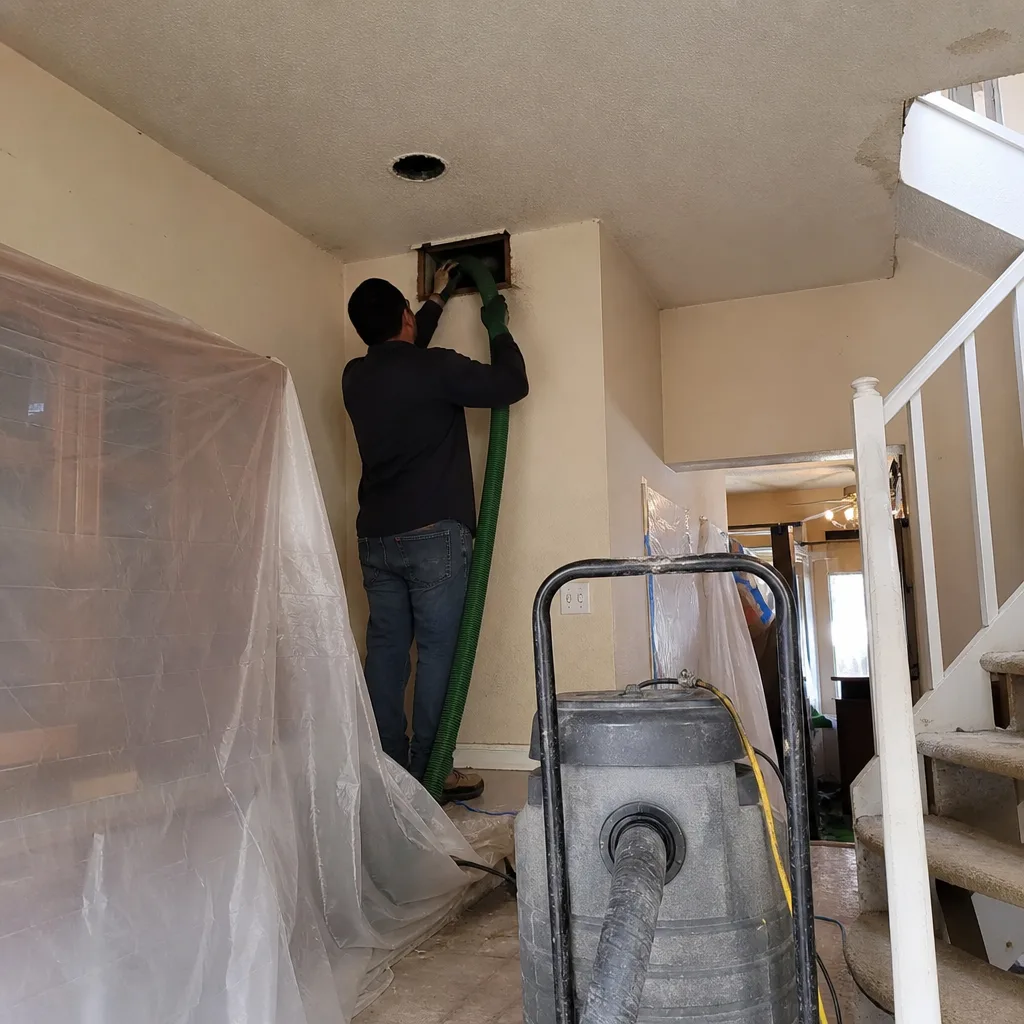 Before
 After
AfterThe Complete Guide to Air Duct Cleaning in Pearland
A duct system in a 2004 Pearland home cleaned for the first time in 11 years yielded 4.2 lbs of debris, two dead rodents, and a disconnected return run - none of which showed up on the $79 coupon checklist. That homeowner paid the coupon price, then paid again for the real work six months later. In Pearland’s market, where clay soil shifts slab foundations and humidity stays above 70% for five months of the year, duct systems accumulate debris differently than they do in drier Texas metros. This guide shows what a complete Air Duct Cleaning service actually involves, how to read a written estimate so nothing hides in add-ons, and what documentation proves the work happened.
Quick Answer
Complete air duct cleaning in Pearland typically costs $400-$900 for a residential system and includes negative-pressure extraction of every supply run, return run, plenum, and air handler compartment, with photographic documentation of each. The job takes 3-5 hours for a standard 2,000-square-foot home and should leave a written scope, a photo record, and a flat price agreed before any panel is removed. Anything priced under $300 is almost certainly a surface vacuuming of visible registers, not a full system cleaning.
Table of Contents
- What Complete Duct Cleaning Actually Involves
- How Pearland’s Climate and Soil Affect Duct Systems
- Coupon-Tier Service vs. Professional Negative-Pressure Cleaning
- How to Read a Written Estimate Line by Line
- What Before-and-After Documentation Should Look Like
- Supply Runs, Return Runs, Plenums, and Air Handlers Explained
- Common Mistakes to Avoid
- When to Call a Professional
- Frequently Asked Questions
BeforeAfterWhat Complete Duct Cleaning Actually Involves
A complete residential duct cleaning addresses the entire air distribution system, not just the parts visible from a hallway. The system has two sides - supply and return - plus the central plenum where they meet the air handler. Each side requires different access points and cleaning methods.
The standard scope includes:
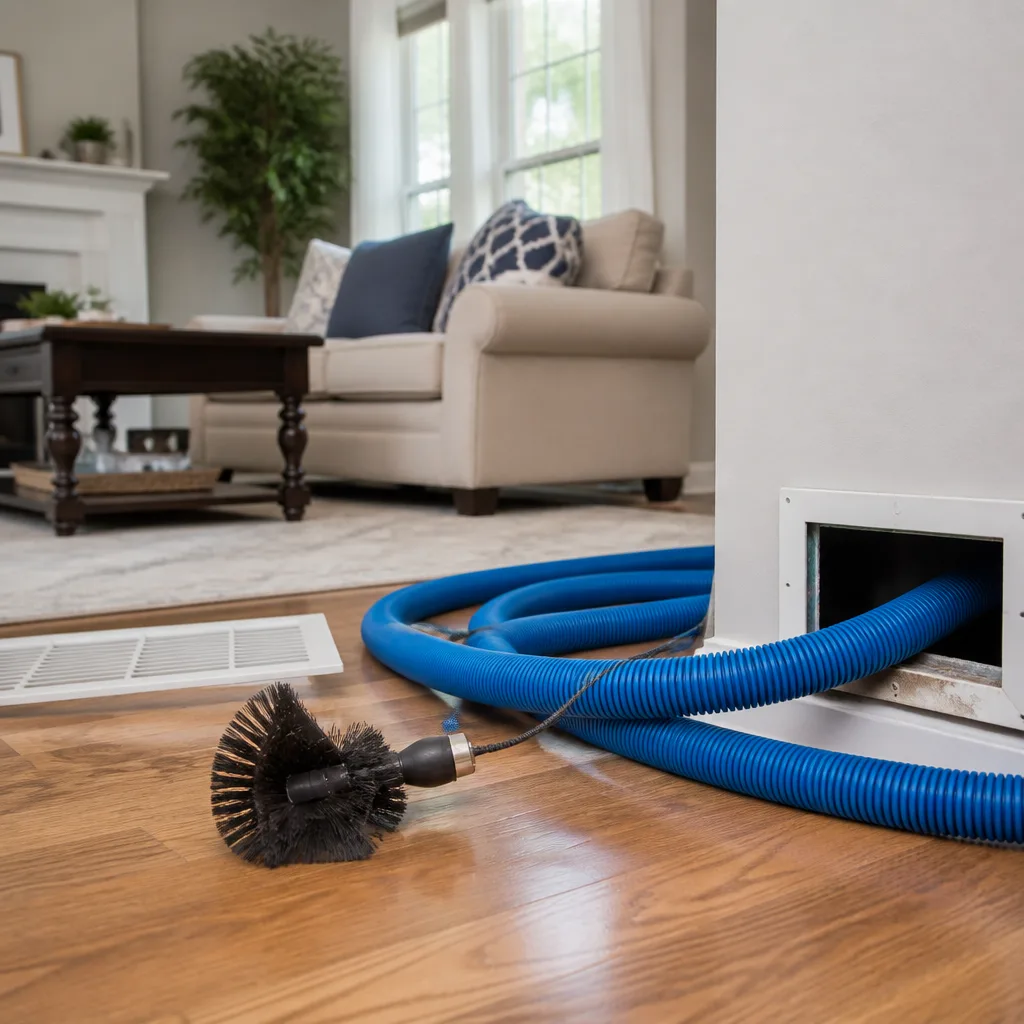
- Supply runs: The ducts that push conditioned air into rooms. Each run is accessed at the register and at the trunk line, then cleaned with a rotating brush or whip system under negative pressure.
- Return runs: The ducts that pull air back to the air handler. These are often larger and accumulate more debris because they lack the filtration that supply air receives after passing through the filter.
- Main trunk lines: The large ducts that branch to individual runs. Both supply and return trunks are accessed and cleaned.
- Plenums: The sheet-metal boxes that connect the trunk lines to the air handler. The supply plenum sits above the furnace or air handler; the return plenum sits below or beside it.
- Air handler compartment: The interior of the furnace or air handler cabinet, including the blower wheel, motor, and evaporator coil housing. This is not a coil cleaning - that’s a separate service - but the compartment itself collects debris that recirculates.
- Registers and grilles: Removed, cleaned externally, and reinstalled. Not wiped in place.
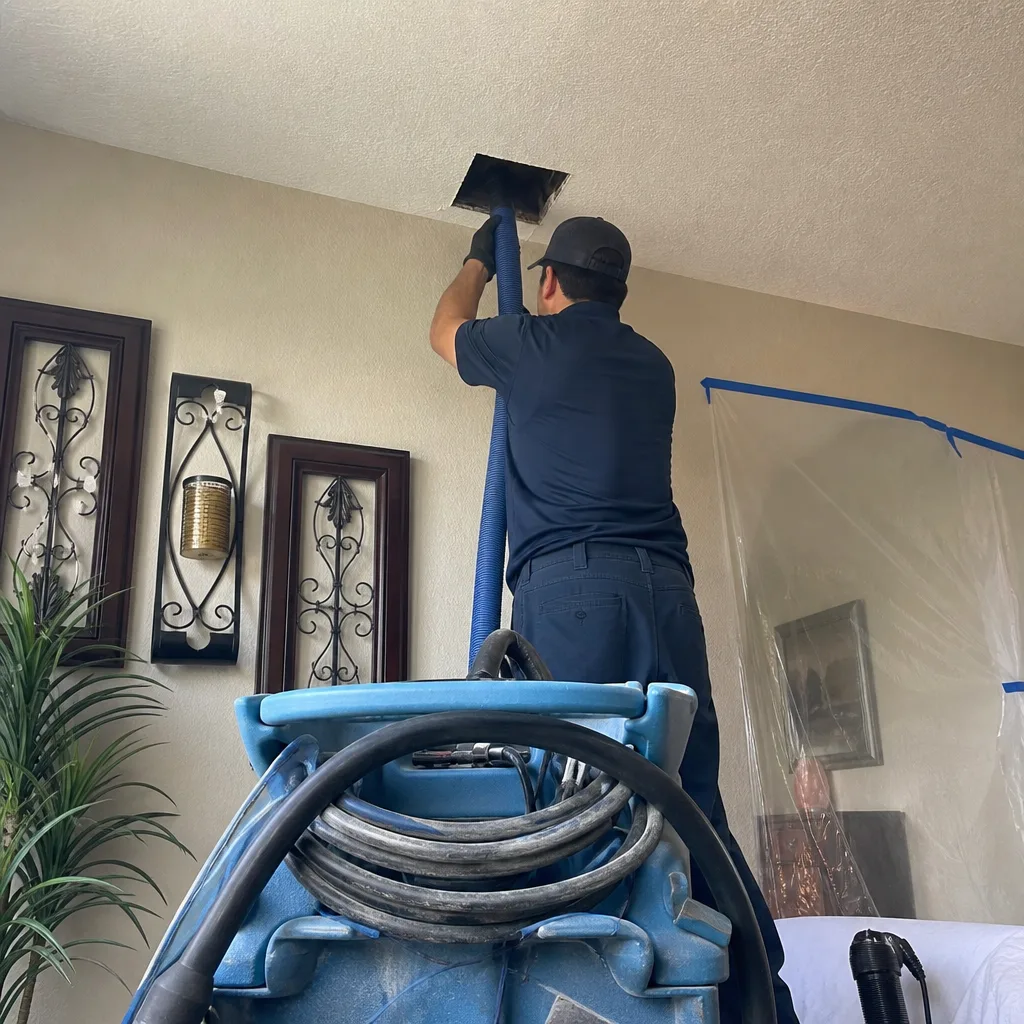
At CleanRun Air Duct Cleaning Pearland home, we photograph every component before and after. The photo record is delivered as a standard job deliverable, not an upsell. In 2013 we started this practice on our first job, and we’ve held to it through 52,000+ homes.
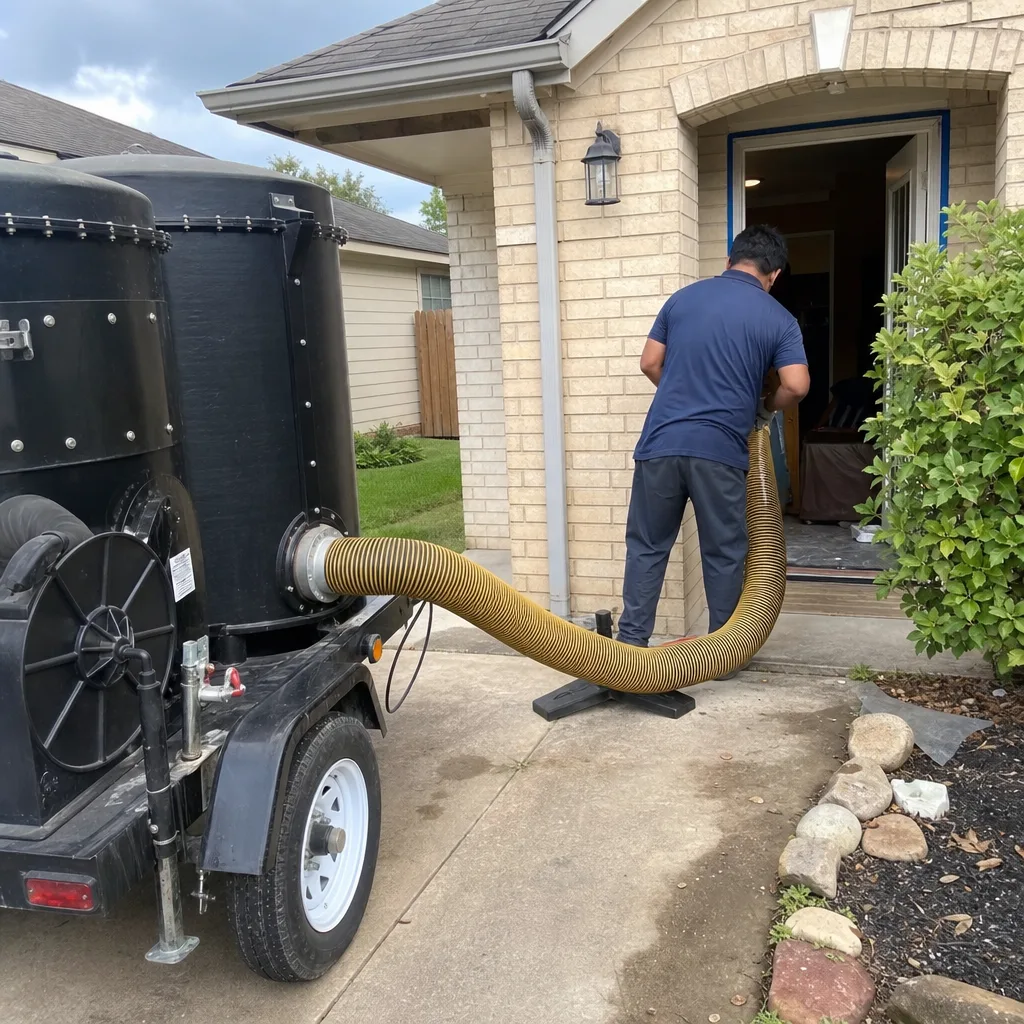
The equipment matters. We use Rotobrush brush-and-vac systems for residential runs, Nikro and Abatement Technologies negative-pressure machines for larger trunk lines, and Guardsman containment tools where access is limited. These are trade-recognized brands. Customers can look up specifications independently before agreeing to a price.
A complete job for a standard Pearland home - roughly 1,800 to 2,400 square feet with a single HVAC system - takes 3 to 5 hours. A crew that finishes in 90 minutes has not completed the scope above. They have vacuumed registers and maybe inserted a hose into the trunk. The debris remains.
How Pearland’s Climate and Soil Affect Duct Systems
Pearland sits on the Gulf Coast Plain with expansive clay soils that shrink and swell dramatically with moisture changes. That movement cracks slab foundations, shifts walls, and separates duct connections in ways that don’t happen on pier-and-beam construction in East Texas or rocky Hill Country soil.
Three local factors accelerate debris accumulation:
- High humidity, long season: From May through October, outdoor relative humidity in Pearland regularly exceeds 75%. Duct systems that leak - and most do, especially at slab penetrations - pull in humid attic or crawl space air. That moisture binds dust into clumps that stick to duct walls instead of passing through to the filter. We’ve photographed 2-inch debris mats in return plenums where humid air entered through a separated flex connection.
- Clay soil and slab movement: When the clay dries in August and September, slabs drop. When fall rains return, they rise. That flexing separates duct joints at the slab penetration, creating gaps where attic insulation, rodent droppings, and construction debris enter the system. In Shadow Creek Ranch and Silverlake, we’ve found disconnected return runs that had been pulling attic air for years - the homeowner’s “allergies” were actually fiberglass particulate.
- Coastal pollen and mold spore loads: Pearland’s proximity to Galveston Bay means higher year-round pollen and mold spore counts than inland metros like Austin or Dallas. These biological particles enter through leaks, adhere to duct walls, and become nutrient sources for mold growth when humidity is present. A 2019 job in Country Place showed heavy mold staining in a supply plenum where a small leak had gone unaddressed for three pollen seasons.
These factors mean Pearland duct systems often need more thorough cleaning than systems in drier climates, and they need sealing afterward to prevent rapid recontamination. A crew that doesn’t understand local soil and climate conditions won’t address the root cause.
Coupon-Tier Service vs. Professional Negative-Pressure Cleaning
The $79 to $149 duct cleaning advertised in Pearland mailers and online platforms is not the same service as a complete cleaning. The difference is mechanical, not merely a matter of effort or experience.
What coupon-tier service physically does:
- Vacuums visible register faces with a shop vac or small portable unit
- May insert a 10-foot hose into the nearest trunk line
- Does not access return plenums or air handler compartments
- Does not remove registers for external cleaning
- Completes in 45-90 minutes
- Uses no negative-pressure containment - debris disturbed during cleaning recirculates into the home
What professional negative-pressure cleaning does:
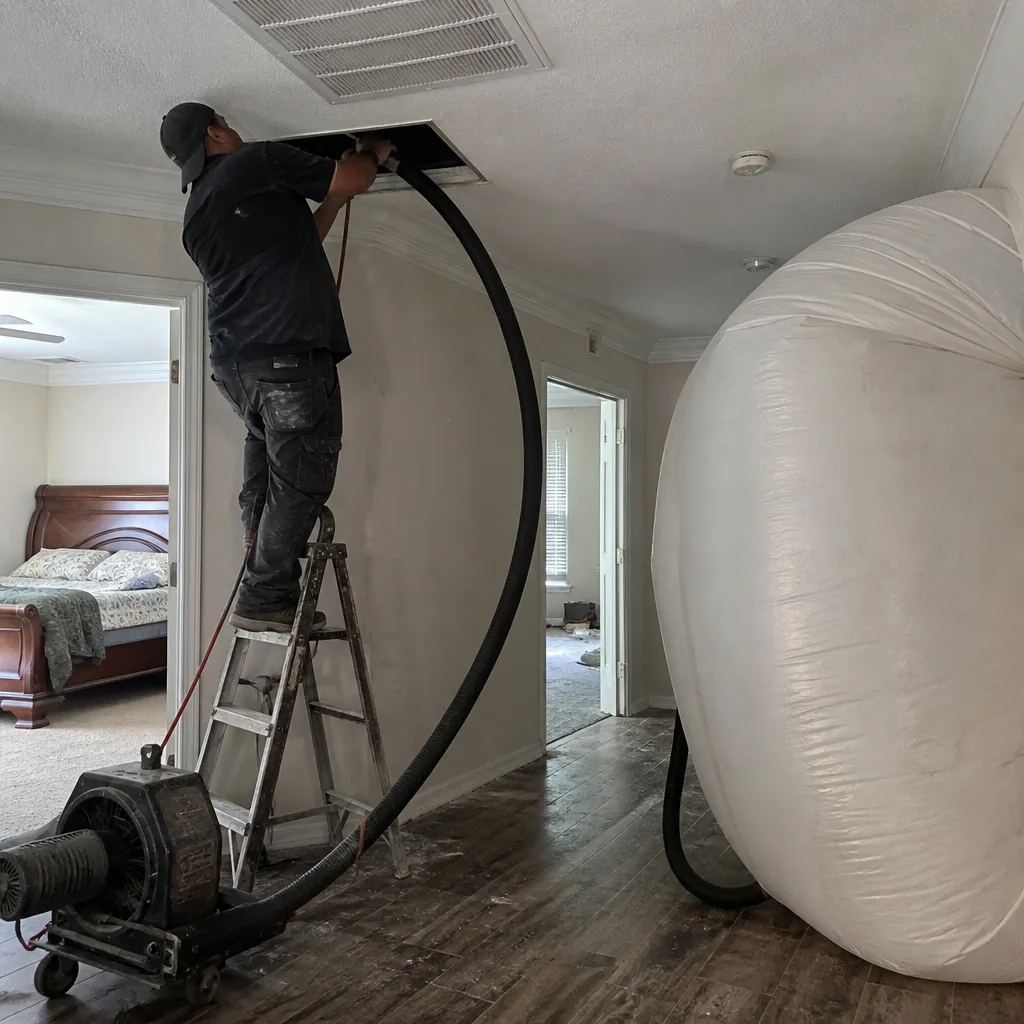
- Seals the system and applies continuous negative pressure at the air handler, preventing debris escape into living spaces
- Accesses every supply and return run at multiple points
- Uses mechanical agitation (rotating brushes, whips, or compressed air tools) to dislodge adhered debris
- Cleans plenums and air handler compartments
- Removes and externally cleans all registers and grilles
- Documents with before-and-after photos of every component
- Completes in 3-5 hours for standard residential system
The equipment difference is substantial. A shop vac moves approximately 100 cubic feet per minute (CFM) and generates no containment pressure. A Nikro or Abatement Technologies negative-pressure machine moves 2,000-5,000 CFM and maintains sealed system pressure below ambient, so dislodged debris is captured at the collection point rather than settling in bedrooms.
We’ve arrived at Pearland homes six months after a coupon cleaning to find the trunk lines still containing the debris the previous crew never reached. The homeowner paid twice. The first invoice was smaller. The total cost was higher.
How to Read a Written Estimate Line by Line
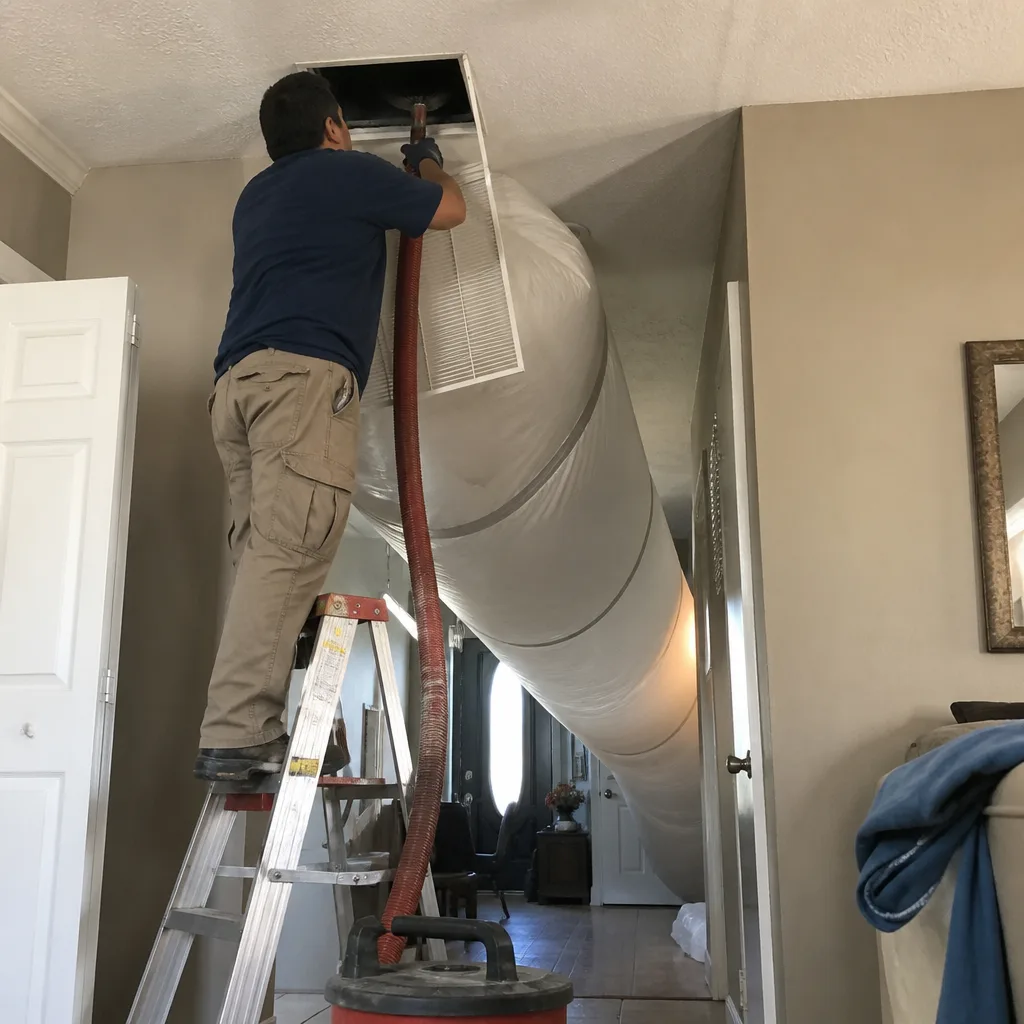
A written estimate is the only protection against the bait-and-switch that dominates this industry. At CleanRun, we deliver a written price before any work starts, every time, under Haven Standard Clause 1. No exceptions. Here’s how to evaluate any estimate you receive.
Line item 1: System count and square footage
The estimate should specify how many HVAC systems are included and the approximate conditioned square footage. A 3,200-square-foot home with two systems should show two system charges, not one. If the estimate says “whole house” without specifying systems, ask for clarification. We’ve seen Pearland homes in Lakes of Highland Glen where a second attic system was “missed” until the crew arrived and discovered it - at a surcharge.
Line item 2: Scope of cleaning by component
Each component should be listed: supply runs, return runs, supply trunk, return trunk, supply plenum, return plenum, air handler compartment, registers/grilles. If the estimate says “duct cleaning” without component breakdown, you cannot verify what was done. Request specificity.
Line item 3: Equipment and method
The estimate should state negative-pressure extraction and mechanical agitation. If it says “vacuum and brush” without specifying negative pressure, ask whether the system will be sealed and under continuous extraction during agitation. Without negative pressure, dislodged debris enters your air.
Line item 4: Documentation
Before-and-after photos should be specified as included, not optional. The estimate should state how photos are delivered - printed, emailed, accessible through a customer portal. CleanRun delivers a digital photo record as a standard job deliverable.
Line item 5: Warranty or guarantee
Look for a written guarantee with specific terms. “Satisfaction guaranteed” is not a term. “365-Day Done Right Promise - if the work is not right, we make it right, in writing” is a term. CleanRun’s 365-Day Done Right Promise is backed in writing on every job, not stated only in marketing materials.
Line item 6: Total price and payment terms
The total should be a flat price per system, not per vent. Per-vent pricing invites counting disputes and mid-job add-ons. The price should be payable on completion, not required upfront. Be wary of “trip charges” or “diagnostic fees” that apply even if you decline the work.
Red flags in any estimate:
- “Call for final pricing” - the price is not written
- “Starting at” - your price will be higher
- Per-vent or per-register pricing structure
- No equipment or method specified
- No documentation mentioned
- Payment required before work begins
- Vague guarantee language without specific remedy
What Before-and-After Documentation Should Look Like
A job without photos is not verifiable. In an industry where the customer cannot see inside their own ducts, documentation is the only evidence that work occurred and that it occurred completely.
The standard photo record should include:
- Register location photo: Each register or grille, identified by room, before removal. This proves every run was accessed.
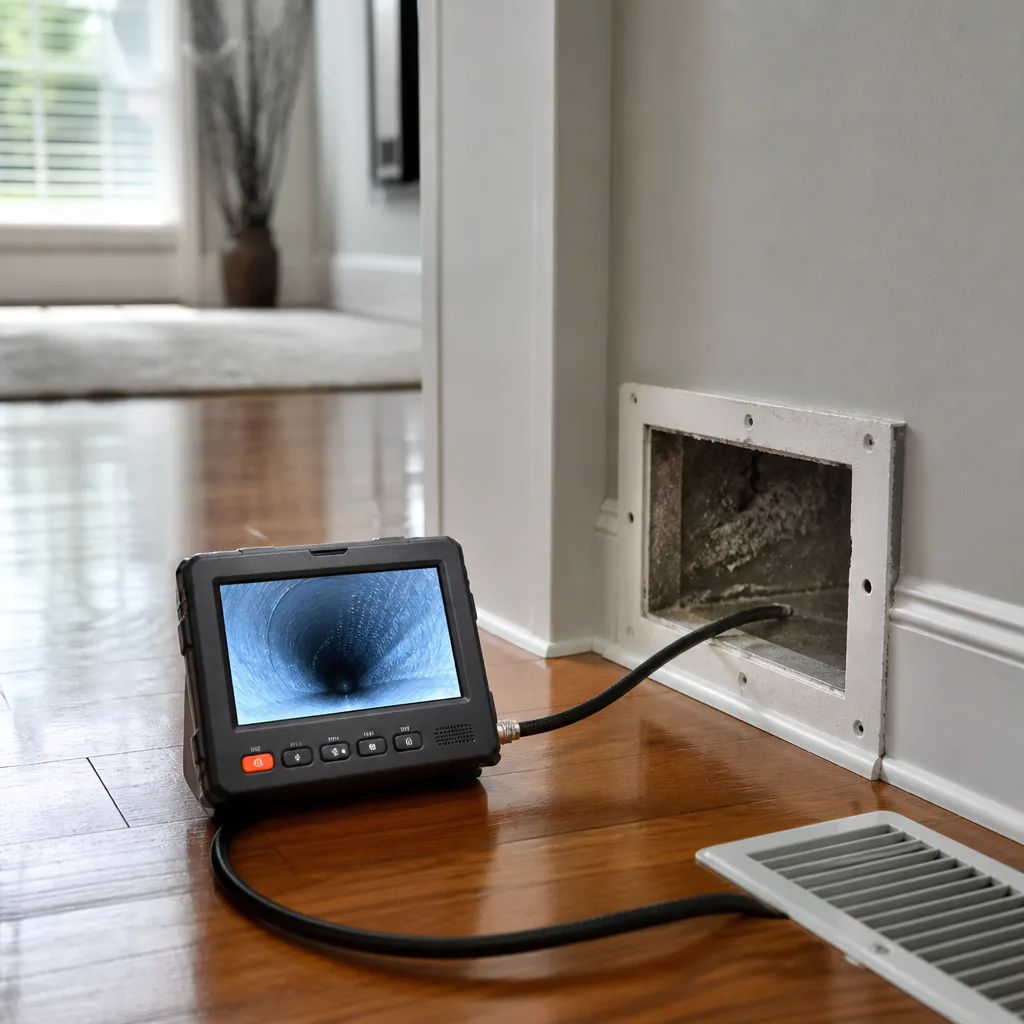
- Interior duct photo - before: Looking into the duct run from the register opening, showing debris condition. This should show the duct wall, not just a dark rectangle. A proper photo is lit with a borescope or inspection camera.
- Interior duct photo - after: Same angle, same lighting, showing cleaned surface. The metal should be visible, not merely “less dirty.”
- Plenum photos - before and after: Both supply and return plenums, accessed and photographed. These are the most commonly skipped components.
- Air handler compartment photo: Blower wheel and compartment interior, before and after. This proves the central distribution point was addressed.
- Debris collection photo: The collected debris, with scale reference. A pile of debris in a collection bag, or a vacuum canister with measured contents.
CleanRun has delivered this photo record on every job since 2013. The customer receives it as a standard deliverable, not an upgrade. In our experience, homeowners who receive documentation call us back for scheduled maintenance and refer neighbors. Homeowners who received no documentation call us six months later, suspicious that the previous job was incomplete - and they’re usually correct.
Photos should be dated and location-tagged where possible. They should be high enough resolution to show detail, not thumbnail-sized. They should be organized by component, not dumped in a single folder. The customer should not need to request them; they should arrive as part of the job conclusion.
Without this documentation, you have a receipt and a memory. With it, you have evidence.
Supply Runs, Return Runs, Plenums, and Air Handlers Explained
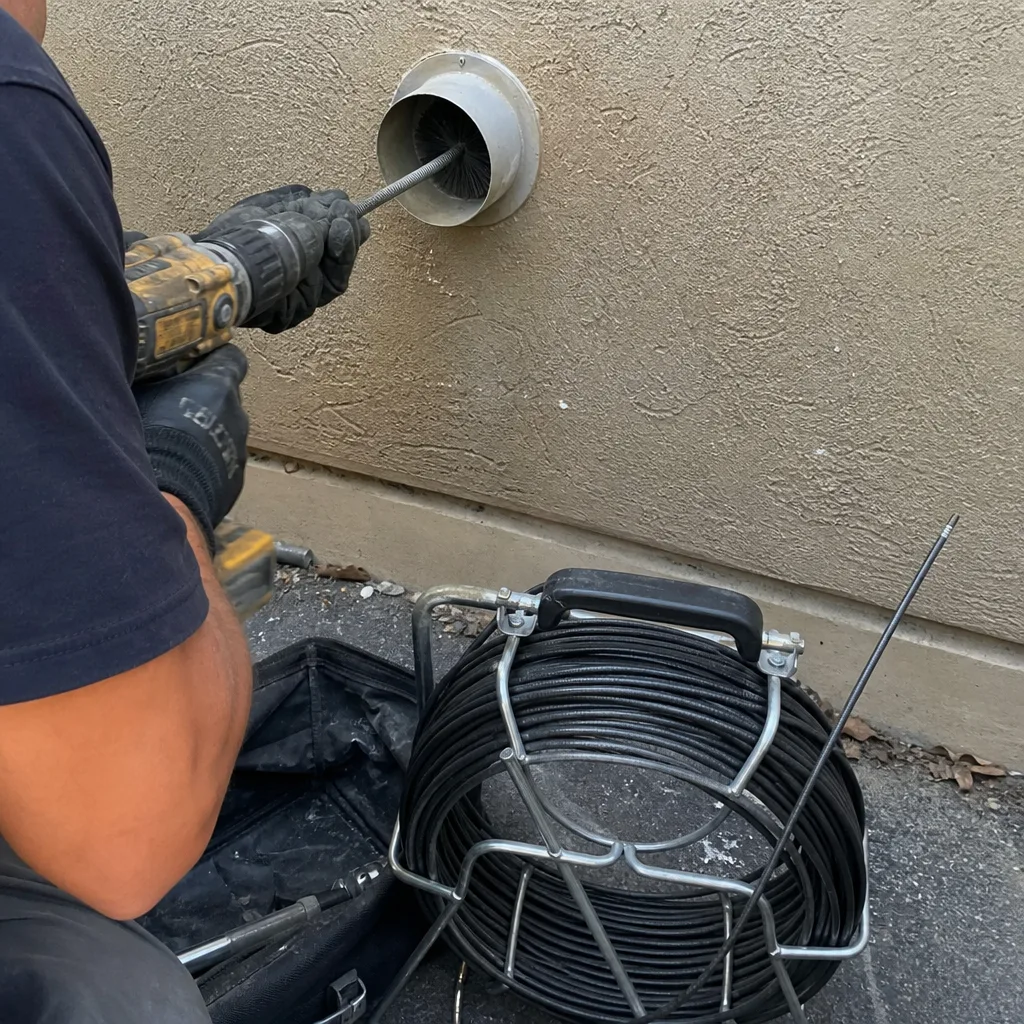
Most Pearland homeowners have never seen inside their duct system. Understanding the components helps you evaluate whether a cleaning quote is complete or incomplete.
Supply runs are the smaller ducts - typically 6 to 8 inches in diameter - that carry conditioned air from the central unit to each room. In Pearland’s 1990s and 2000s subdivisions like West Oaks and Oakbrook, these are often flex duct: a wire coil wrapped in insulation and plastic. In newer construction, they may be sheet metal or fiberglass duct board. Supply runs are under positive pressure when the system runs, so leaks push air out into walls or attics. They accumulate debris slowly because the air passing through has already been filtered.
Return runs pull air from rooms back to the air handler. They are typically larger - 12 to 20 inches - and often run through walls or chases. Return air is unfiltered until it reaches the air handler filter, so these runs accumulate debris faster. In Pearland homes with slab foundations, return chases are often built into the concrete or framed into walls, and leaks at the slab penetration pull in humid, debris-laden air from beneath the home or from wall cavities.
The plenum is the sheet-metal box that connects the trunk lines to the air handler. The supply plenum sits on top of the furnace or air handler; the return plenum sits below or beside it. Plenums are high-velocity zones where debris concentrates at turns and connections. They are also the most commonly skipped component in low-bid cleaning because they require panel removal and resealing.
The air handler compartment contains the blower wheel, motor, and filter rack. Debris that passes the filter settles here and is blown back into the supply system with every cycle. Cleaning this compartment is not optional for a complete job, though many crews skip it because it requires electrical lockout and panel removal.
Which components get skipped by low-bid crews:
- Return plenums - require access panel removal, often in attics or closets
- Air handler compartments - require electrical safety procedures
- Long supply runs in distant rooms - require additional access points
- Registers and grilles - require removal, external cleaning, and reinstallation
A complete estimate names every component. A vague estimate names none.
Common Mistakes to Avoid
- Booking by price alone. The $79 coupon in your Pearland mailbox covers register vacuuming and a trunk hose insertion, not a complete system cleaning. The homeowner who buys on price alone often buys twice.
- Accepting a verbal estimate. Without a written scope and flat price, there is no record of what was promised. Haven Standard Clause 1 requires written pricing before work starts for this reason.
- Ignoring return-side cleaning. Return runs and plenums accumulate more debris than supply runs because the air is unfiltered. A quote that emphasizes “all supply vents cleaned” while omitting returns is incomplete.
- Skipping documentation requirements. A crew that will not photograph before and after has something to hide, or lacks the equipment to do the job properly. Photos are not a luxury; they are evidence.
- Neglecting duct sealing after cleaning. In Pearland’s climate, cleaned ducts that remain leaky recontaminate quickly. Ask whether sealing is included or available, especially if your home is on expansive clay soil where slab movement has stressed connections.
- Confusing duct cleaning with coil cleaning. The evaporator coil is a separate component requiring different access and chemicals. A complete duct cleaning addresses the coil housing, not the coil itself. If your coil needs cleaning, that should be a separate line item with specific scope.
When to Call a Professional
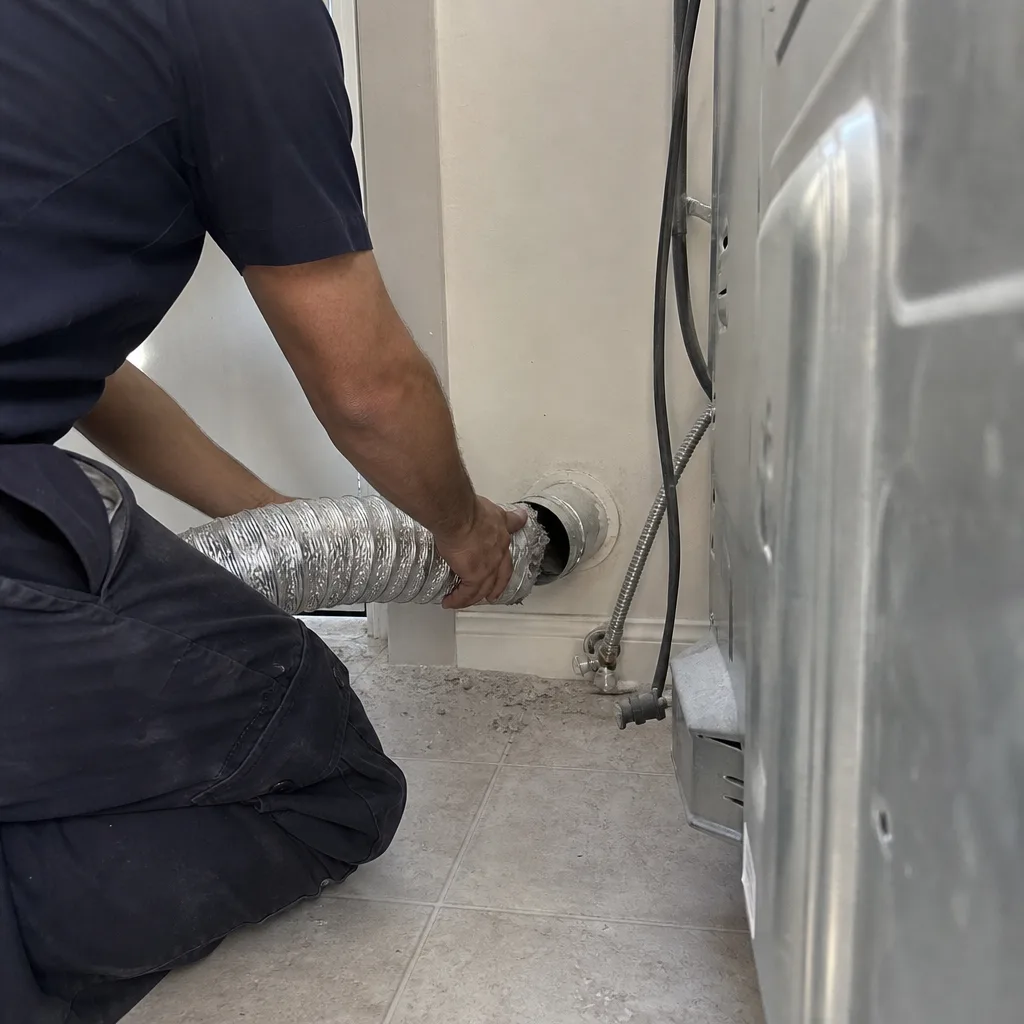
Call for a professional assessment if you notice visible dust emission from registers when the system starts, persistent musty odors that worsen when HVAC runs, uneven airflow between rooms, or debris buildup on register faces that returns within weeks of cleaning. After any renovation - common in Pearland’s growing subdivisions like Sunrise Lakes and Pomona - construction dust in ducts requires professional extraction, not household vacuuming. For a deeper look at whether to tackle this yourself or hire a pro, see our DIY vs Professional Air Duct Cleaning: The Pearland Homeowner’s Decision Guide.
If you’ve received a written estimate from another company and want comparison, CleanRun Air Duct Cleaning Pearland offers a Free Second Opinion on any written estimate. Not sure what to look for? Read our How to Hire a Air Duct Cleaning Contractor in Pearland: A Step-by-Step Guide first. We put our number next to theirs, line item by line item, at no cost.
CleanRun Air Duct Cleaning Pearland offers free estimates in Pearland - call (346) 253-1822. Every estimate is written, flat-priced per system, and delivered before any work starts. All technicians are background-checked and uniformed under Haven Standard Clause 3: Verified Crews. You’ll receive the technician’s name before arrival.
Frequently Asked Questions
Complete residential duct cleaning in Pearland typically ranges from $400 to $900 for a single HVAC system, depending on system size, accessibility, and contamination level. Two-system homes or those with extensive contamination may reach $1,200 to $1,500. CleanRun delivers a written flat price per system before any work starts - no per-vent pricing, no add-ons after arrival. Call (346) 253-1822 for an exact quote; estimates are free.
Low quotes typically cover register vacuuming and brief trunk line insertion, not complete system cleaning. The $79 to $149 range uses portable vacuums without negative-pressure containment and completes in under 90 minutes. A complete job requires sealed negative-pressure equipment, mechanical agitation of every run, plenum access, and 3-5 hours of labor. The cheaper quote is a different service with a similar name. Ask for component-by-component scope in writing before comparing prices.
Demand before-and-after photos of every duct run, plenum, and the air handler compartment, with room identification and date stamps. A verifiable job produces verifiable evidence. CleanRun has photographed every job since 2013; the photo record is a standard deliverable, not an option. If a company will not provide photos, they cannot prove completion.
Most Pearland homes benefit from cleaning every 3 to 5 years, sooner if you have pets, allergies, recent renovation, or live on clay soil where slab movement creates leaks. Homes in newer subdivisions with ongoing construction dust - Pomona, Shadow Creek Ranch, and nearby developing areas - may need more frequent attention. The camera tells the truth: if the borescope shows debris buildup, it’s time. If it shows clean metal, it’s not.
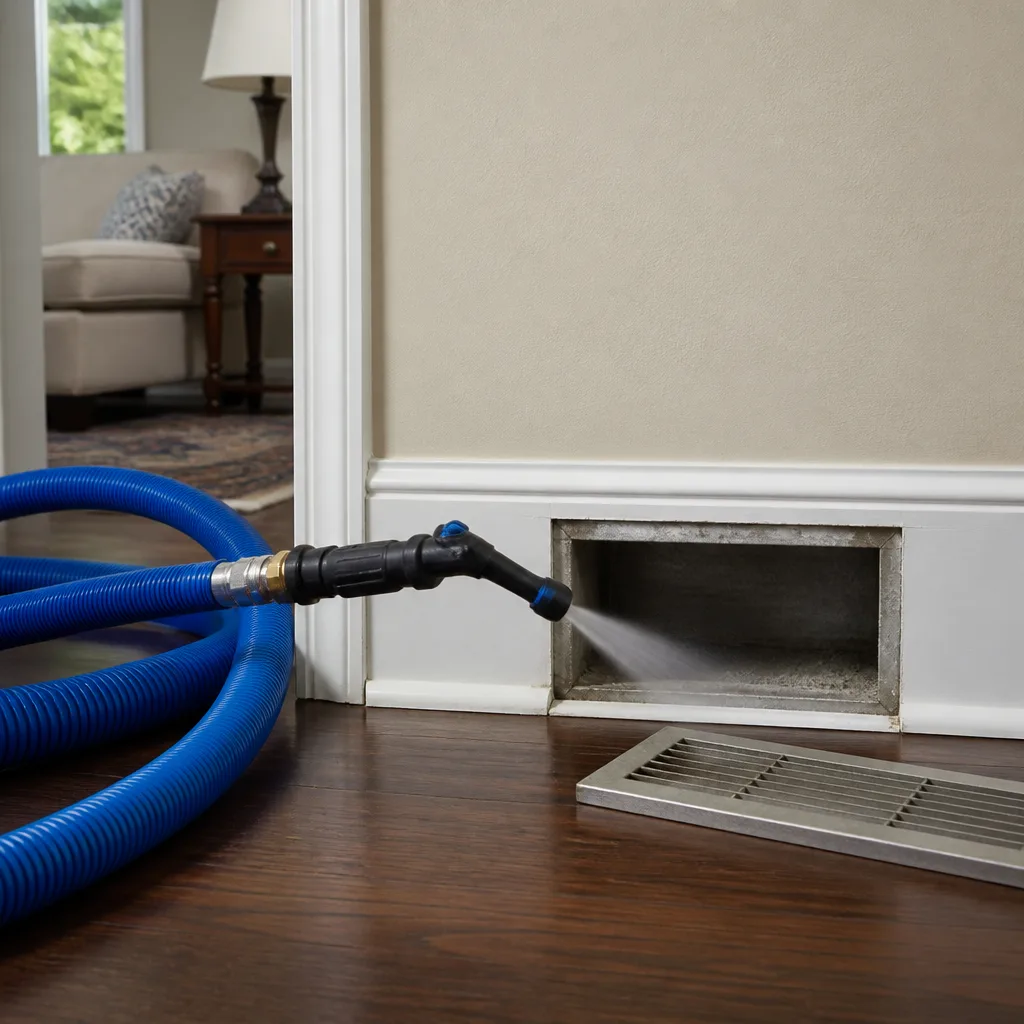
Humidity alone does not cause mold; moisture plus organic debris plus stagnant conditions do. Pearland’s climate creates favorable conditions, but mold growth requires a leak or condensation point. We photograph any suspected biological growth and recommend third-party lab testing before any treatment. Fogging or spraying without identifying the moisture source is ineffective and potentially harmful. Address the leak first, then clean, then consider treatment if testing confirms active growth.
Duct cleaning addresses the distribution network - runs, trunks, plenums, and registers. HVAC cleaning in Pearland includes the ductwork plus the air handler components: blower wheel, evaporator coil, heat exchanger, and condensate system. A complete HVAC cleaning is broader and takes longer. If your goal is debris removal from the distribution system, duct cleaning is the correct scope. If your system has performance or efficiency concerns, Air Duct Cleaning in Pearland may need to be combined with coil and blower service.
The Bottom Line
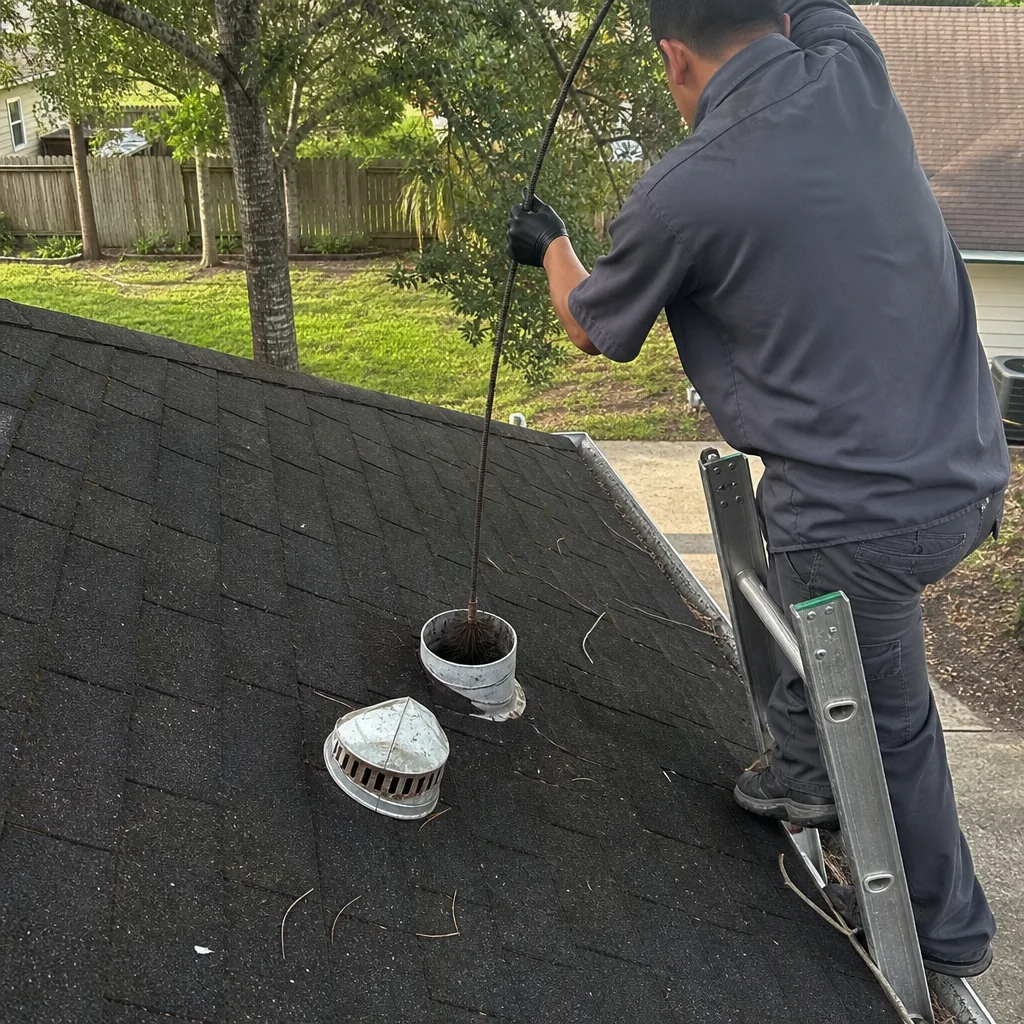
Air duct cleaning in Pearland is not a commodity service where the lowest price buys the same result. The difference between a coupon cleaning and a complete job is mechanical, documented, and verifiable: negative-pressure containment, mechanical agitation of every component, and photographic proof of completion. Pearland’s clay soil, humidity, and coastal pollen loads create conditions that accelerate debris accumulation and make thorough cleaning more necessary, not less. Before you book, demand a written estimate with component-level scope, a flat price per system, and a photo record guarantee. For more guides & resources on protecting your home investment, explore our blog. The homeowner who verifies before paying never pays twice.
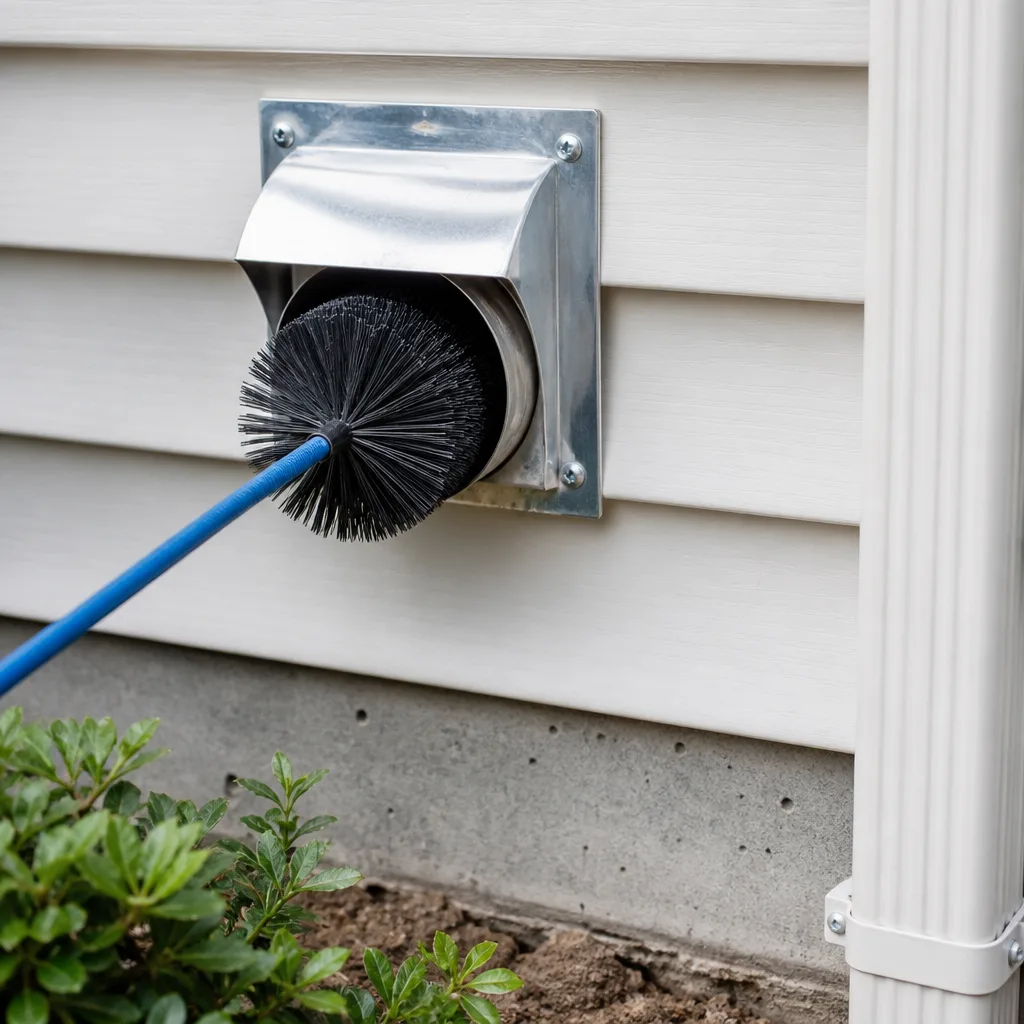
For Dryer Vent Cleaning in Pearland or a complete HVAC system assessment, the same documentation standards apply.
Written by Tomas Reyes, Owner at CleanRun Air Duct Cleaning Pearland, serving Pearland since 2013.